Measure your deck first, sketch a rough floor plan, then place your largest seating piece against the railing or back wall and work outward toward the door. Leave at least 36 inches clear for any main walkway and 24 inches between the backs of chairs for secondary paths. To put those numbers into a patio layout, follow the same clearance rules around the seating and any dining area you add at least 36 inches clear. That single rule eliminates most of the crowding problems people run into on small decks.
How to Arrange Patio Furniture on a Small Deck

Felix Brennan
6 May 2026
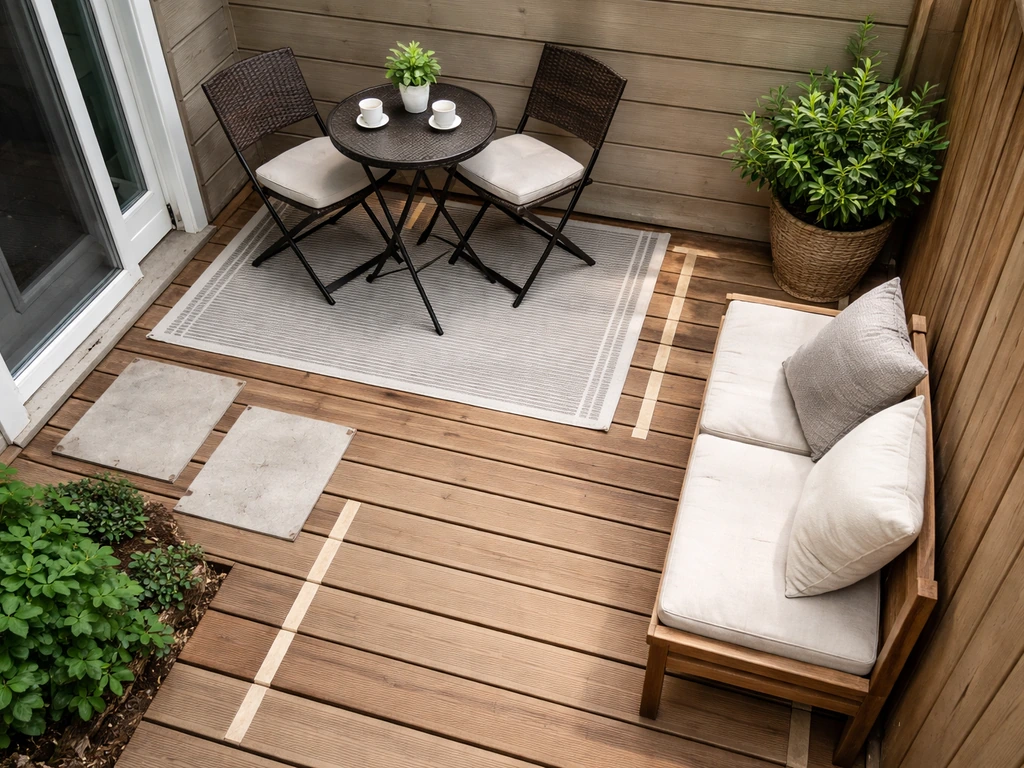
Start with measurements and a traffic map

Before you move a single chair, grab a tape measure and get the actual dimensions of your deck. Width, depth, and the exact position of every door, staircase opening, and post. Write them down or sketch them on graph paper at a simple scale like one square equals one foot. This takes about ten minutes and saves hours of rearranging.
Once you have the shape on paper, draw your traffic lines. Think of every path a person naturally walks: from the door to the stairs, from the door to the grill, from a chair to the railing. These are your protected zones. No furniture leg should sit inside a main traffic path. For a primary walkway, keep at least 36 inches clear. For a secondary path between two seating areas, 24 inches is the minimum you can get away with before things start feeling cramped.
Mark the door swing on your sketch too. A standard hinged door sweeps a roughly 32 to 36-inch arc. You want at least 60 inches of open space measured from the door threshold outward into the deck before any furniture starts. This gives someone coming outside room to step fully onto the deck, close the door, and turn around without bumping into a chair. Sliding doors are more forgiving, but still leave a 36-inch clear zone in front of them.
Pick the right layout style for a small deck
Small decks work best when you commit to one primary function rather than trying to cram in every possible use. The three layouts that actually work at small scale are a conversation setup, a dining setup, and a lounge setup. Trying to mix all three usually means none of them work well.
| Layout Style | Best For | Typical Footprint Needed | Key Furniture |
|---|---|---|---|
| Conversation | Relaxing, entertaining guests | 8 x 8 ft minimum | 2 to 4 chairs or a loveseat plus 2 chairs, small coffee table |
| Dining | Eating meals outside | 8 x 10 ft minimum | Table for 2 to 4, matching chairs |
| Lounge | Solo relaxing, reading, sunning | 6 x 8 ft minimum | 1 to 2 chaise loungers or a daybed, side table |
On a deck under 100 square feet, a conversation layout is almost always the best choice. It seats multiple people without the table footprint that dining requires, and it adapts easily if you want to add a small side table for drinks. Dining layouts work well on decks that are narrow but long, where you can run a rectangular table parallel to the house wall. Lounge setups are great for decks attached to a bedroom or a quiet corner of the yard, or if you are the only person using the space most of the time.
Place the main seating piece first
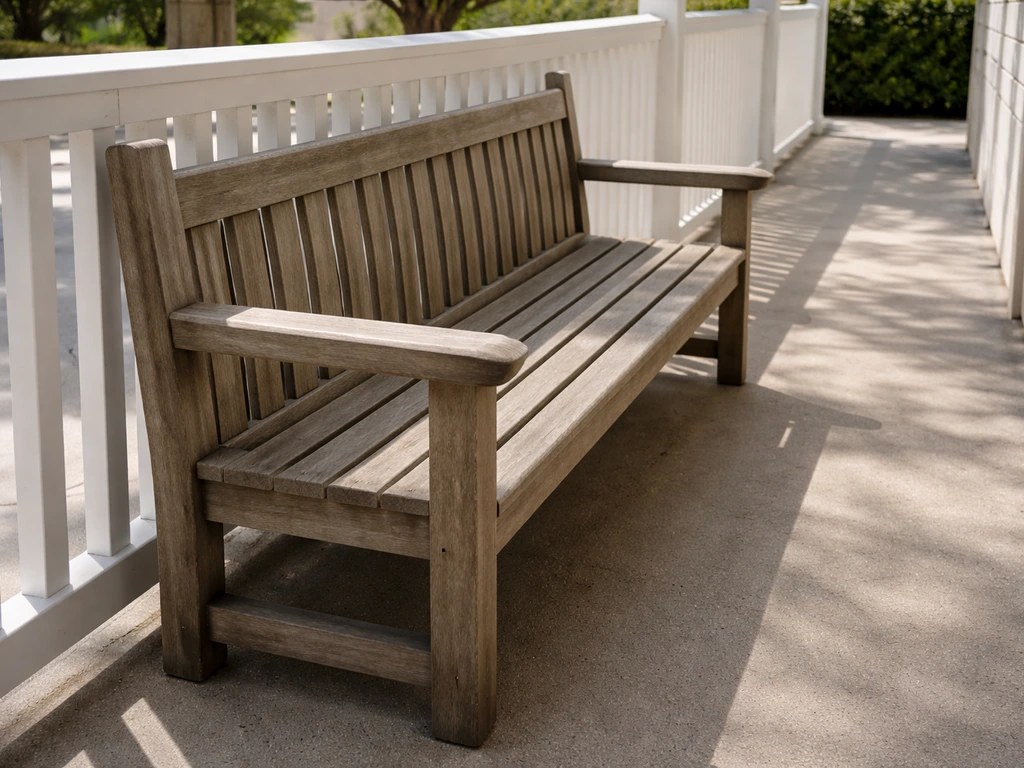
Your largest piece, whether that is a sofa, a bench, or a pair of chairs, goes in first. The rule is simple: anchor it against the railing or the back wall of the house, whichever is farthest from the door. This preserves the traffic zone near the entrance and makes the seating feel intentional rather than scattered. If you want a comfy lounge focal point, use these tips for how to build a patio daybed around your layout and clearance needs.
If you have a two-seat outdoor sofa, push it so the back is within a few inches of the railing. Most deck railings sit between 36 and 42 inches high, which works perfectly as a visual backdrop for a sofa. On a deck with a solid privacy wall on one side, that wall is often the best anchor point instead. The goal is to use the fixed structure of the deck to hold the furniture visually rather than floating it in the middle of the space.
For chairs, an L-shape or facing arrangement along two perpendicular railings is very efficient on a corner deck. Two chairs on one side of the railing corner and one chair or a small bench on the adjacent side creates a natural conversation zone without eating up the center of the deck. Keep the chair backs close to the railing, ideally within 6 to 12 inches, so the front of each chair is as far into usable space as it needs to be without going further.
Add tables and protect your walkways
Tables go in after seating is placed, not before. For a conversation layout, a coffee table should sit about 14 to 18 inches in front of the sofa or chairs, which is the distance that lets someone lean forward comfortably to set down a drink without having to stand up. Anything closer than 12 inches and people start kicking the table. Anything farther than 20 inches and it becomes useless.
For dining layouts, pull chairs away from the table and measure the clearance behind each chair when it is pushed out at a normal dining position, about 18 inches from the table edge. You need at least 24 inches from the back of a pulled-out chair to the nearest wall, railing, or other furniture. At tight tables on small decks, 24 inches is workable but 30 inches is noticeably more comfortable. If you cannot hit 24 inches on any side, the table is too big for that space.
Side tables next to chairs can sit tight to the chair arm with almost no clearance needed since no one walks through that gap. The one exception is a side table placed between two chairs facing each other, which becomes a shared coffee table by default. Keep that gap at least 18 inches wide so people can reach it from both sides.
After placing tables, walk your traffic lines again physically, not just on paper. Step through the door, walk to the stairs, walk from chair to chair. If you have to turn sideways anywhere, something needs to move. A 24-inch secondary aisle feels fine when you are looking at it but uncomfortably tight with a drink in your hand.
Dealing with stairs, posts, corners, and low railings
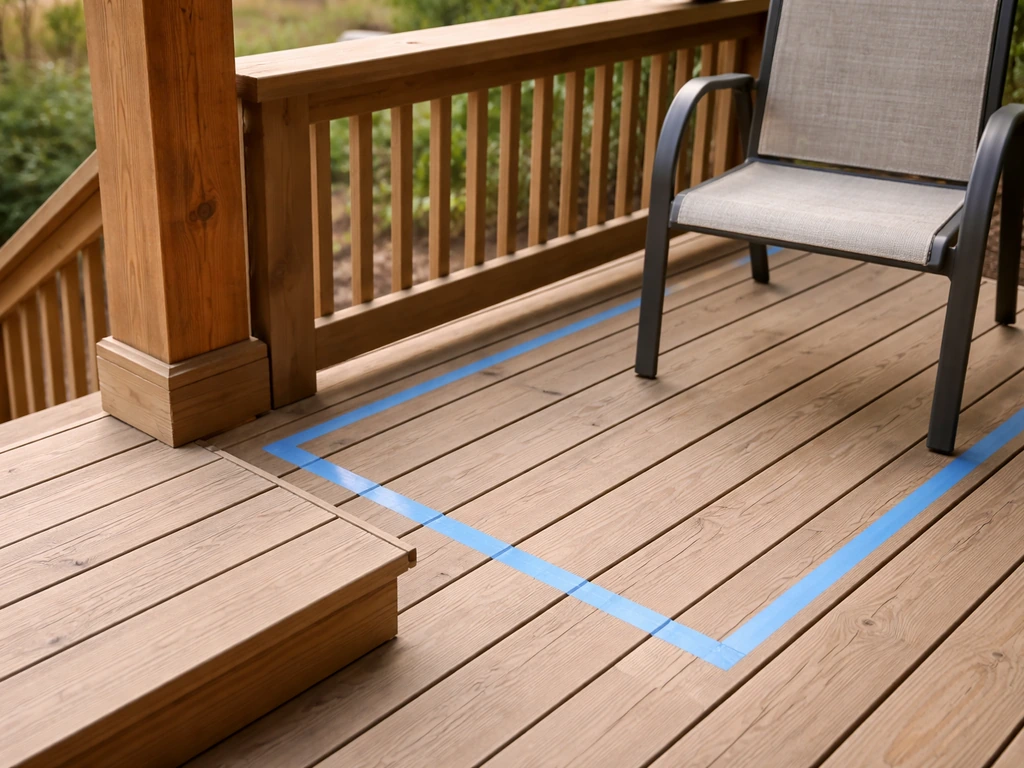
Stairs are the trickiest deck feature to work around. The stair opening needs a clear 36-inch zone on the deck side, measured from the top step edge. Never place a chair or table inside that zone. If the stairs are in a corner, the no-furniture zone becomes an L-shape around the opening. Work with it by treating that corner as dead space and pushing all your furniture toward the opposite side of the deck, which also naturally keeps the conversation area away from foot traffic coming and going.
Posts supporting a pergola, roof overhang, or shade structure can actually help with layout. Treat them like anchor points and arrange chairs to face inward toward the center, using the posts as the corners of a defined seating zone. A small round side table placed near a post keeps it out of the walkway and feels intentional. What you want to avoid is placing a chair so that a post sits directly in front of someone's eye line or so close that getting in and out of the chair means squeezing past it.
Low railings under 36 inches, common on older decks, create a problem because furniture pushed against them can feel unstable or even tip if someone leans on it. When you are building a patio sectional, check that your sectional cushions and legs do not sit against low rails so the seating feels secure Low railings under 36 inches. Leave 6 inches between any furniture back and a railing under 36 inches tall so there is no temptation to use the railing as a backrest. For corner sections where two railing panels meet, that junction tends to be the least sturdy point, so it is a bad spot to anchor heavy furniture.
Odd-shaped decks with jutting corners or angled edges often have one workable rectangle within the overall footprint. Find that rectangle, usually where the deck is widest and most square, and plan your furniture within it. The awkward corners can hold a planter, a torch, a side table, or nothing at all. Trying to fill every geometric quirk with furniture makes the whole space feel cluttered.
Factor in sun, wind, and privacy before you finalize
The direction your deck faces changes everything about where furniture should go. A west-facing deck gets brutal afternoon sun on that side from about 2 p.m. onward. If you put your main seating on the west side facing east, your guests are staring directly into the sun during prime outdoor hours. Orient the main seating so people face north or south, or add a shade sail or umbrella before locking in the layout. Placement decisions made without thinking about sun direction often get undone within the first summer.
Wind typically comes from a consistent direction in most regions. If your deck is exposed and you know which way the prevailing wind comes from, place the back of the seating group toward that direction so the chair backs act as a modest windbreak. A more permanent fix is adding a privacy screen or lattice panel on the windward railing, which also solves privacy issues at the same time. If you are thinking about eventually enclosing or screening the deck, your furniture layout should anticipate where those panels will go and leave room for them.
Privacy matters more on small decks that sit close to neighbors or street level. If you have a visibility problem from one side, that side of the deck is where you want the back of your main seating, not the front. Sitting with your back toward a neighbor feels more private than facing their yard. A tall planter, a freestanding privacy screen, or a curtain panel hung from a pergola can supplement the furniture arrangement without requiring any construction.
Spacing rules to remember and a final layout checklist
A few numbers are worth keeping in your head any time you are arranging furniture on a small deck. They apply whether you are working with a simple two-chair setup or trying to fit a dining table and a couple of extra seats into the same space.
- 60 inches minimum of open space in front of any door before furniture starts
- 36 inches minimum for a primary walkway (door to stairs, door to grill)
- 24 inches minimum between the backs of chairs in a secondary aisle
- 24 to 30 inches behind pulled-out dining chairs to the nearest obstacle
- 14 to 18 inches between a sofa or chair and a coffee table
- 36 inches clear zone around any stair opening
- 6 to 12 inches between furniture backs and deck railings
Once your layout is placed, run through this final check before you consider it done.
- Walk from the door to every exit point without turning sideways
- Sit in each seat and confirm the view, sun angle, and wind direction work for real use
- Check that every chair can be pulled out or stood up from without hitting anything
- Confirm the coffee or dining table is reachable from every adjacent seat
- Verify stair openings and door swings are completely unobstructed
- Step back from the deck and look at it from the yard to check that it looks balanced, not just functional
- Note where a shade umbrella, privacy screen, or overhead cover would go if you add one later, and make sure the current layout accommodates it
Small decks reward simple, committed layouts. One well-chosen seating group with the right clearances around it almost always looks and feels better than a deck stuffed with every piece of furniture that could technically fit. The same spacing and traffic-zone rules also work when you are figuring out how to arrange patio furniture around a pool. Start with less than you think you need, live with it for a few weeks, and add only what the space actually asks for. That approach works every time. A large patio can be furnished the same way: plan the traffic paths first, then anchor the main seating and add tables around it furnish a large patio.
FAQ
Can I arrange patio furniture on a small deck if I need a clear path from the door to the stairs?
Yes, but anchor the table to your walk pattern. If the table edge would cross a protected aisle when someone returns from the door or stairs, reduce the table footprint (smaller round, drop-leaf, or bench-height dining) or move the table so the aisle runs along a side instead of through the middle.
What if I cannot get the recommended 24 inches between chair backs on my deck?
Try swapping one “hard” piece for a flexible one. If you are short on the 24-inch between chair backs rule, use armless chairs, a bench, or a loveseat on one side of the table, since you can compress the seating geometry without eliminating the walkway.
How do I account for how far chairs pull out when arranging patio furniture on a small deck?
Treat small deck layouts like they must work with real sit height and leg space, not just the chair footprint. Measure the distance from where people will sit to the nearest railing, wall, or table edge, and confirm you can pass behind someone with the chair pulled out (especially for dining).
Should I plan a different arrangement for furniture I have to move or store?
Plan for storage before you finalize the “final” layout. If you need to move cushions or collapse items, keep at least one side of the furniture group accessible from the deck edge or door side so you can reach it without squeezing through the aisle.
Is daytime spacing enough, or should I test the layout in low light too?
No, not reliably. A deck that is fine in daytime can become cramped at night when you cannot see foot placement. Do a quick walkthrough after dark (or with one light on) and check whether you can step from the door to seating without stepping around chair legs or tables.
What should I do if my deck has low railings under 36 inches?
If your rail height is below 36 inches, avoid using the railing as the “back” for heavy seating, and keep backs slightly off the rail (about 6 inches in that scenario). For sofas and sectionals, verify the cushion and leg positions so nothing rests against the low rail.
Can posts for a pergola or shade structure help layout, or do they create problems?
Yes, but only if the shade structure does not steal your walkway. Use the posts as corners of the seating zone like you would fixed walls, then place small tables near posts rather than inside an aisle where someone would cut through to reach drinks.
How should I arrange furniture on a corner deck so it still feels open?
For a corner deck, keep the “open” side of the seating group toward the room you want to access, typically the center or direction of the view, and put the chair backs near perpendicular railings. This preserves the central traffic zone while still giving you a natural conversation setup.
What is the best way to handle extra guests on a small deck without ruining the layout?
If you host frequently, leave one gap for an extra seat instead of trying to permanently fit it. Choose a layout with a side bench, armless chair that can slide into position, or a movable small stool, and verify it does not block the door swing or main walkway when added.
Should sun direction affect where I put the main seating on a small deck?
Often, yes. If your deck receives strong afternoon sun from one side, rotate the main seating so people face away from the glare during peak hours. If you cannot rotate the group, plan for a shade sail or umbrella anchored where it will not block the entrance path.
How do prevailing wind direction and privacy screens change furniture placement?
Use the wind direction to place the “backs” toward the wind so chair backs act as a windbreak. If you also plan privacy screening, align that screen on the windward side so you solve both comfort and visibility with one fixture.
What is the simplest way to verify my small deck layout is truly workable?
Run a measurement check for turning and reaching, not just clearance. If you cannot turn without moving sideways, tighten the layout by reducing the number of pieces or switching to narrower seating (slimmer chairs, smaller table, or a bench) so the aisle stays functional with a drink in hand.
Next Articles
How to Decorate a Long Narrow Patio: Layout Tips
Practical DIY layout and decor tips to widen a long narrow patio using zoning, furniture spacing, lighting, greenery, an
How to Decorate a Rectangular Patio Step by Step
Step-by-step plan to decorate a rectangular patio with smart layout, zones, furniture fit, lighting, plants, and seasona
How to Decorate a Patio Wall: DIY Ideas and Mounting Tips
DIY patio wall decor for brick, stucco, wood, concrete, or siding with weatherproof mounting tips and maintenance.