
The fastest fix is adding curtain weights to the bottom hem and securing the lower corners with tie-down anchors or line ties to a post, railing, or floor hook. That combination stops most blowing on its own. For gusty or exposed patios, you'll also want to look at how your curtains are mounted, what hardware holds them in place, and whether your patio setup gives wind a free path to get underneath the fabric.
How to Keep Patio Curtains From Blowing in Wind

Felix Brennan
6 May 2026
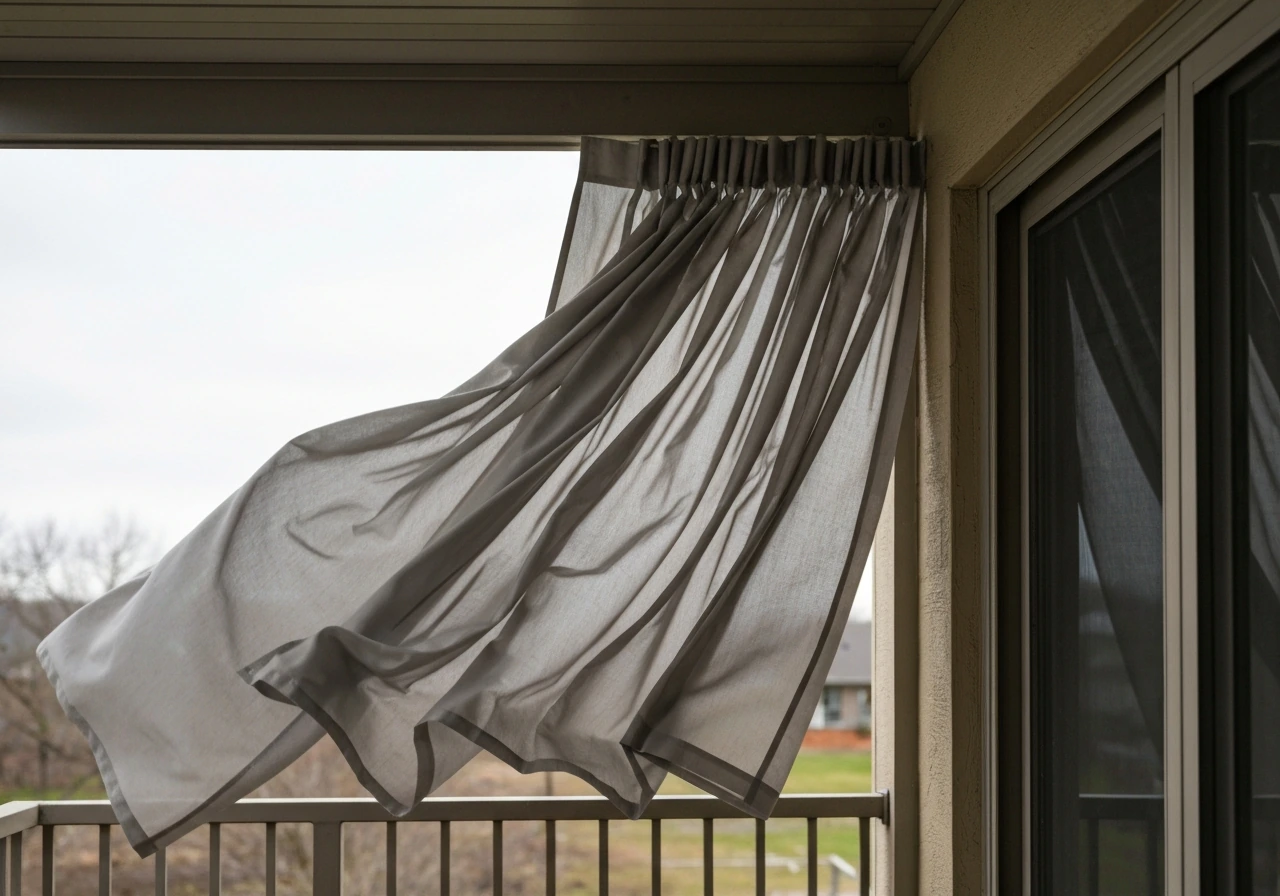
Why patio curtains blow in the wind
Curtain panels are basically sails. When wind hits one side of a flat panel, pressure drops on the opposite side, and the fabric is pulled outward toward the low-pressure zone. That's the same lift principle that fills a sailboat's canvas. The bigger the panel and the more it billows, the worse the effect gets, because a curved surface increases the pressure difference between the two sides.
A standard 6-foot outdoor shade panel can experience 20 to 30 pounds of outward force in moderate wind. Gusts spike that load significantly, which is why a curtain that sits perfectly still on a calm afternoon turns into a flapping mess the moment a front rolls through. Corners, hilltop patios, coastal yards, and any space with no fence or walls on the windward side make this worse. The wind simply has a clear runway to build speed before it hits your curtains.
Most curtain blowing problems come down to a few weak points: not enough weight at the bottom, too much gap at the sides, rod or wire mounts that let the panel slide and bunch, and fabric that's lightweight enough to catch air easily. Fix those points and you fix the problem.
Quick fixes you can do today
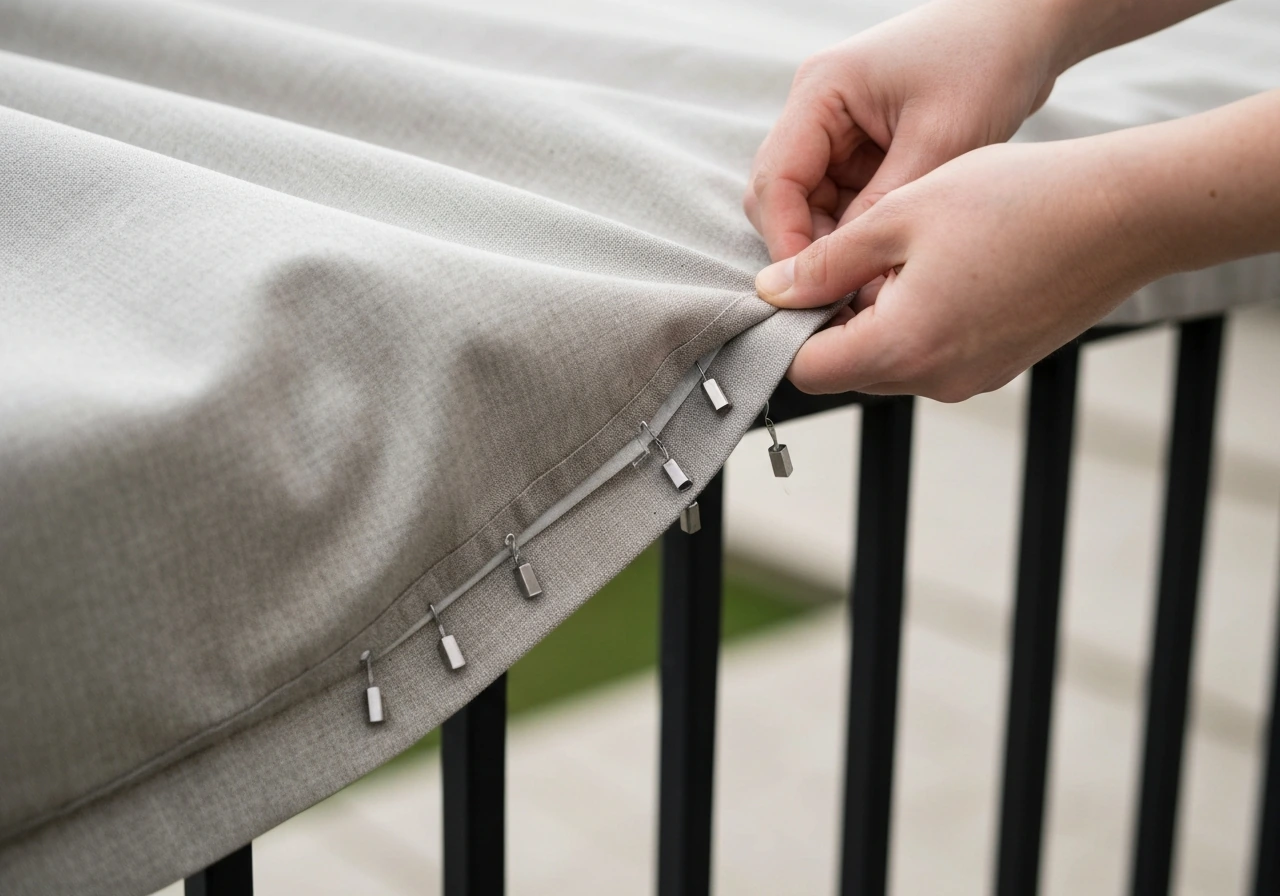
These solutions use materials you can pick up at a hardware store or order online and install in an afternoon. If you want to keep outdoor blinds from flapping, start by adding weight, tightening the top mount, and anchoring the bottom so the fabric cannot billow Quick fixes you can do today. They won't require new mounting hardware or major changes to your setup.
Add curtain weights
Curtain weights are small metal discs or bars you slip into the bottom hem of your panel. They're sold specifically for outdoor curtains and cost a few dollars per panel. Drop-in hem weights work best if your curtains have a folded bottom hem with some width to it. If the hem is too narrow or sewn shut, stick-on drapery weights (covered in fabric) can be hand-stitched or safety-pinned into the lower corners and center. For a heavier option, fishing weights or small lead sinkers wrapped in fabric and stitched into the hem do the same job for almost nothing. Aim for at least one weight per corner and one in the middle of any panel wider than 48 inches.
Use tiebacks at the bottom
A tieback is typically used to hold a curtain open, but you can install them low, near the floor, to anchor the bottom of the panel to a post or column. Use a hook-and-ring setup at ankle height on each side post. Loop the curtain's lower corner through the ring or hook it with a S-hook through a grommet. This keeps both lower corners pinned even when you want the curtain closed.
Anchor with line ties
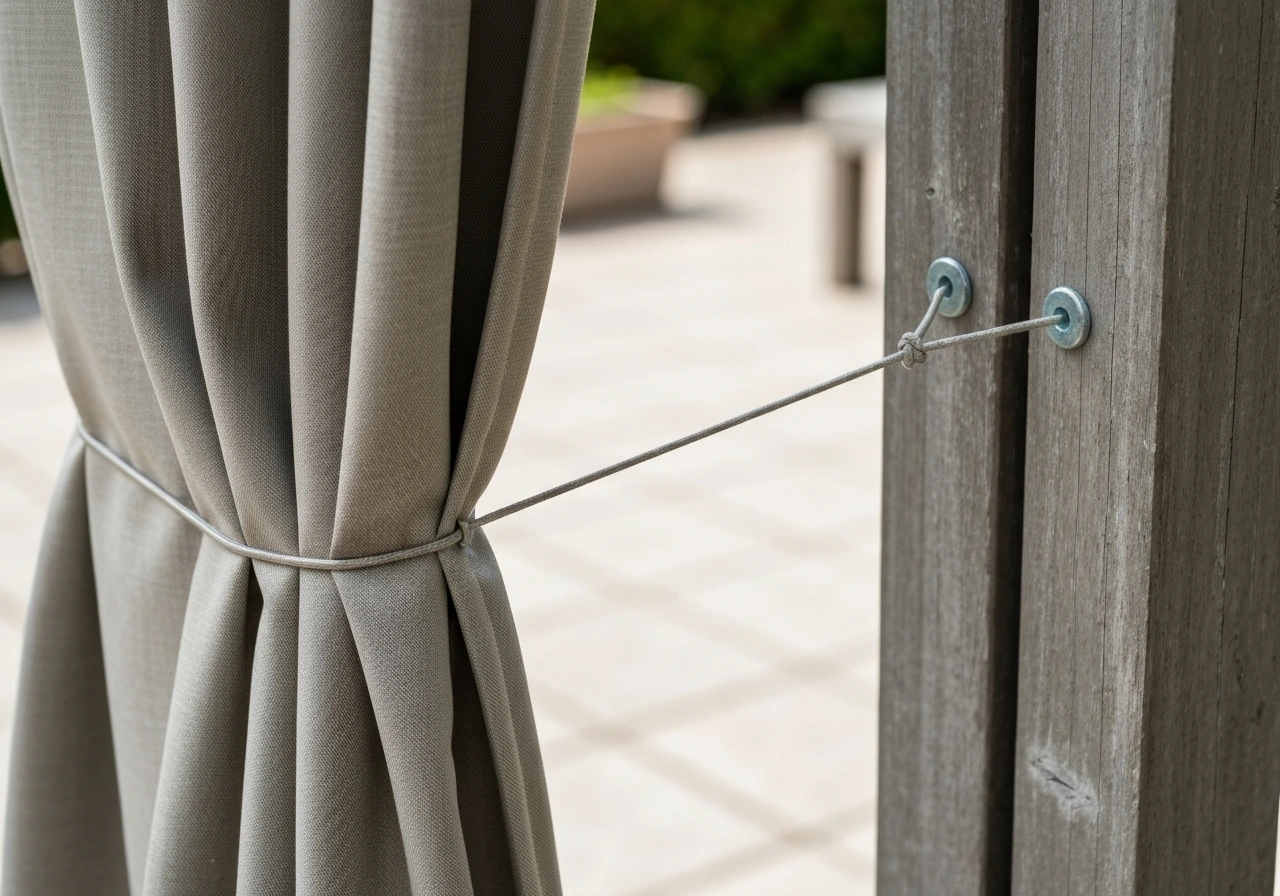
Line ties are short lengths of cord, bungee cord, or hook-and-loop strap attached to the curtain panel and tied off to a fixed point. Screw small eye bolts into your patio posts at floor level and knee height, then add short tie cords or velcro straps to the curtain's grommets at matching points. Pull snug and clip or tie them when wind picks up. This takes about 20 minutes per panel and costs almost nothing. Bungee cord works especially well here because it absorbs gusts rather than going rigid, which reduces stress on the grommets.
Mounting options that reduce wind lift
How your curtains are hung has a big effect on how much they blow. A panel that can swing, bunch, or slide will catch far more wind than one held snug at multiple points.
Rods vs. cable wire vs. track systems
Standard outdoor curtain rods let panels slide freely, which means wind can push them sideways and bunch them into a pocket that catches even more air. A better option is a tension cable or wire system strung tightly between two posts. The cable doesn't flex the way a rod can, and you can use compression clips to pin the curtain at several points along the cable so it can't bunch or shift. For the most wind-resistant setup, a ceiling-mounted track with snap-in clips or carriages holds the curtain flat against a fixed path and prevents it from lifting at the top edge.
Increase overlap and tension
If you have two panels meeting in the middle, increase their overlap to at least 6 to 8 inches. A small overlap is the first place wind finds a gap and lifts the fabric. Overlapping panels can also be joined with magnetic curtain closures, snaps, or hook-and-loop tape running vertically down the meeting edges. This seals the center gap and makes both panels behave more like one solid barrier. Also make sure your rod or cable is tensioned tightly enough that the curtain hangs taut rather than drooping, as a loose, saggy panel catches wind much more easily.
Close the top gap
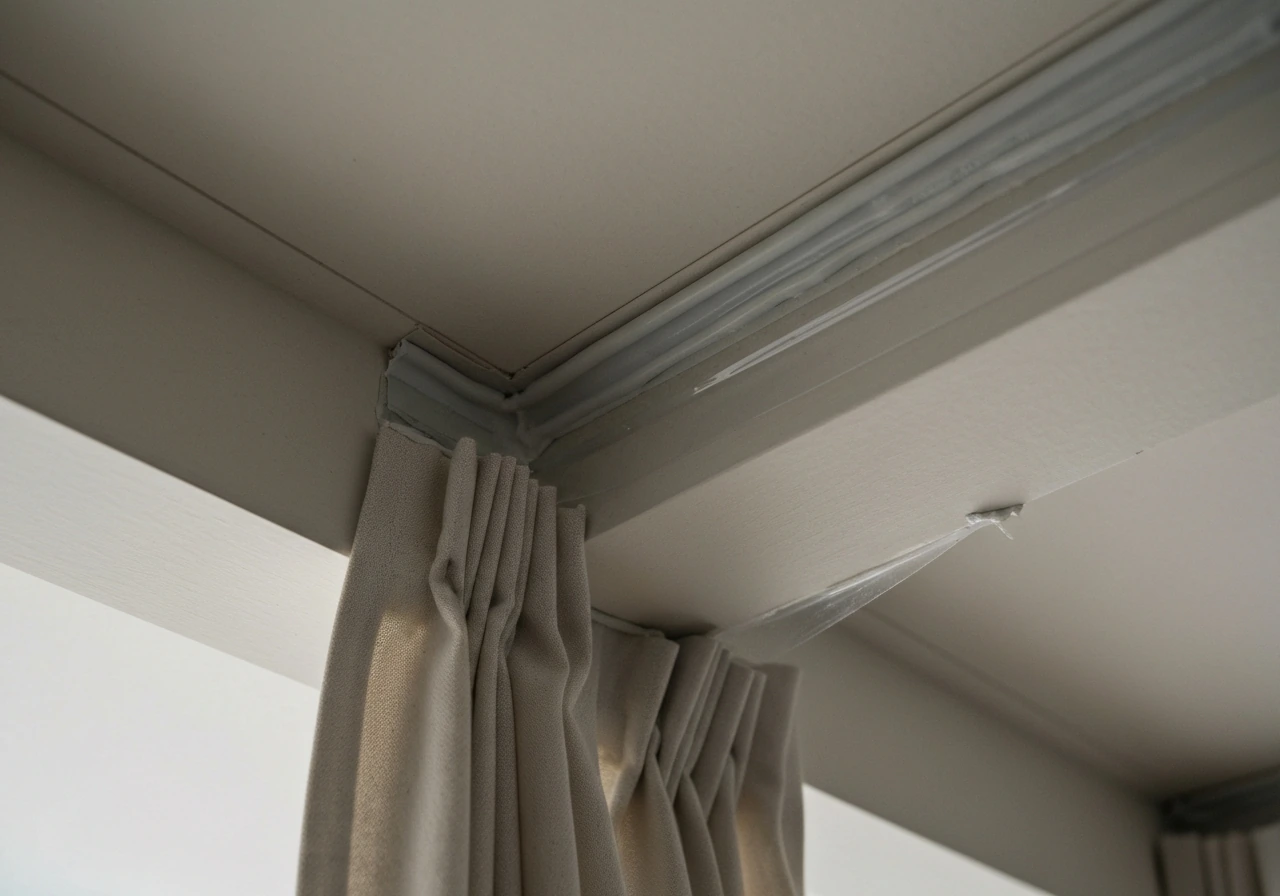
One often-missed spot is the gap between the top of the curtain and the ceiling or beam. Wind sneaks underneath the top edge, inflates the panel from behind, and lifts the whole thing. If your rod is mounted a few inches below the beam, try moving it as close to the ceiling as possible. Alternatively, add a strip of hook-and-loop tape (adhesive-backed outdoor Velcro) along the top edge of the curtain and on the beam or fascia directly above, so the panel stays flat against the structure when closed.
Hardware choices for outdoor curtains
The right hardware turns a loose panel into something that actually stays put. Here's how the main options compare for wind resistance.
| Hardware Type | Wind Resistance | Ease of Use | Best For |
|---|---|---|---|
| Grommets with line ties | High | Medium | Panels you want to anchor at multiple points |
| Snap fasteners (marine-grade) | Very High | Medium | Permanent or semi-permanent installs on posts |
| Magnetic curtain closures | Medium | Easy | Sealing panel overlaps in moderate wind |
| Velcro (hook-and-loop) | Medium-High | Easy | Top edges, overlaps, or temporary hold-downs |
| Spring tension clips on cable | High | Easy | Panels hung on wire or cable systems |
| Bungee tie-downs | High | Easy | Bottom corner anchoring, absorbs gusts |
Marine-grade snap fasteners are the gold standard if you're willing to install them properly. They're the same hardware used on boat canvas and are designed to hold under repeated wind stress without corroding outdoors. Scovill’s DOT® Durable™ snap fasteners use 316 marine-grade stainless steel and note resistance to pitting and crevice corrosion, including in chloride exposure conditions [DOT® Durable™ Snap Fasteners 316 “Marine Grade” Stainless Steel product sheet](https://www. scovill.
com/wp-content/uploads/2024/02/MKT0035REV70523316SSTEELPRODUCT_SHEET. pdf). You'll need a snap fastener kit and a setting tool, but the installation is straightforward: set female snaps into the curtain grommets or hem, and screw the male socket bases into your posts at matching heights. Canvas Designers sells a Pres-N-Snap hardware kit and snap-setting tool for installing marine canvas snaps on canvas and enclosures [snap fastener kit and a setting tool](https://canvasdesigners.
com/products/pres-n-snap-hardware-kit). Each snap holds securely but releases easily when you want to remove the curtain.
Grommets with short cord tie-offs through eye bolts are the easiest DIY version of the same idea. Use stainless steel or brass grommets, not cheap zinc ones that rust and corrode within a season. Outdoor-rated Velcro (3M makes a weatherproof version) is excellent for sealing panel overlaps and tacking down top edges, and it won't delaminate in heat and humidity the way standard indoor Velcro does.
Wind-proofing with patio enclosures and windbreaks
If you're fighting wind constantly, the curtains themselves can only do so much. The real fix is reducing the wind load that reaches them in the first place. This is where patio design upgrades make a lasting difference.
Add a windbreak panel or screen
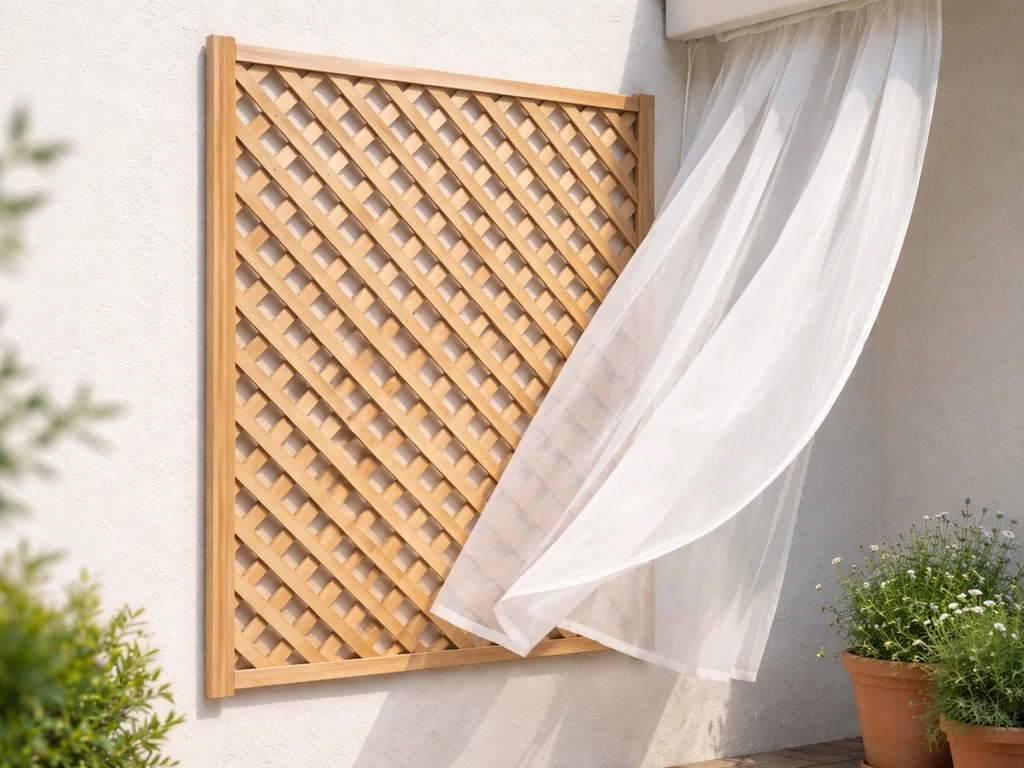
A windbreak panel installed on the prevailing-wind side of your patio disrupts the air flow before it reaches your curtains. This can be as simple as a lattice panel attached to your posts, a polycarbonate wind panel, or a section of outdoor privacy screen fabric stretched on a frame. Even a partial barrier that covers the lower 4 feet of an opening dramatically reduces the speed of air reaching your curtain panels. If you're already thinking about a screened patio enclosure, this is a good reason to start with the windward wall first.
Consider a full or partial patio enclosure
A screened patio enclosure eliminates the blowing problem entirely on the enclosed sides. Screens and solid panel systems create a sheltered outdoor room where you can still use lightweight curtains for shade and privacy without fighting wind. Clear vinyl panels are another option: they let in light and views while blocking wind almost completely. If a full enclosure isn't in your budget right now, even enclosing two sides of your patio (the prevailing wind side and one adjacent side) cuts the gusting dramatically.
Strategic placement and curtain choice
Heavier fabric blows less. Outdoor canvas, solution-dyed acrylic (like Sunbrella), and thick polyester panels weigh enough to resist moderate gusts without extra hardware. Lightweight sheer panels are the worst offenders because they have almost no weight but plenty of surface area. If your curtains are sheer or thin, you're fighting an uphill battle with tie-downs alone.
Consider replacing them with a heavier outdoor fabric, or layer them against a heavier liner panel that stays anchored. If you're starting fresh and want to make your own panels, heavier materials like drop cloth canvas work very well for wind-prone patios. If you want to upgrade to sturdier, heavier curtains, start with drop cloths by following this guide on how to make patio curtains out of drop cloths.
If you’re wondering how to make curtains for outdoor patio spaces, heavier drop cloth canvas is a great material to start with make your own panels.
Maintenance tips to keep solutions working season after season
Even the best hardware and anchoring setup degrades over time if you don't stay on top of it. These are the things worth checking at the start of each outdoor season and after any major storm.
- Inspect all grommets for cracking, rust, or enlargement. A grommet that's stretched or cracked will tear out in the first serious gust. Replace any that look worn before the season starts.
- Check snap fasteners and eye bolts for rust or loosening. Marine-grade hardware resists corrosion but isn't immune to it. A quick wipe with a stainless steel cleaner and a check that all screws are still tight takes five minutes per panel.
- Re-tension cable or wire systems. Wire stretches slightly over time, especially after a winter of temperature swings. Re-tighten turnbuckles at each end until the cable is taut again.
- Replace outdoor Velcro every one to two seasons. The adhesive backing weakens, and the hook-and-loop pile loses grip after repeated sun and moisture exposure. Fresh Velcro costs almost nothing and holds far better than old strips.
- Check curtain hem weights after washing. Bottom weights can shift or fall out if the hem stitching loosens. Re-stitch or replace any weights that have migrated to one side, which throws off the way the panel hangs.
- Before any major storm, take curtains down or tie them fully closed with all anchors engaged. A gust that would normally just ruffle a properly anchored curtain can tear it off the rod if the panel is left partially open with only top-mounted hardware.
- Store lightweight or sheer panels indoors for winter if you're in a cold or high-wind climate. Repeated freeze-thaw cycles and winter gusts degrade both the fabric and the fasteners faster than anything else.
The combination that works best for most patios is this: heavier outdoor fabric, grommets with line ties or snap fasteners at multiple points (top, middle, and bottom), a tight cable or track mount at the top, and at least a partial windbreak on the prevailing wind side. Start with the quick fixes today, then plan the mounting and enclosure upgrades for your next weekend project.
To put up patio curtains effectively, start by choosing the right mounting approach and then secure the bottom and edges so wind can't get under the fabric. If you're wondering how to add curtains to patio setups that handle wind, start by addressing weights, anchoring, and mounting Start with the quick fixes today.
If you're dealing with patio blinds that flap, the same windproofing and anchoring steps can help you fix them too how to fix patio blinds. You'll go from chasing flapping curtains every time the wind picks up to having a genuinely comfortable, sheltered outdoor space.
FAQ
What’s the best order to fix patio curtains that keep blowing in wind?
Start with bottom control (weights plus anchoring the lower corners), then address side gaps (overlap or vertical closures), and finally tighten the top mount (tight cable or track, reduce any top-edge gap). If the curtains still billow after that, the next step is adding a windbreak on the prevailing-wind side.
Can I use curtain weights if my bottom hem is narrow or sewn shut?
Yes, but drop-in hem weights may not work well if the hem is too tight. Use stick-on drapery weights that you hand-stitch or safety-pin into the lower corners and the center, or wrap fishing weights or small sinkers in fabric and stitch them into the lower seam (still aiming for at least one weight per corner plus one in the middle on panels over 48 inches).
How do I stop wind from getting under the top edge of the curtains?
First, mount the rod or cable as close to the ceiling beam or fascia as possible. If there’s still an air gap, add an outdoor-rated hook-and-loop strip along the top edge of the curtain and the matching surface above so the panel seals flat when closed.
Should I avoid using standard curtain rods for wind-prone patios?
Often, yes. Standard rods allow sideways movement that lets panels bunch and catch more air. A tension cable system with compression clips, or a ceiling track with snap-in carriages, typically holds the fabric in a fixed path and reduces flapping significantly.
How much should I overlap two curtain panels in the center?
Use at least 6 to 8 inches of overlap if you have two panels meeting. Then reinforce the seam with magnetic closures, snaps, or vertical hook-and-loop tape so the center gap is sealed during gusts.
What’s the difference between tie-downs and bungee tie-downs for anchoring?
Tie-downs that go rigid can transfer stress into grommets during gusts. Bungee cord absorbs peak gust energy, which reduces strain and helps the curtain stay controlled without tearing or loosening hardware.
My curtains have grommets, but they still blow out. What’s a common hardware mistake?
Using low-quality or wrong fasteners. Make sure grommets and anchors are outdoor-rated, and replace rust-prone zinc components with stainless steel or brass. Also verify your tie-off points match the curtain’s grommet spacing and are tightened enough that the panel hangs taut, not saggy.
Are snap fasteners worth it, and do they work better than line ties?
Snap fasteners can be more wind-resistant if installed correctly because they lock the curtain into place while still allowing removal. They’re a good choice for frequent opening and closing, but they require proper alignment of male bases to post positions so the snaps engage evenly.
How do I keep outdoor curtains from blowing when I want them closed most of the time?
Use a low, near-floor anchoring method for the lower corners (hook-and-ring or S-hook through grommets), then seal the top and center with hook-and-loop or overlapping closures. This creates a “three-point control” effect (bottom corners, top edge, and center seam).
Will heavier fabric alone solve the problem, or do I still need anchoring?
Heavier outdoor fabric reduces flapping, but it usually does not eliminate it on exposed patios with direct wind. For consistent results, combine heavier fabric with at least bottom weighting and corner anchoring, and tighten the top mount so the curtain does not billow from behind or underneath.
What should I inspect at the start of each outdoor season?
Check bottom weights are still secure, grommets are not pulling or tearing, and tie cords or straps have not stretched. Also confirm eye bolts and anchors are tight after storms, and inspect top sealing (Velcro or snap alignment) so it still contacts properly when the curtain is closed.
If I can’t enclose the whole patio, what upgrade gives the biggest improvement?
Add a windbreak panel or privacy screen on the prevailing-wind side first. Even covering the lower portion of an opening, roughly the lower 4 feet, can dramatically reduce wind speed reaching the curtain and reduce gust-driven billowing.
Next Articles

How to Decorate a Long Narrow Patio: Layout Tips
Practical DIY layout and decor tips to widen a long narrow patio using zoning, furniture spacing, lighting, greenery, an

How to Decorate a Rectangular Patio Step by Step
Step-by-step plan to decorate a rectangular patio with smart layout, zones, furniture fit, lighting, plants, and seasona
How to Decorate a Patio Wall: DIY Ideas and Mounting Tips
DIY patio wall decor for brick, stucco, wood, concrete, or siding with weatherproof mounting tips and maintenance.