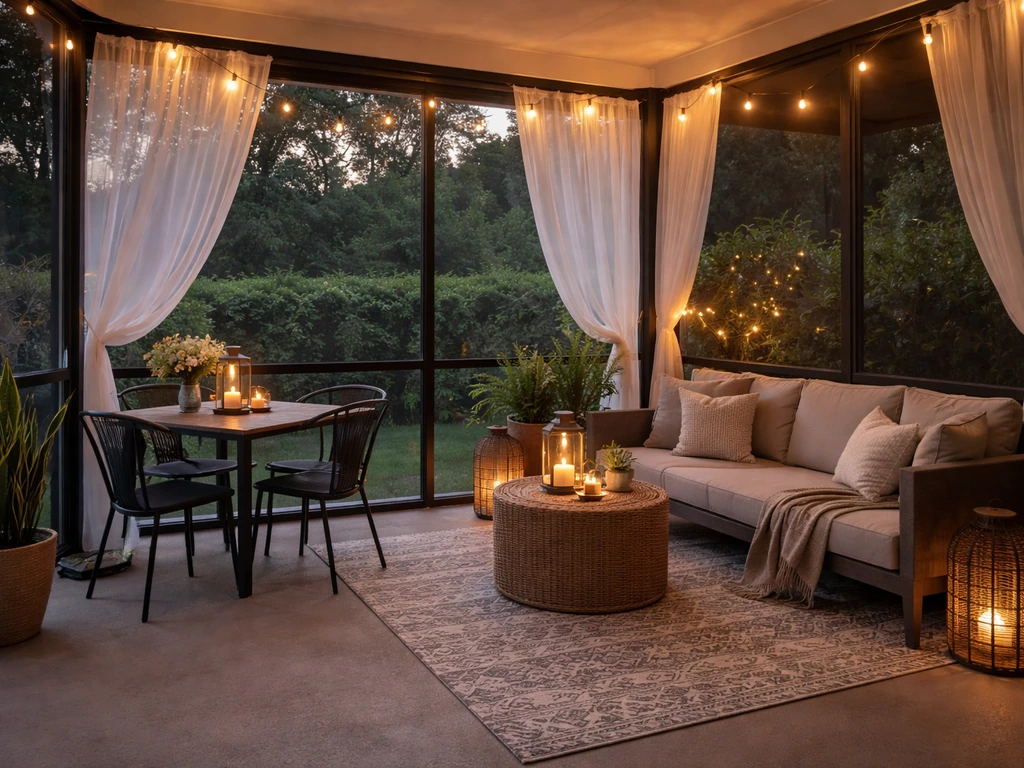
Decorating a screened-in patio comes down to treating it like an actual room, not just a covered slab with some chairs on it. Start by mapping the layout around traffic flow and screen constraints, then layer in lighting, airflow, furniture, rugs, and wall decor using outdoor-rated materials that can handle humidity and sun. Get those fundamentals right and the space will feel finished, comfortable, and genuinely usable year-round.
How to Decorate a Screened-In Patio Step by Step

Felix Brennan
11 Jul 2026
Start with your patio's layout and constraints
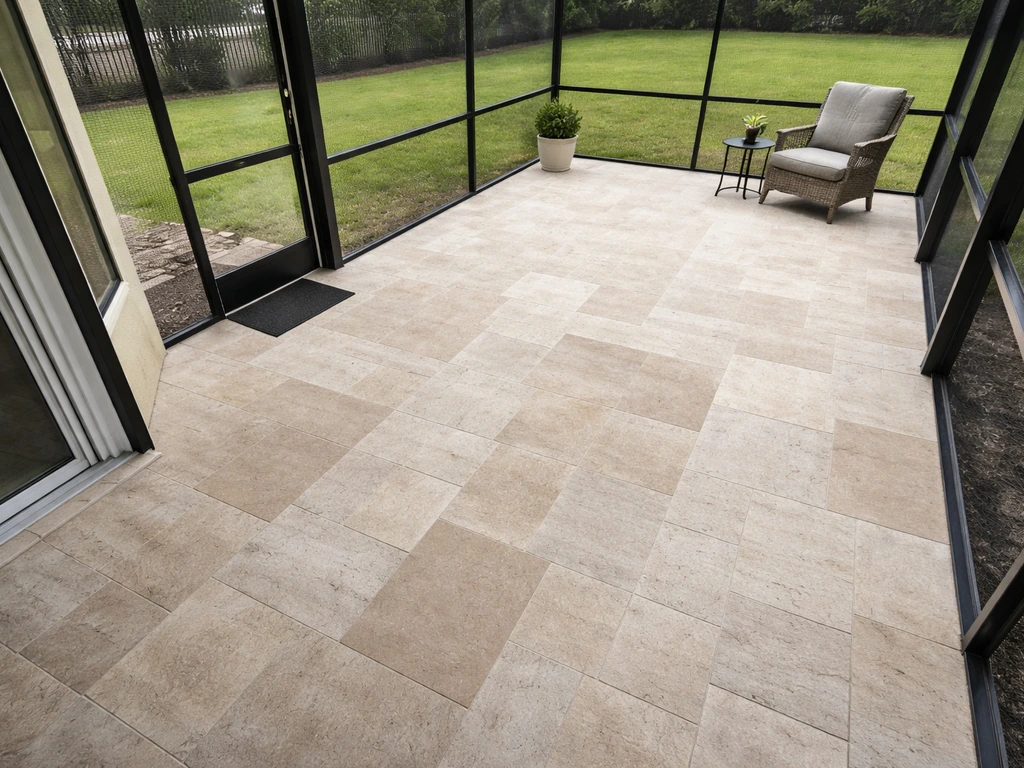
Before you buy a single piece of furniture, walk the space and answer a few questions. Where does the door swing? Where does foot traffic naturally flow from the house to the patio and back again? The biggest mistake people make is placing a sofa right in the middle of the main walking path. A proven approach is to keep that traffic corridor near the door and push your seating into the rest of the floor area so it forms a continuous, uninterrupted zone. If you have multiple doors, try to locate your primary furniture grouping away from the most active entry point.
Next, look at your screens. Run your hand along the mesh and check for sag, tears, or loose spline in the channels. Loose or sagging mesh is a snag hazard for furniture legs, cushion corners, and anything you hang nearby. If you spot small holes, a patch cut from a screen repair kit works fine as long as it overlaps the damaged area completely. For fiberglass mesh, make sure you're matching the right spline diameter (usually 0.175 inches) when reseating any loose sections. It's worth doing this before decorating so you're not moving furniture around later to access the screens.
Also take stock of sunlight angles throughout the day. Which wall gets direct afternoon sun? That affects where you place seating and whether you'll want a solar shade fabric panel on the inside of the screen frame to reduce glare and heat. Note the ceiling height too, because that determines whether a ceiling fan is realistic and what size pendant or string light drop will work without feeling cramped.
- Identify the door swing and keep a 36-inch clearance path from entry to any exits
- Check all screen panels for sag, tears, or loose spline before adding furniture near walls
- Note which walls get direct sun in the afternoon to plan shade and seating orientation
- Measure ceiling height to confirm fan clearance (minimum 7 feet from floor to blade) and light drop length
- Decide on zones upfront: dining, lounging, and conversation areas work well as distinct clusters
Lighting, airflow, and keeping bugs out
Lighting that actually works in a screened space
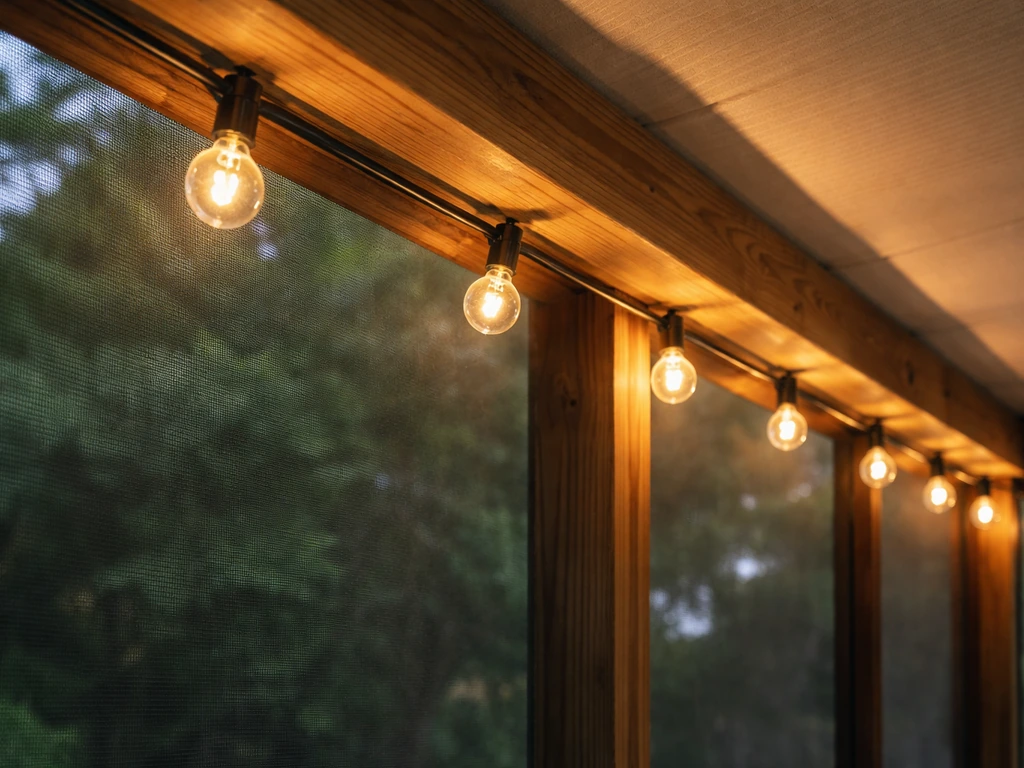
String lights are the go-to for a reason: they're easy to hang from the ceiling framing, they don't require an electrician, and they cast a warm glow that makes the space feel like an outdoor room rather than a garage. Aim for bulbs in the 2700K to 3000K color temperature range, which gives you that soft amber warmth rather than a harsh bluish-white.
For wall-mounted options, look for sconces or lanterns rated at minimum damp-rated (covered patios qualify), and make sure they're rated for outdoor use specifically. Wet-rated fixtures are even more durable if your screens allow wind-driven rain to reach the walls. A combination works well: string lights or a ceiling-mounted fixture for ambient light, plus one or two sconces near seating walls for accent.
Airflow and keeping the space comfortable
A ceiling fan is one of the best investments you can make for a screened patio. It doesn't actually lower the air temperature, but it creates a wind-chill effect that can make 85 degrees feel significantly more comfortable. Choose a damp-rated fan at minimum, and make sure it's sized correctly for the square footage. For most screened patios in the 150 to 200 square foot range, a 52-inch blade span is a solid choice.
Don't forget that cool air naturally enters at lower levels, absorbs heat, rises, and wants to exit higher up. That means stacking bulky furniture against screened wall panels or blocking upper vents with hanging decor will work against your comfort. Keep the upper portion of your screen panels clear.
Bug control while decorating
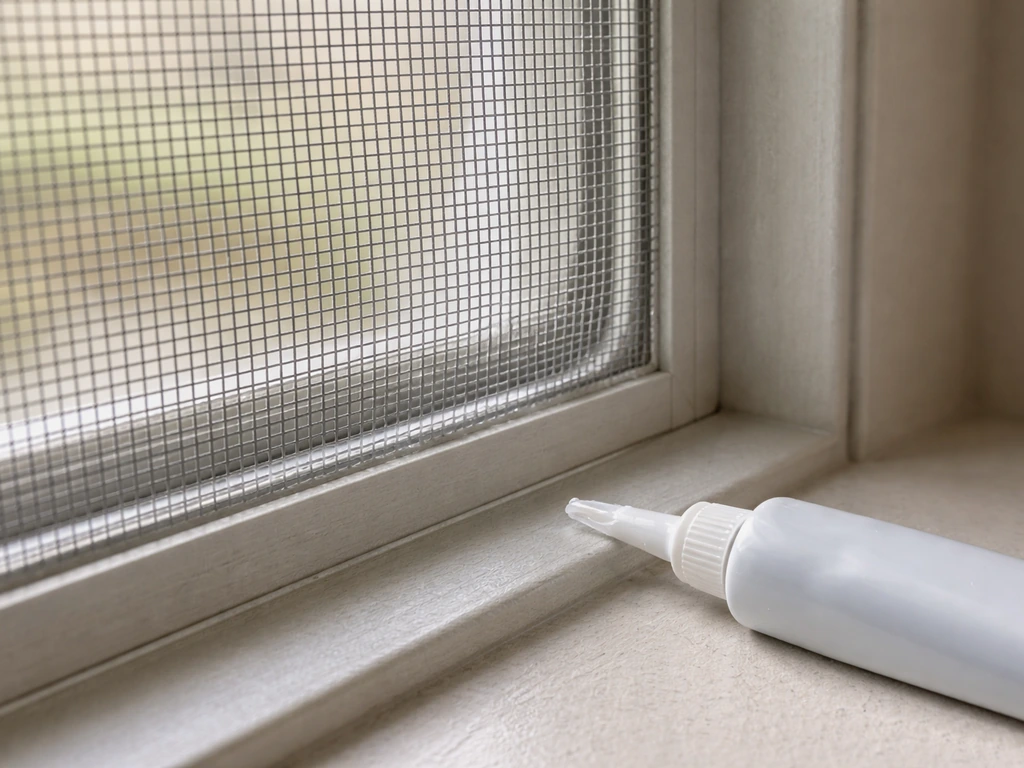
Good screens are your primary bug defense, but citronella candles alone won't reliably close the gap if your mesh has any weak spots. Research consistently shows that citronella candles and diffusers don't perform at the same level as EPA-registered insect repellents, so treat them as ambiance first and bug control second. If mosquitoes are getting in, find the gap in the screen, don't just light more candles. For outdoor entertaining, EPA-registered repellents with DEET, picaridin, or IR3535 are the proven options. Keep a few available rather than relying on decorative elements to do the work.
Choose a style and stick to it
The most common reason screened patios look unfinished is that they're a collection of mismatched stuff rather than a cohesive space. Pick a style direction before you shop. The two most popular for screened patios are natural/relaxed (think rattan, wicker, wood tones, neutral linens, and plants) and modern/clean (powder-coated aluminum or steel frames, solid-color cushions, geometric patterns). Either works well, but mixing the two without intention is where things go sideways.
For fabrics, solution-dyed acrylic is the clear winner in screened outdoor environments. Sunbrella is the most recognized brand, and fabrics in this category are genuinely fade-proof, mold and mildew resistant, water resistant, and cleanable with mild soap and water. They hold up far better than polyester blends or repurposed indoor fabric in humid conditions. This matters more in a screened space than a fully open deck because humidity and limited direct sun can actually encourage mildew on cheaper materials.
| Material | Fade Resistance | Mold/Mildew Resistance | Best For |
|---|---|---|---|
| Solution-dyed acrylic (Sunbrella) | Excellent | Excellent | Cushions, pillows, curtains |
| Polyester outdoor fabric | Good | Moderate | Budget cushion covers |
| Olefin/polypropylene | Good | Good | Rugs, some upholstery |
| Indoor fabric repurposed outdoors | Poor | Poor | Avoid in screened spaces |
| Powder-coated aluminum frame | Excellent | N/A | Furniture frames, railings |
For color palettes, start with one neutral base (white, cream, gray, or warm tan) and add one or two accent colors through pillows, a rug, or planters. This approach is budget-friendly because you can swap out the accent pieces seasonally without replacing furniture. Natural tones tend to read warmer and more relaxed; cooler grays and whites read cleaner and more modern. Neither is wrong, but picking one and staying consistent makes even a modest space look intentional.
Flooring, rugs, and how to place decor without trapping moisture
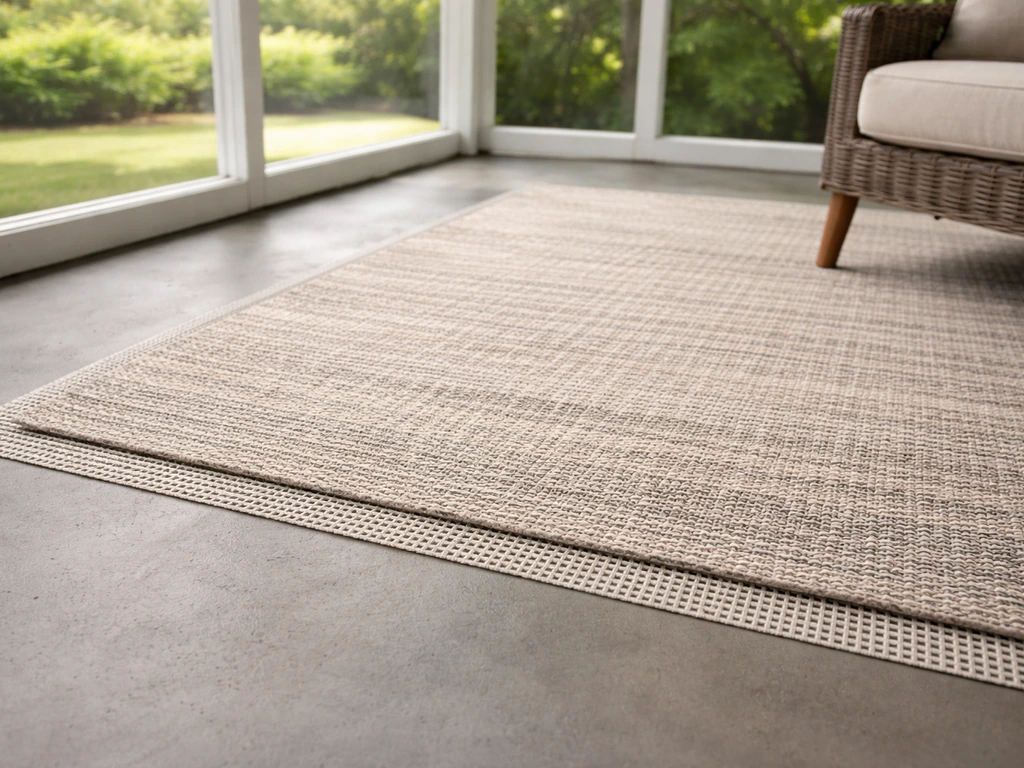
An outdoor rug is one of the fastest ways to define a seating zone and make the space feel finished. For screened patios, choose rugs made from polypropylene or other moisture-resistant synthetic materials specifically engineered for outdoor use. These resist mold and mildew far better than natural fiber alternatives. Size matters: for a lounging zone, go big enough that at least the front legs of all seating pieces sit on the rug. A rug that's too small just looks like an afterthought.
Rug pads are worth using, but choose one with an open-weave design that promotes airflow and drainage underneath. Pads that trap moisture against the floor are a mildew factory. Even with the right pad, lift and dry your rug periodically, especially after heavy rain seasons. If you need to wash it, let it air-dry fully in a sunny spot before putting it back down, and hang it if you can to let air circulate on both sides.
For decor placement on the floor, avoid anything with solid bases that sit flush and trap moisture underneath: solid ceramic pots, flat-bottomed decorative crates, and similar items need feet, risers, or drainage gaps. Side tables and plant stands with open-leg bases are much better choices than solid pedestals. Keep at least two to three inches of clearance between the bottom of any decor piece and the floor surface.
Wall, ceiling, and rail decor that works with the screens
This is where a lot of people hesitate because they're not sure what they can hang or mount without damaging the screen system. The rule is simple: never mount anything directly into the screen frame or the screen mesh itself. Always anchor into solid wood framing, posts, or the ceiling joists. That includes curtain tracks, planters, hooks, and wall-mounted shelves.
Curtains for privacy and style
Outdoor curtains are one of the best ways to add privacy, soften the look, and create the feel of an enclosed room. Mount the curtain track or rod into the solid ceiling framing or wall posts, not the screen channel. Keep the hem about an inch above the floor so it doesn't drag or slap against the screens in a breeze. For fullness, use panels that are at least 1.5 times the width of the opening you're covering. Outdoor-rated, fade-resistant fabric is non-negotiable here, and sheer panels in light colors work especially well for diffusing afternoon sun without blocking airflow.
Railing planters and hanging baskets
Rail-mounted planters are a natural fit for screened patios and add a lot of life without taking up floor space. Use bracket-style mounting hardware designed for your railing width, and always account for the weight of the planter fully loaded with soil and a watered plant. Exterior-rated screws and properly sized brackets are the only way to do this safely. Hanging baskets from the ceiling framing are another great option, but again, anchor into solid joists, not the screen frame. Keep plants positioned so they don't press against the mesh, since foliage rubbing on screen material over time causes abrasion and weakens the mesh.
Vertical accents and storage
Wall-mounted shelving bracketed into posts or wall framing can hold lanterns, small plants, and decorative objects without eating into floor space. For storage, look for outdoor-rated bins, cushion storage benches, or side tables with built-in shelves. Vertical garden pockets or wall-hung planters on post surfaces add greenery and texture without any floor footprint. Avoid anything with a large, flat back surface pressed flush against a screen panel, because it restricts airflow and can cause moisture buildup behind the piece.
Seasonal upgrades and keeping everything looking good
One of the advantages of a screened patio over an open deck is that your decor is partially protected from the elements, so seasonal transitions are easier. That said, you still want to swap out a few things to keep the space fresh and functional as conditions change.
Seasonal swaps that make a real difference
In summer, focus on cooling: light-colored cushions and fabrics reflect heat, sheer curtains on the sun-facing wall reduce glare, and the ceiling fan does heavy lifting. If your patio gets intense afternoon sun through the screens, a solar-screen fabric panel on the interior of the frame can dramatically reduce heat gain and protect furnishings from fading. In fall and cooler months, swap to deeper tones in your accent pillows and add an outdoor-rated throw blanket or two. A small outdoor-safe space heater or a wall-mounted infrared heater extends usability well into the cooler months depending on your climate.
Maintenance routines that prevent the common problems
Fading is the first thing to show up on outdoor fabrics that aren't solution-dyed, and it's irreversible. The prevention is in the material choice upfront. For pieces that do fade, UV-protective spray treatments can slow further damage but won't restore color. Mildew on cushions and rugs is the second most common issue. The fix is a mild soap and water scrub, thorough rinsing, and complete air-drying before storing or returning to use. Never store cushions or rugs while damp.
- Inspect all screen panels at the start of spring and after any major storm; patch small holes immediately before they expand
- Lift and dry outdoor rugs monthly during humid seasons; air-dry fully after any washing before replacing
- Wipe down furniture frames and cushion bases with a damp cloth every few weeks to prevent mildew buildup
- Check curtain rod and planter bracket hardware seasonally and retighten any screws that have loosened
- Run the ceiling fan in reverse (clockwise) at low speed during cooler months to circulate warm air downward
- Bring in or store lighter accent pieces like throw pillows and small decorative objects if a major storm is approaching
Wind-blown decor is a real issue even in a screened space because gusts can enter through the door. Anchor lightweight items with outdoor-rated putty, weighty bases, or hooks, and skip anything too fragile or too light to stay put. Lanterns with weighted bases, anchored planters, and heavier ceramic or concrete decor objects are more reliable than lightweight wire or plastic pieces that tip and break.
If you're still in the process of building or converting your space, the decorating decisions here connect naturally to how the enclosure itself is constructed. The screen framing layout, ceiling height, and post spacing all shape what mounting options are available, so it helps to think about decor possibilities during the build phase rather than after the fact. Whether you're working from a completed structure or still planning the enclosure, the same core principles apply: anchor into solid framing, use outdoor-rated materials throughout, keep airflow paths clear, and build the layout around how the space will actually be used. If you want a real walkthrough of the process, see how I built a DIY screened in patio from planning the layout to finishing details.
FAQ
What should I prioritize if my patio stays humid or gets little direct sun?
A good rule is to treat anything that touches water, condensation, or repeated mist as “outdoor” even if it’s technically inside the patio. Use solution-dyed acrylic for cushions, moisture-resistant synthetic rugs, and damp-rated lighting and fans. If you use natural materials like wood or wicker, look for sealed finishes and expect some seasonal cleaning, because humidity in screened spaces can still cause dulling and mildew if surfaces stay wet.
Can I use curtains on a screened-in patio without worrying about trapping moisture or damaging the screens?
Yes, but keep the fabric behavior in mind. If you add curtains, maintain airflow by keeping the hem about an inch above the floor and choose light colors or sheer panels on the sun-facing wall. For heavy curtains, use a track mounted to solid framing, not the screen, and consider tiebacks so wind and humidity do not keep fabric pressed against the mesh.
How do I hang wall decor safely if I want it close to the screen walls?
To hang art or decor near screens without risking snags, keep mounting hardware out of the screen system entirely, anchor into posts, studs, or ceiling joists, and avoid anything with sharp edges at leg or cushion height. For wall decor, prefer pieces that can be wiped clean and that have feet or standoffs if they sit close to vertical surfaces.
What size outdoor rug works best for a screened-in patio seating area?
Pick a rug size that covers the full “landing area” of the seating, at minimum the front legs of all pieces. If you have multiple seating areas, treat each like its own zone and use separate smaller rugs rather than one tiny rug under just a coffee table. Also remember screened patios tend to feel larger visually, so err slightly bigger to avoid the afterthought look.
Are there any decor items I should avoid because they could snag the screen or overload the frame?
Keep the screen plan in mind before you buy. Anything that concentrates weight on the screen system (hanging planters, heavy wall shelves, or ceiling-mounted items) should be avoided, and even lightweight items can become snag hazards if the wind swings them. If you want ceiling drops like pendants or lanterns, confirm the ceiling can support them structurally and still choose damp-rated, outdoor-appropriate fixtures.
What’s the best way to prevent mildew when storing cushions seasonally?
If you regularly see mildew on cushions or rugs, the fix starts with airflow and storage habits. Clean with mild soap and water, rinse thoroughly, and dry completely in open air before storing. Use breathable storage bins, and avoid covering furniture tightly when it’s still cool from evening temperatures, because trapped moisture condenses and encourages mildew.
If mosquitoes still get in, should I use more citronella or troubleshoot the screen first?
Yes. When citronella is your only strategy, it often fails because it does not reliably seal gaps around the screen. If bugs are coming in, inspect for loose spline, sagging mesh, or small punctures first. If the screen system checks out, then layer in EPA-registered repellents for people and consider additional physical screening like closing the door promptly.
How should I layer lighting so the patio feels welcoming and not dim?
Choose outdoor lighting based on where you want the light to land, not just the fixture style. For general ambience, string lights or a ceiling-mounted fixture works well. For reading or dining, add a damp-rated sconce or lantern near seating. Use warm color temperature bulbs (around 2700K to 3000K) and check that any fixtures are outdoor-rated specifically for covered patios.
Does adding plants and hanging decor affect cooling from a ceiling fan?
You can, and it can help a lot with comfort, but do not block the “upper exit” zone. Keep bulky decor and planters from pressing against screen panels at higher levels, and avoid hanging items from areas that would interfere with airflow. If you’re adding suspended decor, use lighter pieces and keep them clear of the upper portion of the screens.
What’s the easiest seasonal update for a screened-in patio without redoing everything?
The simplest way is to keep the structure consistent and swap accessories. Change accent pillows, throws, and planters for each season, and use adjustable window treatments like sheer curtains for summer glare. In cooler weather, add deeper-toned cushions and outdoor-rated blankets, then consider a small outdoor heater if your climate requires it.
Next Articles
How to Turn a Patio Into a Screened-In Porch
Step-by-step DIY on how to turn a patio into a screened-in porch, from planning and framing to screens, utilities, and p
How I Built a DIY Screened-in Patio Step by Step
Step-by-step DIY screened patio build: planning, framing, posts, screen panels, doors, sealing gaps, and fixes.
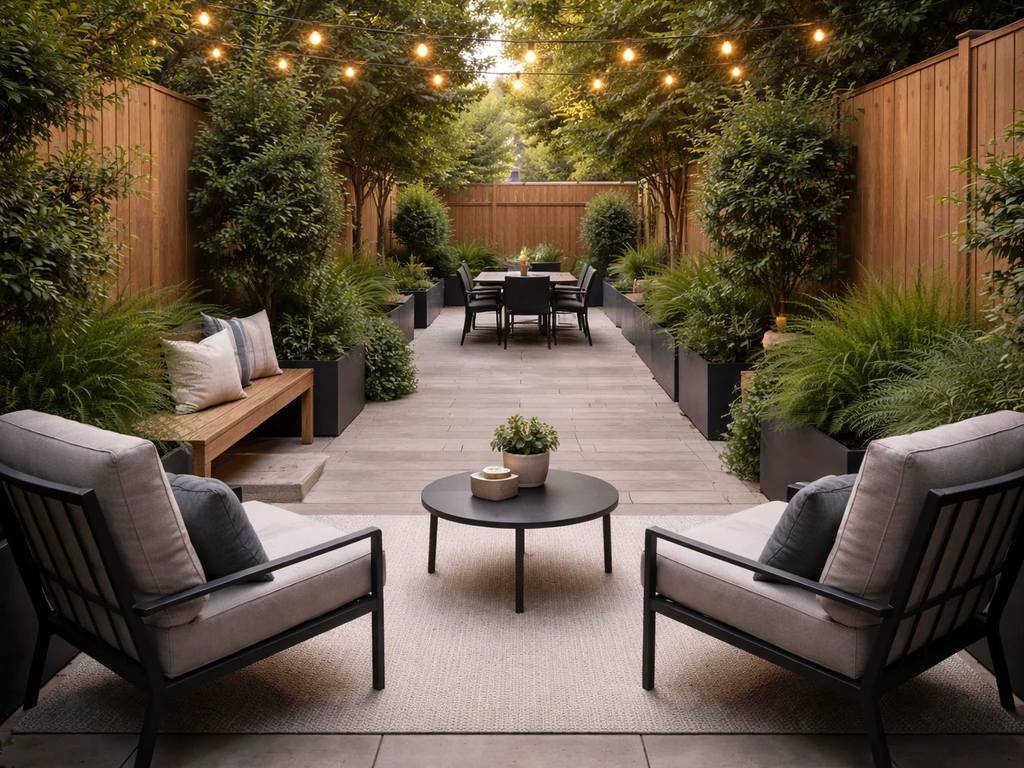
How to Decorate a Long Narrow Patio: Layout Tips
Practical DIY layout and decor tips to widen a long narrow patio using zoning, furniture spacing, lighting, greenery, an