To decorate your patio for summer, start with a clear style direction, layer in weather-resistant textiles and lighting, carve out separate shade and dining zones, add container plants for color and life, then build a simple cleaning and refresh routine so everything still looks good in late August. If you want to go beyond neutrals, add color to outdoor patio spaces by layering cushions, outdoor rugs, planters, and weather-rated lighting. That's the whole game. The details below will walk you through each step in order, with specific product types, placement measurements, and a same-day checklist you can actually use.
How to Decorate Your Patio for Summer: Step by Step

Felix Brennan
1 Jul 2026
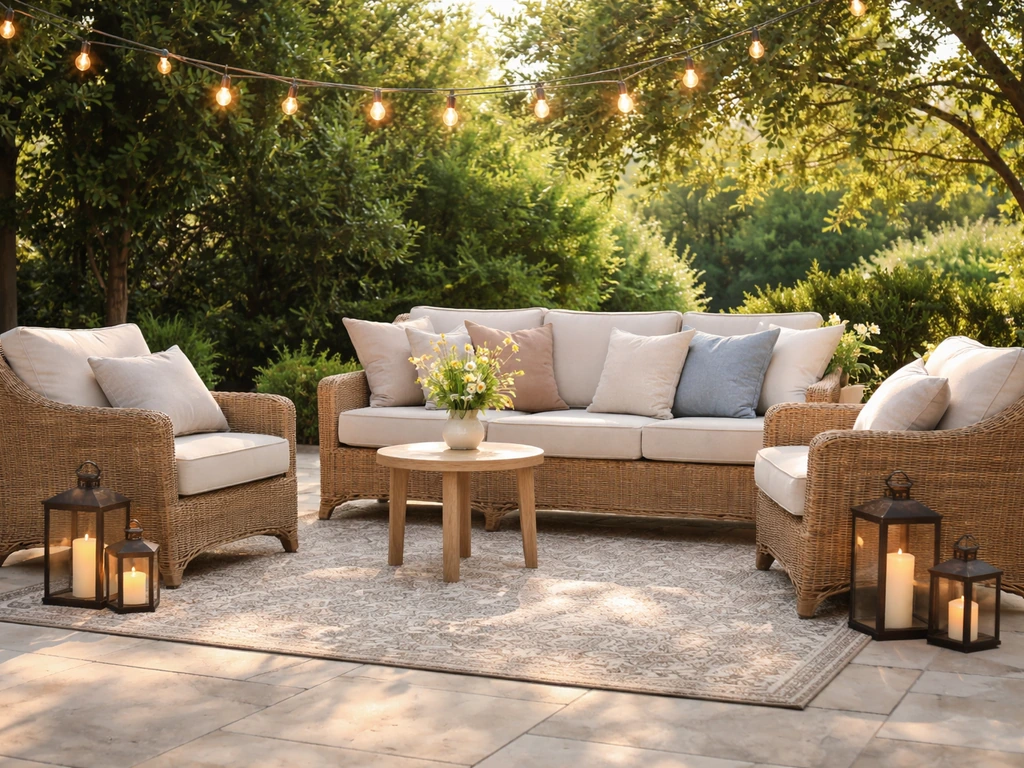
Start with a summer design plan
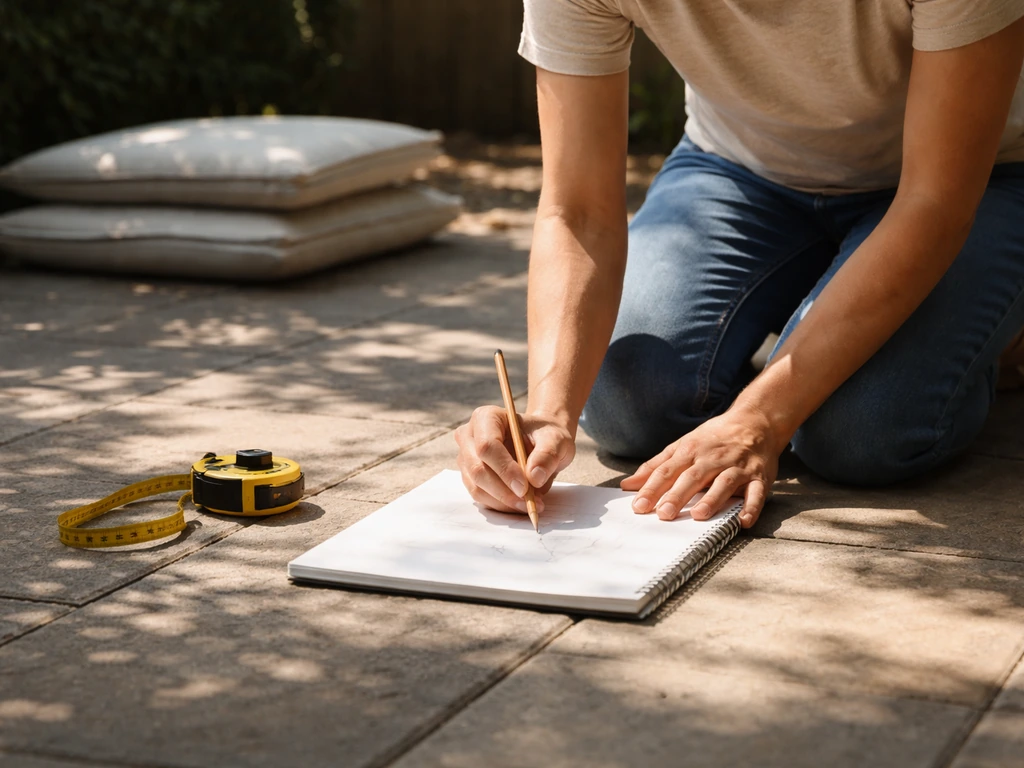
Before you buy a single throw pillow, spend 10 minutes walking your patio at the time of day you use it most. Note where the sun hits hardest, where it's shadiest, where people naturally stand or sit, and what existing materials (concrete, pavers, wood decking, tile) are already setting the tone. After you’ve mapped your space and picked your colors and style, you can turn it into a complete patio deck look with the right fabrics, rugs, lighting, and plants. Your decor needs to work with those conditions, not fight them.
For summer specifically, the best color directions are ones that feel cool and fresh under bright light. Think coastal whites with navy and warm sand tones, earthy terracotta and sage green, or a bold tropical palette of coral, banana yellow, and deep leafy green. All of these read as intentional and summery without competing with the sun. Avoid very dark solids for large items like cushion covers and rugs because they absorb heat aggressively and fade fast under UV exposure.
Pick one dominant style word and stick to it. 'Coastal,' 'Bohemian,' 'Modern,' or 'Tropical' each pulls in a distinct set of shapes, textures, and materials. If you're unsure, look at what the interior of your home faces when the patio door is open. Extending that palette outdoors by one or two tones creates a natural visual flow that makes even a small patio feel like a planned room.
Matching the layout to your space
Before anything else, sketch a rough footprint with measurements. A typical 10x12 patio can hold a small dining set and one lounge chair, but not much more without feeling cluttered. A 12x20 space can support a full dining zone, a separate 2-3 piece lounge area, and a planter border. Knowing your square footage in advance stops you from buying furniture that doesn't fit or leaves dead corners you can't fill meaningfully.
Outdoor decor essentials: fabrics, rugs, and table styling
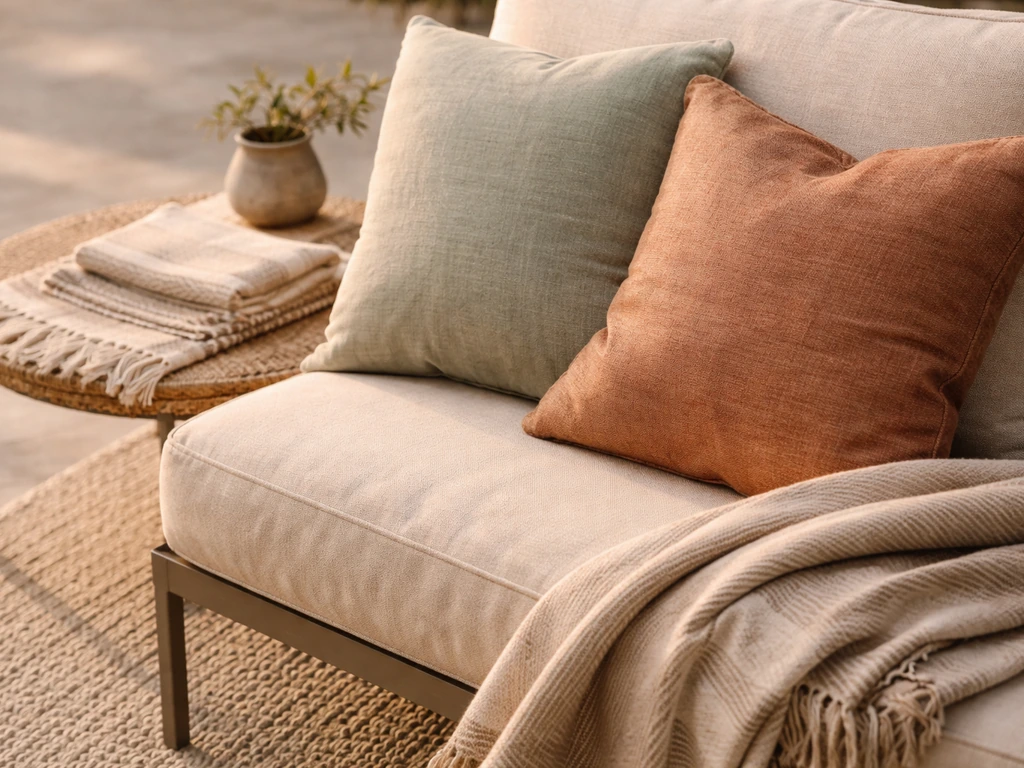
The single biggest upgrade most patios need is better textiles. Cushions, rugs, and throws transform raw furniture frames into a room that actually invites you to sit down. But outdoor textiles are not all the same, and choosing wrong costs you money by mid-July.
Cushions and pillows
Look for fabrics specifically rated for outdoor use. Solution-dyed acrylic fabrics (Sunbrella is the benchmark brand) have color dyed all the way through the fiber rather than printed on the surface, which makes them genuinely fade-resistant and UV stable. They're also resistant to mold, mildew, and moisture. Expect to spend $25-60 per cushion cover for quality fabric at this level, and it's worth it because cheap printed polyester covers usually look washed out by early August.
The foam core matters just as much as the cover. The main risk with outdoor cushion foam is staying wet too long, which leads directly to mold and mildew inside the cushion even when the cover looks fine. Choose quick-dry, open-cell foam or closed-cell foam labeled specifically for outdoor/marine use, and store cushions in a dry place or bring them inside during heavy multi-day rain periods. Even great foam benefits from cushion covers that zip off easily for washing.
Outdoor rugs
Polypropylene and polyester outdoor rugs are the practical choice: they're stain resistant, mold and mildew resistant, and quick drying. A rug under a seating group immediately anchors the zone and adds color with very little effort. For a standard 4-chair lounge group, a 5x8 rug is the minimum size that looks intentional rather than like an afterthought. For a dining set, size up to an 8x10 so all chair legs land on the rug even when chairs are pulled out.
Rotate your outdoor rug twice per season (once at the start of summer, once at mid-point) so high-traffic areas wear evenly. For spills, blot immediately rather than scrubbing to avoid pushing the stain deeper. If mildew develops, a solution of equal parts white vinegar and water or a baking soda paste scrubbed with a stiff brush then rinsed thoroughly handles most cases. Let the rug dry completely in the sun before putting furniture back on it.
Table decor and small accents
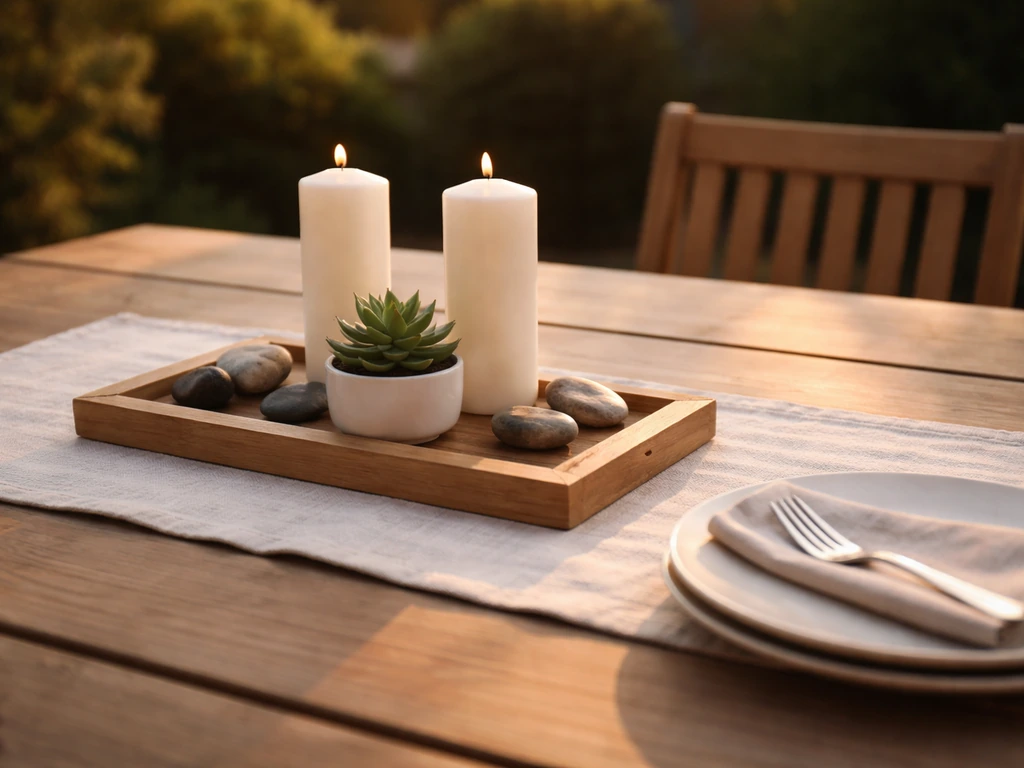
For outdoor table styling, keep it simple and weighted. A low centerpiece (a tray with candles, a small potted succulent, or a bowl of river rocks with a single plant cutting) works better than tall arrangements that catch wind and tip over. Use melamine or enamelware dishes outdoors rather than ceramic, which chips on hard patio surfaces. A tablecloth made from outdoor-rated fabric adds color and protects the table surface, but clip it to the table edge on windy days.
Lighting for summer evenings
Good patio lighting extends usable hours into the evening, which is often the most comfortable time to be outside in July. The three layers to work with are overhead string lights for ambient glow, lanterns or table lights for task and accent light, and path lighting if you have steps or a garden border.
String lights
String lights are the fastest way to add warmth and character to a patio at low cost. The key rule for outdoor use: always plug into a GFCI-protected outlet. The National Electrical Code (NEC 210.8(F)) requires GFCI protection for outdoor outlets in dwelling units, and it's there for a real reason. If your outdoor outlet doesn't have GFCI protection (look for the test/reset buttons on the outlet face), have an electrician add it before running lights. Also confirm the string lights you buy are rated 'wet location' or 'wet rated' if they'll be exposed to direct rain.
For placement, a simple zigzag pattern from house to fence posts or overhead beams gives even coverage. Warm white (2700K-3000K) is the most flattering color temperature for outdoor dining and lounging. Avoid cool white (5000K+) for ambience because it reads as harsh and clinical in an outdoor setting.
Lanterns and table lighting
Solar or battery-powered lanterns eliminate the cord management problem and work well on tables, steps, and planter ledges. Pair them with real or flameless candles inside for flicker that photographs well and creates genuinely relaxing atmosphere. Cluster three lanterns at varying heights on a table or bench for a more intentional look than setting one alone.
Path and step lighting
If your patio has steps or connects to a garden path, low-voltage path lights make the space both safer and more polished after dark. Space path fixtures roughly 6 to 10 feet apart, staggered on alternating sides of the path rather than directly across from each other. This spacing pattern minimizes dark gaps between fixtures and gives a more natural, flowing light line. Solar-stake path lights are the easiest DIY install and require no wiring.
Plants and vertical greenery
Plants do more work for a patio than any other decor element. They add color, filter air, create visual privacy, and soften hard surfaces. The trick is placing them strategically so they thrive in your specific light conditions rather than struggling against them.
Choosing the right containers
Pick a container slightly larger than the combined root ball of whatever you're planting. This gives roots room to grow without leaving so much extra soil that it stays waterlogged between waterings. Use a potting mix that includes perlite or vermiculite. Both of these mineral amendments improve drainage and air space in the root zone, which is critical in containers because the roots can't escape sideways the way they do in garden beds. Skip regular garden soil entirely in containers because it compacts and drains poorly when confined.
Sun, shade, and plant placement
Most flowering annuals and edible plants need at least 6 to 8 hours of direct sun daily to bloom and produce well. Petunias, geraniums, calibrachoa, and lantana are strong performers in full-sun patio spots and flower through the heat of summer. For shadier areas (under a pergola or awning), swap in impatiens, begonias, caladiums, or ferns. Container performance also depends on wind exposure and temperature: a pot sitting on a hot concrete surface in full afternoon sun dries out twice as fast as one on a covered deck. Elevating pots slightly on pot feet improves drainage and airflow under the container.
Vertical greenery and hanging baskets
Vertical elements pull the eye upward and make a patio feel larger. Hanging baskets from a pergola or porch beam, a wall-mounted planter grid, or a tiered plant stand against a fence all accomplish this without taking up floor space. Trailing plants like sweet potato vine, bacopa, and ivy work especially well in hanging baskets because they spill down and create a lush, full look quickly. For a privacy screen effect, a row of tall ornamental grasses or columnar evergreens in large floor pots along a fence line adds a soft green backdrop to the whole space.
Comfort and shade coordination
The most beautifully decorated patio in the world gets abandoned by noon in July if there's no shade. Before finalizing your layout, honestly assess your sun exposure. If your patio faces west or southwest, afternoon sun will be brutal without deliberate shade solutions. If it faces east or is already under a roof overhang, you have more flexibility.
Separating dining and lounging zones
Treat your patio like a room with distinct zones. For a wedding, this zone approach also helps you design a comfortable setup for guests, photos, and the party flow how to decorate a patio for a wedding. The dining area needs a flat, level surface, easy chair movement, and proximity to the house entry. The lounge area benefits most from shade, softer seating angles (reclined rather than upright), and a side table for drinks. Separate the two zones with a rug, a planter row, or even just a 3-foot gap. This small division makes the patio feel organized and gives each use its own identity without requiring a wall.
Shade solutions that work with decor
A market umbrella is the simplest shade fix for a dining table, but it requires a base weighted for wind or a center-hole table. Cantilever umbrellas free up table space and can be positioned over a lounge group. Shade sails in natural canvas or UV-blocking polyester fabric are a more architectural option that can double as overhead decor when strung at an angle between posts. For a more permanent feel, a pergola with a retractable canopy or lattice top with climbing plants gives the most shade flexibility over time.
Wind matters too. A windbreak structure only needs to be tall enough to create a sheltered zone downwind. The general principle: a windbreak reduces wind speed for a distance roughly equal to several times its height on the leeward side. Windbreak effectiveness is related to the windbreak's structure height, reducing wind speed downwind for distances on the leeward side [a windbreak reduces wind speed for a distance roughly equal to several times its height on the leeward side.
](https://www. montana. edu/extension/gallatin/documents/naturalresourcesdocuments/GallatinCoBasicGuide. pdf).
Even a solid privacy fence, a hedge row of tall containers, or a section of outdoor curtains panels attached to a pergola frame can take the edge off consistent afternoon wind and make lightweight decor items stay put. Outdoor curtains also soften the visual boundary between the patio and yard without blocking light entirely.
If your patio already has a screen enclosure or partial enclosure, you're ahead of the game. An enclosed patio keeps wind, insects, and even some afternoon heat in check, which lets lighter-weight textiles and more delicate decor hold up better through the season. For anyone who hasn't yet tackled enclosing or covering their patio, those structural upgrades genuinely make the decoration work better year-round.
Weatherproofing, cleaning, and keeping it fresh all summer
Summer decor that starts looking rough by the Fourth of July is a materials and maintenance problem. Get ahead of both by choosing right from the start and building a light care routine into your schedule.
Weatherproofing before the season starts
- Seal or re-stain wood furniture, decking, or pergola beams at the start of summer. Most exterior wood sealers recommend reapplication every 1-2 years, but checking each May takes 10 minutes and prevents big repairs later.
- Apply a UV-protective fabric spray to any outdoor textiles that aren't solution-dyed (like printed polyester covers or standard canvas). It won't make them as resistant as purpose-built outdoor fabrics, but it extends color life noticeably.
- Check all metal furniture for rust spots. Sand lightly, prime with a rust-inhibiting metal primer, and touch up with spray paint rated for outdoor metal before rust spreads.
- Inspect string light connections for cracked or damaged insulation before plugging in for the season.
Mid-season cleaning routine
Plan a quick patio refresh every 3-4 weeks through summer. Hose down the floor surface and furniture frames. Wipe cushion covers with a damp cloth and mild soap, then let them air dry fully before storing or sitting on them. Check your outdoor rug for mildew, especially underneath where air circulation is lowest. Deadhead flowering container plants to keep them blooming and remove any yellowing or dead foliage. Refill or replace solar light batteries if output has dropped.
When to bring things in
Even the best outdoor fabrics benefit from storage during extended storms. Bringing cushions inside or into a deck box during a 2-3 day rain event prevents the wet-foam mold problem mentioned earlier and adds years to the cushion life. Lightweight decor items like lanterns, trays, small planters, and table accents should come in at the first sign of tropical weather or high wind. A waterproof deck box or storage bench is one of the most practical patio investments you can make and functions as extra seating too.
Decorate today: your step-by-step checklist and starter layout
Here's how to go from bare patio to a functional, good-looking summer space in one weekend. Once your patio is staged for summer, you can use the rest of these tips to choose furniture, textiles, lighting, and shade so the whole space feels finished bare patio. The quick wins are things you can do today with items you may already have or can pick up at any home improvement or garden center. The upgrade path is for the next few weekends as budget allows.
Same-day quick wins
- Measure your patio footprint and sketch two zones: dining and lounging. Mark where the sun hits each zone at 2pm.
- Place an outdoor rug (minimum 5x8 for lounging, 8x10 for dining) in each zone to anchor the furniture.
- Swap out any indoor or faded cushions for outdoor-rated replacements in your chosen summer color palette.
- Add at least 3 container plants: one large (12-14 inch pot) for floor placement near the lounge zone, one hanging basket at the entry or overhead beam, and one small pot on the dining table.
- String warm-white lights overhead or along the fence line. Confirm you're plugging into a GFCI outlet.
- Set up your shade solution: open the patio umbrella, hang a shade sail, or adjust an existing awning or canopy to cover at least the lounging zone.
- Add 2-3 lanterns or solar lights along steps, table, or planter borders for evening use.
Starter layout for a 12x16 patio
| Zone | Furniture | Decor | Shade/Light |
|---|---|---|---|
| Dining (8x10 area) | 4-chair dining table | Outdoor rug, tablecloth, low centerpiece with potted herb | Market umbrella or shade sail overhead, string lights above |
| Lounge (6x8 area) | 2-3 piece seating group or loveseat + chairs | 5x8 rug, 4-6 throw pillows, side table with lantern | Cantilever umbrella or pergola with curtain panels |
| Entry/Border | Plant stand or planter row along fence | Tall ornamental grasses or columnar shrubs in pots, hanging basket at door | Path lights spaced 6-8 feet apart along edge |
| Vertical accents | Wall-mounted planter grid or trellis with climber | Trailing plants, outdoor artwork or mirror | Solar wall sconce or clip-on spotlight |
Longer-term upgrade path
- Add a pergola or shade structure to make your lounge zone genuinely comfortable in afternoon heat without relying on a portable umbrella.
- Install a screen enclosure or privacy panels to reduce wind, block insects, and let lighter-weight decor items hold up through summer storms.
- Upgrade to permanent low-voltage landscape lighting with a timer so the path and accent lights run automatically at dusk.
- Build or buy a deck storage box to store cushions during rain and keep the patio looking tidy.
- Consider a ceiling fan rated for outdoor damp or wet locations if your patio has an overhead cover, since moving air makes a 10-15 degree difference in perceived temperature.
Once your patio is in good shape for general summer use, it's worth thinking about specific moods or occasions. A tropical-themed patio takes the color and plant layers further with oversized leafy plants, rattan furniture, and bold patterned textiles. If you're decorating for a specific event like an outdoor gathering or wedding, staging and focal-point decor become the priority rather than daily-use comfort. And if you want to go deeper on color alone, coordinating your textiles, plants, and hard surfaces around a single palette makes even a simple patio look professionally put together. All of those directions build naturally on the foundation you're laying today.
FAQ
Can I leave patio cushions, rugs, and string lights out in summer rain?
If you plan to leave items out all summer, prioritize “wet location” lighting and fully outdoor-rated textiles (solution-dyed acrylic for cushions and polypropylene or polyester for rugs). For anything not clearly labeled for outdoor use, plan to store it after storms or when rain lasts more than a day.
What should I change for decorating if my patio gets windy?
Yes, but do it intentionally. Place heavier pieces (ottomans, rug corners, planters) on non-slip pads or outdoor furniture grippers so they don’t shift, and anchor umbrellas with a proper wind-rated base. For lightweight decor like lanterns and trays, bring them in during high wind alerts.
How do I decorate with darker colors without making the patio too hot?
For heat, treat dark fabrics and large black planters as “heat magnets.” If you love a dark look, limit it to small accents (throw covers, a small tray, a couple of planters) and keep the rug and main seating colors lighter to reduce scorching and faster fading.
How do I pick the right pot size and placement for container plants in hot weather?
Start with containers that match your plant’s sun needs, then choose pot sizes based on root growth. In full sun, slightly larger pots (but only moderately larger than the root ball) help slow drying, and elevating the pot on feet improves airflow and drainage from the start.
What’s the best way to handle a patio with both full sun and shade?
If your patio has mixed light, split plants into zones by sun exposure instead of mixing everything in one area. Use taller, shade-tolerant plants farther from the brightest wall, and move sun-lovers (like flowering annuals) to the spots you identified during your time-of-day walk.
How do I avoid a patio layout that looks good but feels cramped?
Give yourself an escape plan. After you place your rug and seating, check that walk paths still feel clear, and leave enough gap between the lounge and dining zone for chairs to pull out. A quick test is to simulate everyday movement (pull chair, stand up, pass through) before you finalize small decor.
What’s the safest way to clean an outdoor rug in summer?
Don’t just spot-clean. For outdoor rugs, blot spills immediately, but schedule a deeper clean and full dry when the weather turns. Make sure both the rug and any underlayment are completely dry before using them again, or mold can reappear underneath.
Can I use candles and lanterns for patio lighting without creating a safety risk?
Yes, if you use battery or solar options rated for outdoor exposure, and you keep the light sources at safe heights. Use real or flameless candles inside lanterns, but avoid placing candles near curtains, overhangs, or anything that can shift with wind.
Does an enclosed patio change what materials I should choose?
If your patio is screened or partially enclosed, you can use a wider range of textiles and slightly heavier decor because wind and insects are reduced. Still, airflow matters for mildew, so keep rug drying and cushion storage habits consistent, especially after multi-day rain.
How can I decorate for a summer party so it looks styled for photos but stays functional for guests?
For gatherings, build one “hero spot” with a focal arrangement (table centerpiece or a cluster of lanterns), then repeat the color through small accents to look cohesive in photos. Keep items that can block movement (tall plants, low benches) positioned at the edges of the zone instead of in the middle of traffic flow.
Next Articles
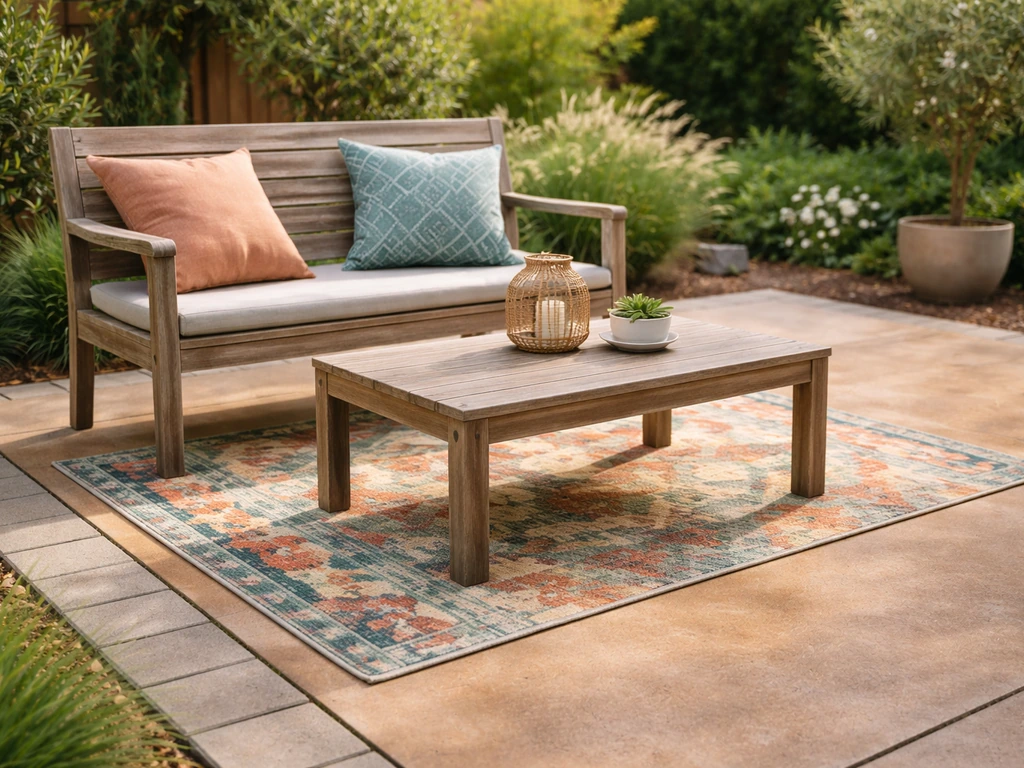
How to Add Color to an Outdoor Patio: DIY Guide
Step-by-step DIY guide to add lasting color to concrete, pavers, wood, and metal patio surfaces with prep, cure, and mai
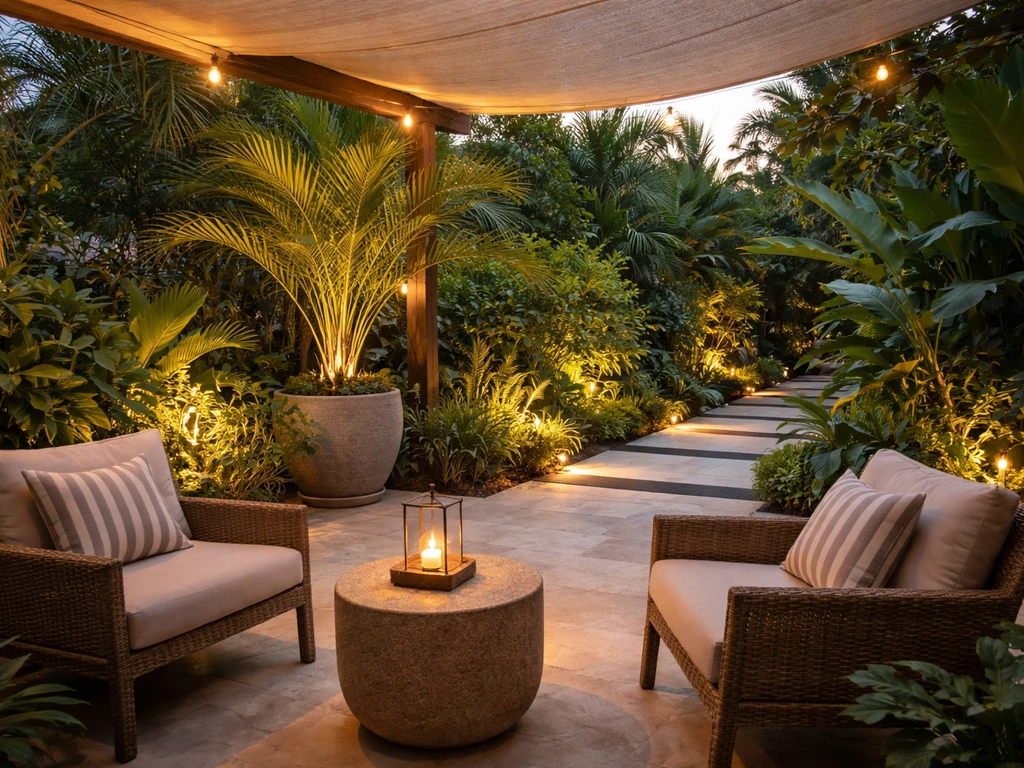
How to Make a Tropical Patio: DIY Step by Step Guide
Step-by-step DIY guide to turn your patio tropical with plant picks, shade and privacy, outdoor upgrades, and maintenanc
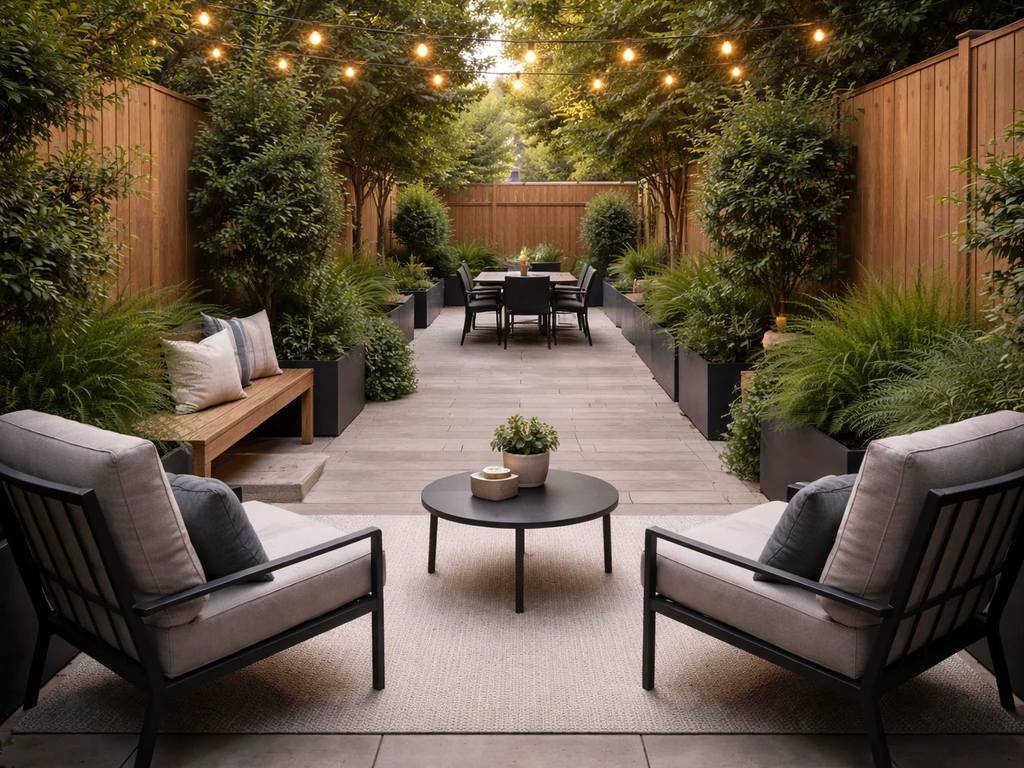
How to Decorate a Long Narrow Patio: Layout Tips
Practical DIY layout and decor tips to widen a long narrow patio using zoning, furniture spacing, lighting, greenery, an