The best way to block west sun on a patio depends on how fast you need relief and how permanent you want the solution. For today: a shade sail, a large offset patio umbrella, or outdoor curtains can knock out most of the direct glare in an afternoon. If you want a quick answer to what you can use for shade on your patio, start with a shade sail, an offset patio umbrella, or outdoor curtains for immediate relief.
How to Block West Sun on Patio: DIY Shade Options

Felix Brennan
2 Jun 2026
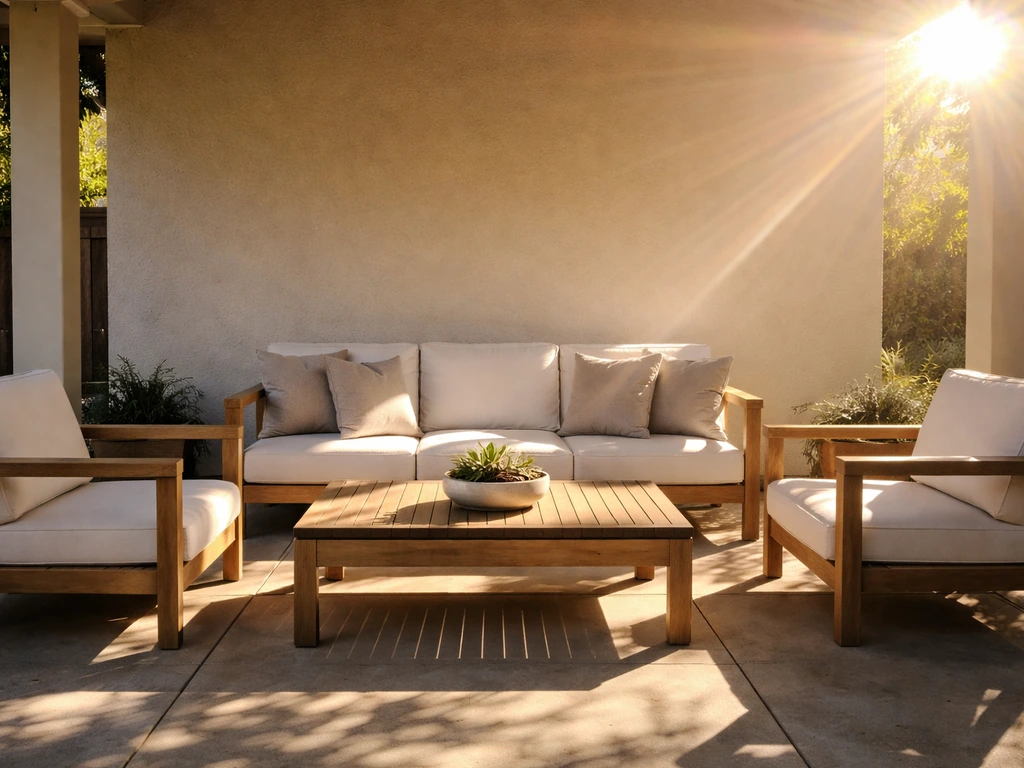
For the long haul: a retractable awning or a solid patio cover with reflective roofing does the job properly and adds real value to the space. West sun is a specific problem because it hits low and late, usually between 2 PM and sunset, which means standard overhead shade often isn't enough. You need something that blocks the angle, not just the overhead rays.
Figure Out Where the West Sun Actually Hits Your Patio
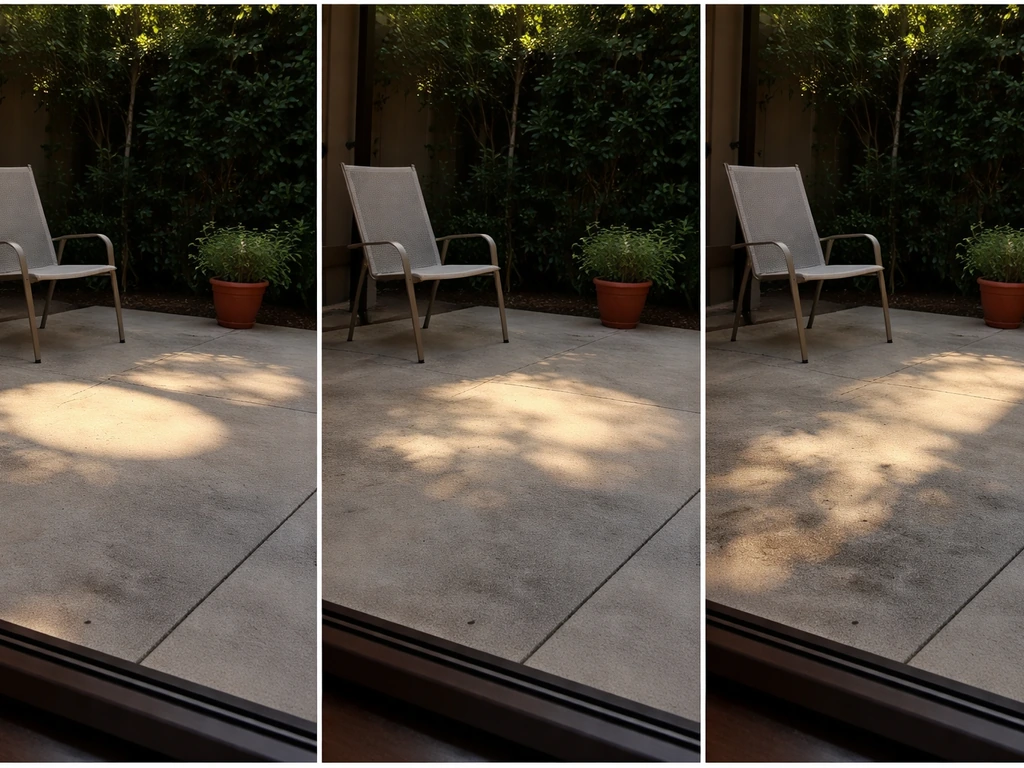
Before you buy or build anything, spend one afternoon watching what happens on your patio between noon and sunset. West sun doesn't arrive straight down. In summer, the sun arcs high through midday and then drops toward the horizon as it swings west, which means by 3 or 4 PM it's throwing long, low-angle light almost horizontally across your patio. That's what makes it brutal. In winter, the sun stays lower all day, so west exposure can start bothering you earlier.
Walk out to your patio at 2 PM, 3 PM, 4 PM, and 6 PM. Take a photo each time and note which parts are in direct sun. Mark the zones on a rough sketch. Pay attention to whether the sun is coming through the side of the patio (low and lateral) or from overhead.
Most west patios get a combination of both in summer. If you want to get precise, a free app like SunPath lets you point your phone camera at the sky and see the sun's path overlaid on your view, which helps you visualize exactly where the sun will be at any time of day on any date. This matters a lot when you're deciding whether to mount shade to the house wall or set posts out from the edge.
The other thing to check: how long does the intense heat last? If it's only brutal from 5 PM to sunset, a retractable solution you deploy late in the day might be all you need. If your patio bakes from 1 PM onward, you're looking at a more substantial covering. Write down the hours when the patio is genuinely unusable. That window tells you what coverage area you need and how much structure you're justified in building.
Quick Fixes You Can Put Up Today
If you need to use the patio this weekend, here are the options that can be set up with minimal tools and minimal commitment.
Offset patio umbrella
A cantilever-style offset umbrella with a weighted base is the fastest fix. The offset arm lets you position the canopy to block sun coming from the side rather than just overhead, which is exactly what west sun demands. Look for a 10-foot or larger canopy with a tiltable head. Weighted bases need to be substantial (50 to 100 pounds of ballast) if you live anywhere with afternoon wind, which tends to come with summer heat. Don't skip the ballast. These are a common tipping hazard when underweighted.
Shade cloth hung vertically or at an angle
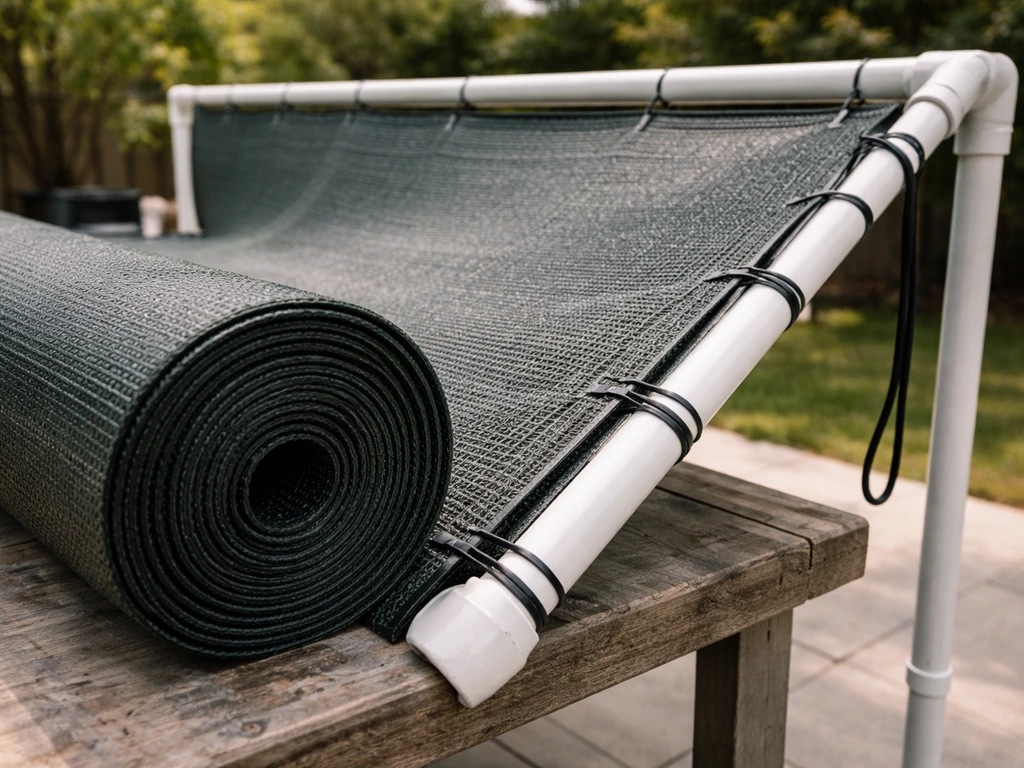
A roll of 80 to 90 percent shade cloth from a hardware store or online supplier can be zip-tied to an existing fence, pergola, or temporary PVC pipe frame in a couple of hours. For west sun, hang it vertically on the west-facing side of your patio or angle it from the roofline down to a fence post to block that low-angle light. Shade cloth is cheap (often under $40 for a 6x10 panel), breathable, and easy to take down at the end of the season. It's not pretty, but it works immediately.
Outdoor curtain panels
If you have a pergola or overhead beam to hang from, outdoor curtain panels are a great same-day fix. Use a tension rod or a length of conduit with curtain rings. Pull them closed when the sun swings west and tie them back when you don't need shade. Stick to light colors or reflective white panels since these reflect more solar radiation than dark fabrics. This is the same principle behind window treatments for heat control indoors: silver or light-colored materials turn away significantly more heat than darker, more transparent ones.
Permanent Shade Options Worth Building
Temporary fixes solve the immediate problem, but if you're using this patio regularly through summer, investing in something permanent makes the space genuinely livable. Here are the three most practical options for a west-facing exposure.
Retractable awnings
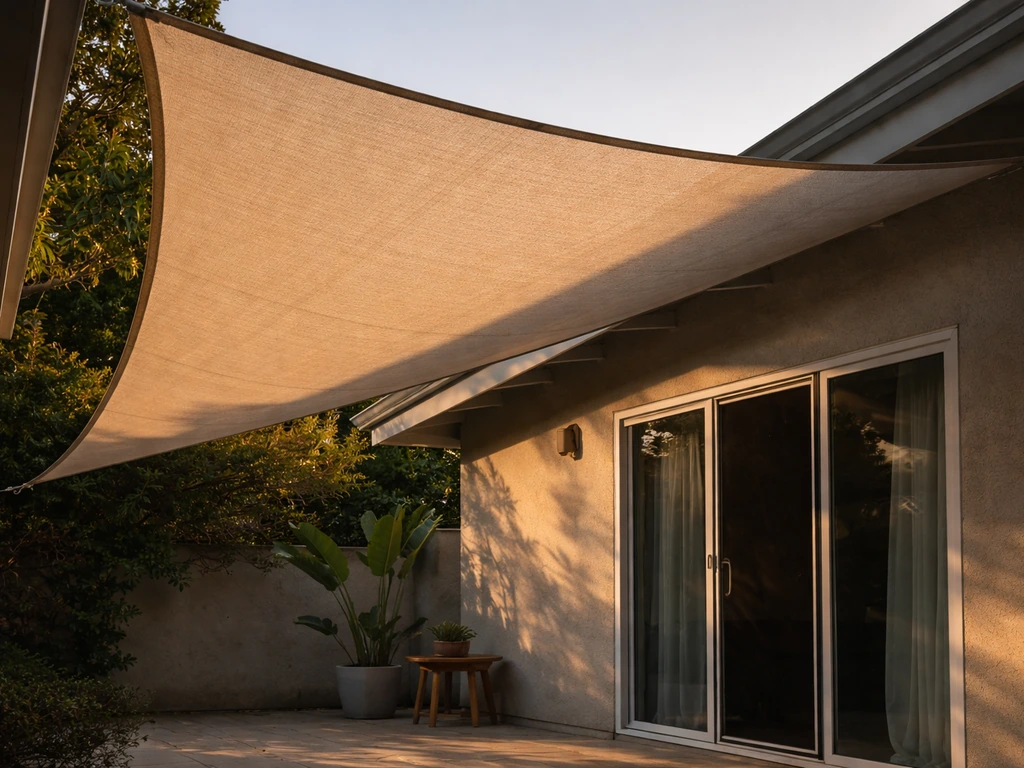
A retractable awning mounted to the house wall is probably the most flexible permanent solution for west sun. You can pitch the fabric at a steeper angle to catch low-angle afternoon light, and you retract it when you don't need it or when wind picks up. Retractable awnings typically cover 12 to 20 feet of width, which handles most standard patio sizes. Look for one with adjustable pitch so you can tilt the leading edge lower in the afternoon when the sun is at its most horizontal. The mounting point needs to hit solid structure, so locate your ledger board or band joist before choosing a position.
Shade sails
Shade sails are a genuinely good solution for west sun because you can angle them asymmetrically to block a specific direction rather than just the sky above. A triangular or rectangular sail attached at two high points on the house side and one low point on a ground post out toward the west creates a tilted plane that intercepts that low-angle afternoon light effectively. They look good too.
The keys to making them work long-term are proper hardware (stainless steel D-rings and turnbuckles, not the cheap hooks that come in the bag) and correct tensioning. A slack sail flaps in wind and degrades fast.
A properly tensioned sail is taut and stable. Always check the wind rating of the sail you buy and make sure your mounting points are anchored into something structural. Check the hardware and tension a few times per season.
Pergolas
A pergola by itself doesn't block much west sun since the open rafters let in plenty of low-angle light. But a pergola combined with a shade sail overhead, retractable shade panels on the west side, or a louvered roof system becomes a highly effective structure. Motorized louvered pergolas, where individual roof slats rotate to any angle, are the premium option here.
They let you dial in exactly how much light and air you want at any time of day, and most systems include wind sensors that automatically close the louvers if a storm rolls in. They're more expensive than a basic pergola (budget $8,000 to $20,000 installed depending on size), but for a patio you use heavily, they're worth the consideration.
| Option | Best For | Typical Cost (DIY) | West Sun Effectiveness | Wind Resistance |
|---|---|---|---|---|
| Offset umbrella | Small patios, renters, quick fix | $150–$400 | Good for localized shade | Low (needs ballast) |
| Shade sail | Medium patios, angled coverage | $100–$500 + hardware | Excellent if angled correctly | Moderate (depends on install) |
| Retractable awning | House-attached patios, flexibility | $800–$3,000 | Very good with adjustable pitch | Good (retract in high wind) |
| Fixed pergola + shade cloth | Larger patios, permanent look | $1,500–$5,000 | Good with added side panels | Good if engineered properly |
| Louvered pergola (motorized) | Premium patios, full control | $8,000–$20,000 installed | Excellent, fully adjustable | Excellent (sensor-automated) |
Hard Enclosures and Screen Systems That Cut Solar Heat
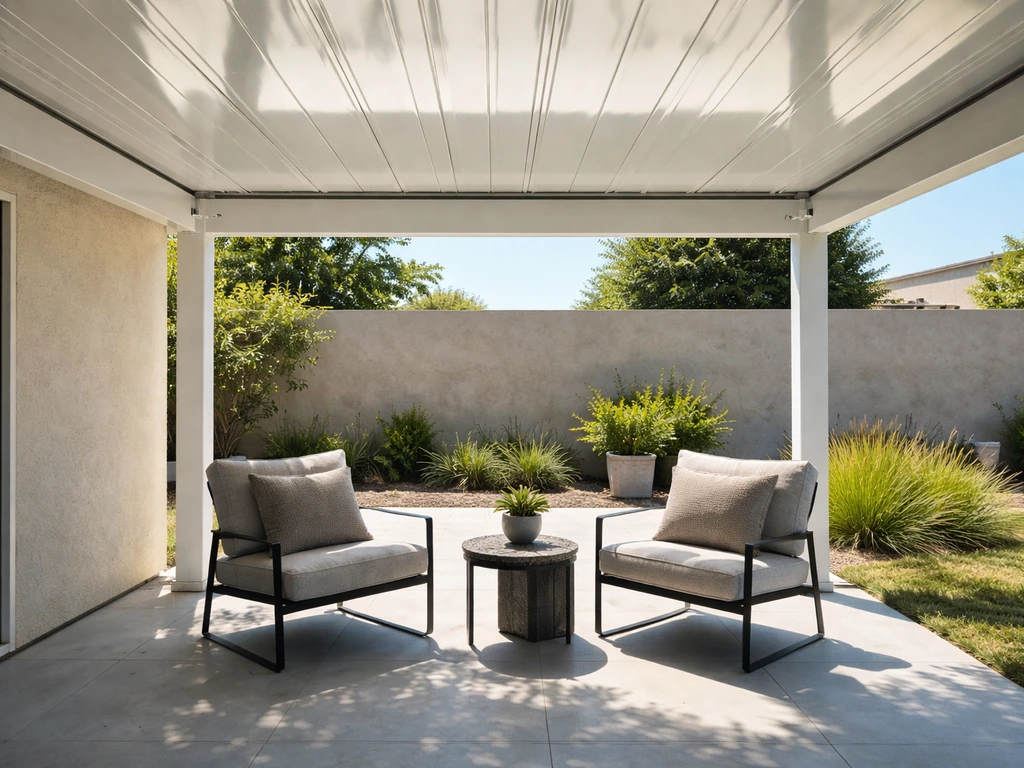
If you want to go beyond shade and actually enclose the patio, you have some solid options that reduce heat gain significantly rather than just blocking direct sunlight.
Solid patio covers with reflective or cool roofing
A solid roof attached to the house, built with aluminum or wood framing and covered in reflective metal roofing or polycarbonate panels, is one of the most effective long-term solutions. The key is what you put on top. Reflective cool-roof materials (light-colored or metallic surfaces with high solar reflectance) reduce the amount of heat that flows through the roof into the space below.
If you go with polycarbonate panels, look for UV-stabilized product, since standard polycarbonate yellows and loses performance within a few years in direct sun. UV-stable grades are rated for ten-year performance and are worth the extra cost. Under the roof, [adding a radiant barrier layer](https://www. energy.
gov/energysaver/weatherize/insulation/radiant-barriers) (aluminum foil-faced insulation with an air gap on the underside) can further cut radiant heat transfer into the covered patio. The DOE's guidance on radiant barriers is clear: the air space between the barrier and the surface below is what makes it work, so don't sandwich it tight against the rafters.
Solar screens and screen enclosures
Solar screen mesh (often called sun screen or solar shade fabric) installed in a screened patio enclosure on the west-facing side does double duty: it blocks insects and cuts solar heat gain at the same time. The DOE notes that exterior shading is more effective than interior shading because it stops solar radiation before it can enter and convert to heat inside the space. Screens rated at 80 to 90 percent solar blockage significantly reduce the heat load.
A full screen enclosure with solar mesh on the west panels turns your patio into a genuinely usable room even in peak summer heat. If you're exploring screen enclosures more broadly, that connects closely to how to shade a patio from sun in general, where the enclosure approach is covered in more depth.
If you want to know how do you shade a west facing patio, focus on blocking low-angle light on the west side, not just overhead glare shade a patio.
Add Heat-Control Layers on Top of Your Shade
Shade blocks direct sunlight, but ambient air temperature and radiant heat from hot surfaces still make a patio feel miserable even under cover. These add-ons work with your shade structure to make the space actually comfortable.
Ceiling fans
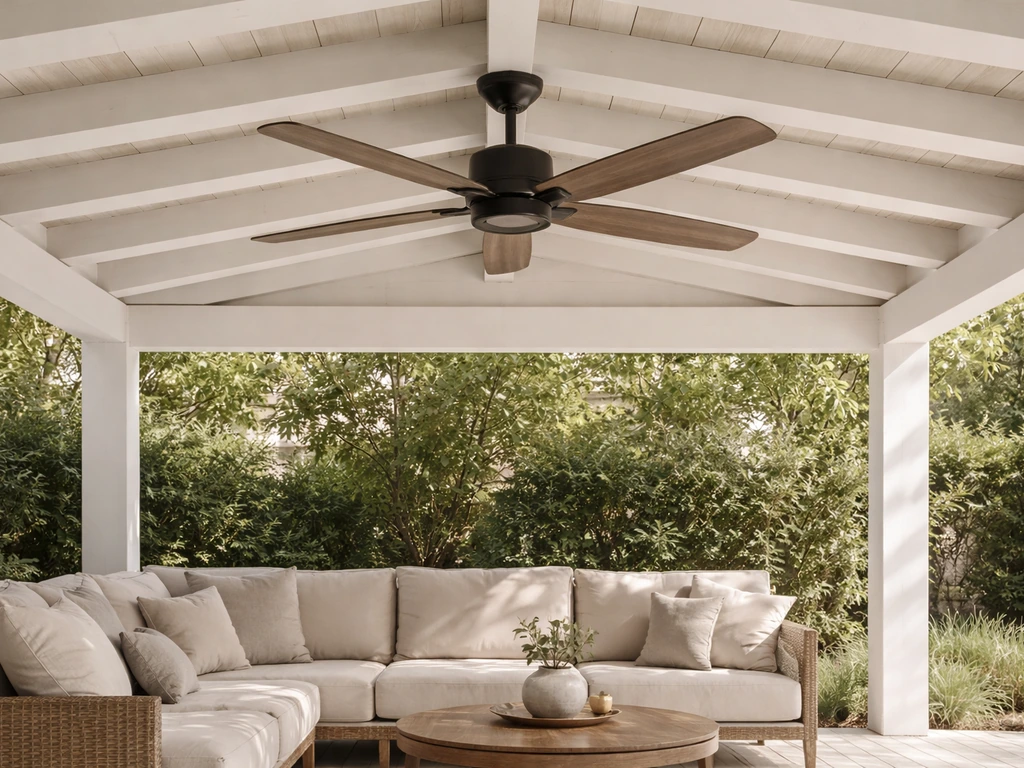
If you have a solid patio roof or a covered pergola, a ceiling fan is one of the most impactful additions you can make. According to DOE research, ceiling fans are the most effective type of circulating fan, and they let you tolerate air temperatures roughly 4 degrees Fahrenheit higher without feeling uncomfortable. On a 95-degree afternoon, that's the difference between bearable and miserable. Use a fan rated for damp or wet locations depending on whether your patio is exposed to rain. Mount it at 8 to 9 feet above floor level for best airflow.
Outdoor solar shades and blinds
Roll-down outdoor solar shades mounted on the west side of a pergola or cover are excellent for blocking low-angle afternoon sun that sneaks in under or around the main roof. If you want step-by-step guidance on selecting the right setup, see our guide on how to shade patio areas for west-facing sun. These are available in manual pull-down or motorized versions and come in varying openness factors (3 to 10 percent openness being most effective for heat blocking). Light or silver-toned fabrics outperform dark ones for heat reflection. These work well as a complement to a shade sail or retractable awning, handling the residual low light that gets past the primary shade.
Outdoor curtains with solar-reflective backing
For a softer, more aesthetic approach, heavy outdoor curtains with a reflective liner do a real job on west-facing sun. The liner side faces out and bounces solar radiation away before it heats the fabric. These are easy to hang from existing hardware, easy to wash, and easy to swap out seasonally. They're also a fast way to add privacy on a patio that faces neighbors to the west.
Reflective and insulated panel systems
For west-facing walls adjacent to the patio, reflective exterior panels or light-colored wall cladding reduce radiant heat re-emission from surfaces that have been baking all day. A dark masonry wall on the west side of your patio will keep radiating heat for hours after sunset. Painting it a lighter color or adding a ventilated reflective panel in front of it is a low-cost way to cut that effect.
DIY Planning: Measurements, Mounting, Materials, and Permits
Before you buy materials or start building, take 30 minutes to work through the planning basics. This is where most DIY patio shade projects go wrong.
Measure your coverage area and sun angle
Measure your patio length and width. For west sun specifically, also measure the height of your house wall or fence on the west side, because the height of your mounting point determines how low an angle you can intercept. A shade sail attached at 10 feet on the house side and anchored at 6 feet on a post 12 feet out will cover a specific zone. Sketch it roughly to scale. For retractable awnings, measure the wall width you have available for mounting brackets, since you'll need continuous solid structure (rim joist, band board, or blocking) across the full mounting span.
Mounting to the house vs. freestanding posts
Attaching to the house is simpler in most cases but requires that you hit solid framing. Use a stud finder and locate the band joist or ledger. Lag screws into solid lumber hold; screws into just sheathing or stucco do not. If your patio doesn't have a convenient house wall, freestanding posts set in concrete footings are the alternative. For any freestanding structure over about 200 square feet, dig footings to at least 12 inches below grade (deeper in freeze/thaw climates) and use tube forms with concrete. Post base hardware set in concrete is also acceptable for lighter structures.
Material choices for outdoor durability
West sun is the harshest sun exposure for materials because of the combined heat and UV load in the afternoon. Here are the key choices:
- Fabric: Solution-dyed acrylic (like Sunbrella) holds color and resists UV far better than polyester. For shade cloth, look for UV-stabilized HDPE.
- Metal framing: Powder-coated aluminum resists rust and handles thermal expansion better than raw steel in a sun-exposed location.
- Wood: Pressure-treated lumber is fine for structural members but will gray and crack over time if left unfinished. Cedar and redwood are better-looking options. Seal or stain anything that will see direct west sun.
- Polycarbonate panels: Only use UV-stabilized grades. Standard greenhouse-grade polycarbonate yellows badly within 3 to 5 years under west sun.
- Hardware: Use stainless steel or hot-dipped galvanized hardware for all exterior connections. Standard zinc-plated bolts rust out within a few seasons in humid climates.
Wind load and drainage
Wind is the most common cause of shade structure failures. Any permanent fabric structure (awning, shade sail, pergola canopy) needs to be sized and tensioned for your local wind conditions. Check your county's design wind speed, which is usually listed in local building codes. For shade sails, the tension on the sail and the rated load capacity of the mounting hardware both matter. For solid patio covers, the roof needs to be engineered or built to code with appropriate rafter spacing, connections, and a slope for drainage (minimum 1/4 inch per foot pitch). A flat patio cover that pools water will fail within a few seasons.
When you need a permit
Most municipalities require a building permit for any attached patio cover, pergola, or enclosed structure. The threshold varies, but if you're attaching a permanent structure to your house, assume you need a permit and check before you build. Typical permit applications ask for a site plan showing the structure's location and dimensions, structural framing plans with lumber sizes, species, and spacing, ledger attachment details, and footing/caisson sizes. Some jurisdictions (like Phoenix, Maricopa County, and many others) have specific patio cover standards that specify exactly how the ledger must attach to the house. Skipping permits on an attached structure can cause problems when you sell the house or need homeowner's insurance coverage. The paperwork is usually straightforward. Pull the permit.
Your Next-Step Checklist
Here's how to go from reading this to actually solving the problem:
- This week: observe your patio between 1 PM and sunset and note exactly when and where west sun makes it unusable. Sketch a rough patio plan with sun zones marked.
- Today if needed: put up a temporary fix (offset umbrella, shade cloth, or outdoor curtains) so you can use the patio while you plan the permanent solution.
- Decide on your approach: small patio or rental situation means portable or fabric solutions. House-attached patio with a solid wall means awning or pergola. Need full enclosure for bugs plus heat? Solar screen enclosure.
- Measure your patio width, depth, and the height of available mounting points. Note whether you have solid framing to attach to on the house wall.
- Check your local building department's requirements for patio covers before buying materials. A quick phone call or website check takes 10 minutes.
- Choose your material tier based on budget: shade sail or cloth for under $500, retractable awning for $800 to $3,000, solid patio cover or louvered pergola for $3,000 and up.
- Add heat-control layers (ceiling fan, outdoor roller shades, reflective roofing) after the primary structure is in place to maximize comfort on peak summer afternoons.
West sun is solvable. The difference between a patio that gets abandoned every summer and one that becomes your favorite place to be in the evening usually comes down to one or two targeted improvements. Start with the diagnosis, pick the right tool for your specific situation, and build from there. Once you match the coverage and the sun angle, you can follow a step-by-step approach for how to shade patio from sun in your exact setup.
FAQ
How do I block west sun on a patio if the sun also hits my outdoor furniture from the side?
In that case, plan for side-angle coverage, not just overhead shade. Use an offset umbrella or vertical/angled shade cloth on the west-facing edge, and consider adding reflective screens to create a “light wall” that protects seating backrests. If you only cover the floor area, the low-angle glare can still bounce off chairs and make the space feel bright and hot.
What’s the easiest way to test whether west sun is the main problem or if reflected heat from my house or fence is worse?
On a sunny afternoon, stand where you sit and check what feels hottest. If you feel intense heat even under shade, that usually means radiant heat from hot surfaces (west wall, fence, pavers). Test by temporarily draping a light shade sheet over the seating area, then compare it to shielding only the west wall side. If the second test helps more, prioritize blocking or cooling the west surface (reflective exterior panels, cooler roof finish, or solar screen on that side).
Can I use clear panels or a glass roof to block west sun without making the patio feel dark?
Yes, but choose UV-stabilized, solar-controlling materials rather than plain clear polycarbonate or untreated panels. Clear products often block UV but still transmit a lot of heat, so you may get glare reduction without real temperature relief. If you want brightness, pair a partially translucent cover with a west-side solar screen or roll-down solar shade to handle low-angle light.
What wind problems should I plan for with shade sails and umbrellas on west-facing patios?
West late-day wind gusts can twist or flap fabric, and flapping quickly loosens hardware. For shade sails, use the rated stainless turnbuckles and D-rings, tension until the sail is taut, and avoid “cheap hooks” that can deform. For umbrellas, confirm the closed position strategy (wind-safe tie-downs or retracting) and use proper ballast in the 50 to 100 pound range if you get afternoon breezes.
If I install a shade sail, how do I decide anchor height and how far out the posts should go?
Use your sunlight window to pick an angle. After you mark your direct-sun zones at 2 PM, 3 PM, 4 PM, and 6 PM, translate that to geometry: higher house attachment lets you intercept more of the low-angle light, and increasing the post distance increases the covered footprint. If you cannot place a post far enough out, raise the house attachment or add a second attachment point to create a more effective tilted plane.
Are outdoor curtains enough to block west sun, or do they need reflective liners?
Curtains can work, but reflective liners or light-colored outdoor fabric make a meaningful difference for heat reduction. Without a reflective liner, curtains mainly stop direct glare while still absorbing and re-radiating heat. For best results, close them during the peak window and mount so they hang vertically on the west side, with minimal gaps where low-angle light slips through.
How much openness should I look for when buying roll-down solar shades?
Aim for the more blocking side of the range. Roll-down options are often rated by openness, and lower openness (around 3 to 10 percent) generally blocks more solar heat. If you choose a more open fabric for visibility, plan to use it as a complement to a primary shade like an awning or shade sail rather than your only west-sun barrier.
What should I do if my patio cover is permitted but my problem is only west sun glare, not full coverage?
Consider a targeted retrofit instead of a full-size replacement. Many homeowners start with a west-side component that doesn’t require the same structural footprint as a full roof, like vertical shade cloth, solar screen panels on the enclosure side, or a roll-down shade mounted under the existing cover. This can reduce both cost and permit scope, while still solving the actual peak west-sun hours you documented.
How do I choose between an awning and a retractable solution if wind and durability are my biggest concerns?
If wind is frequent, prioritize systems designed for wind-safe operation, and use adjustable pitch so the leading edge is angled lower during the worst hours. Retractable awnings and deploy-late systems can be easier to secure when conditions change, but you still need correct mounting into solid structure and the right wind rating. If you cannot guarantee that, a freestanding or side-sited shade cloth or solar screen can be more forgiving for DIY.
Do I need to worry about radiant heat even after I block the direct sun?
Yes. Direct sun blockage reduces glare, but your patio can still feel hot due to radiant heat from pavers, walls, and a west-facing fence that stays warm after sunset. If you notice that the area still feels oppressive under shade, add one heat-control layer, like reflective or cool-roof roofing on a solid cover, a radiant barrier with an air gap under the roof assembly, or solar mesh screening on the west enclosure side.
What are common DIY mistakes that cause west-sun shade to fail early?
Most failures come from three issues: mounting to the wrong substrate (fasteners only hitting sheathing or stucco), under-tensioned fabric that flaps in wind (especially shade sails), and covering only overhead rays when the sun is entering from the side at low angles. Another frequent miss is underestimating the hours of unusable heat, so people build a smaller coverage area than the actual west-sun zone.
Next Articles
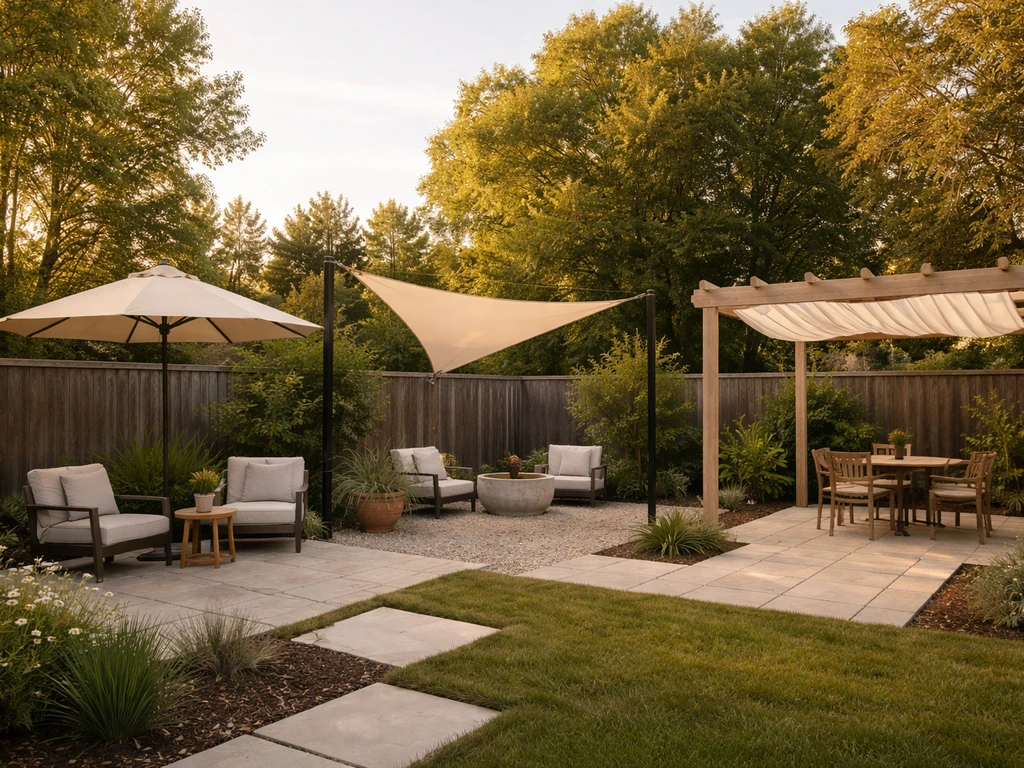
What Can I Use for Shade on My Patio: Options
DIY patio shade options from umbrellas to pergolas and sails, with cost, durability, mounting tips, and quick decision h
How to Shade Patio From Sun: DIY Options and Installation
Step-by-step DIY guide to shade a patio from sun with umbrellas, sails, pergolas, awnings, and installs, measurements, a
How to Shade a Patio: Best DIY Options and Steps
Step-by-step DIY guide to shade a patio with sails, awnings, umbrellas, pergolas, and secure anchoring for lasting cover