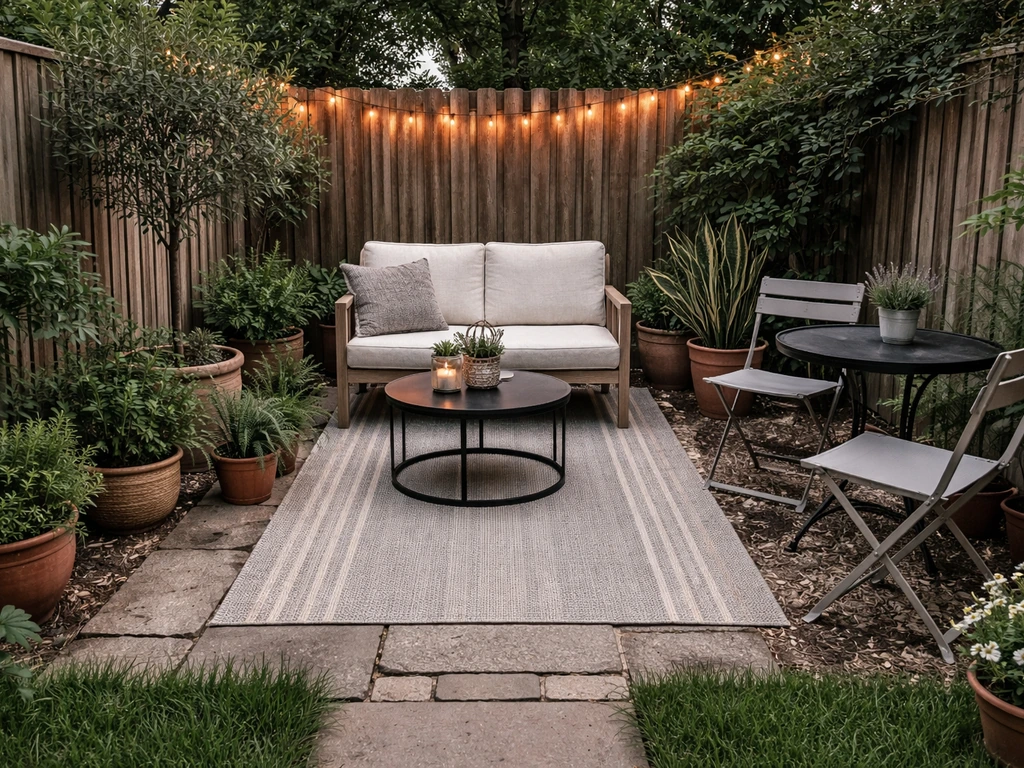
The best way to arrange furniture on a small patio is to pick one primary use (dining, lounging, or a conversation corner), choose furniture sized for that use, tuck pieces toward the edges or one end of the space, and protect a clear 30-inch walking lane from your door to wherever you need to go. That one decision, protecting the path first, then filling in around it, does more for a cramped patio than any decorating trick.
How to Arrange Furniture on a Small Patio Step by Step

Felix Brennan
25 Jun 2026
Start with a layout audit before you move a single chair
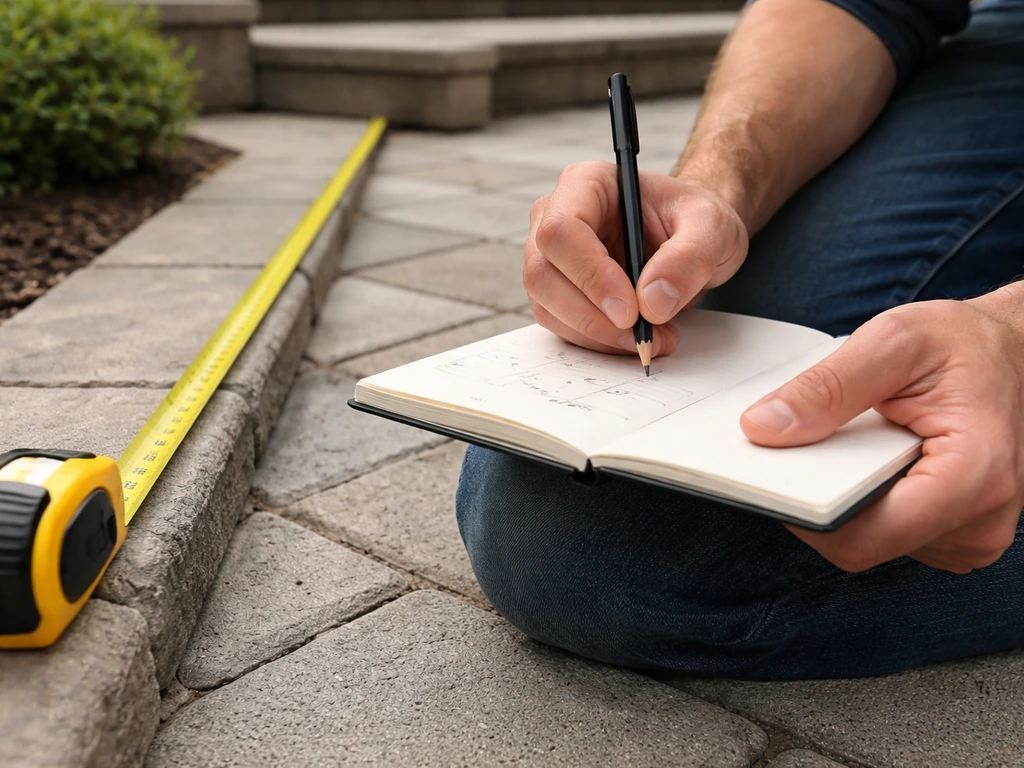
Grab a tape measure and spend ten minutes on this before anything else. You will save yourself a lot of dragging and rearranging later.
- Measure the full patio dimensions: length, width, and any odd angles, bump-outs, or alcoves. Write them down.
- Note every door that opens onto the patio and which direction the door swings. A door that swings outward needs at least 36 inches of clear space in its arc — nothing can live in that zone.
- Mark where steps or ramp transitions are. These are fixed chokepoints that define your traffic flow.
- Identify any fixed elements: an outdoor outlet, a gas line stub-out, a hose bib, a drain. These anchor where certain items (grill, planter, storage) must go.
- Sketch a rough rectangle or shape on paper. Label the door side, the view side, and any walls, fences, or railings. This is your layout map.
Once you can see the patio on paper, the path naturally becomes obvious. On most small patios, the door sits on one short end of a rectangle. That means your main walking lane runs lengthwise, and your furniture belongs on the far end or tucked to one long side, not spread across the middle. If you have a sliding door on a long wall, your lane runs across the width instead. Either way, protecting that route is step one.
Choose furniture that actually fits the square footage
The single biggest mistake on a small patio is buying furniture at full outdoor-living scale and then trying to cram it in. A standard four-person dining set with a 48-inch round table and four chairs takes up roughly a 10-by-10-foot footprint once you account for chair pull-out clearance. Most small patios are 8-by-10 feet or smaller. That math doesn't work. If you are still deciding what to buy first, start by matching each piece’s footprint to your patio size.
Match your furniture to your patio size
| Patio Size | Best Furniture Choice | What Fits Comfortably |
|---|---|---|
| 6×8 or 8×8 ft | Bistro set (2 chairs + small round table) | One seating pair, a slim side table, or a single chair with footstool |
| 8×10 ft | Loveseat + one or two chairs, or a 3-piece dining set | Small conversation grouping or compact dining setup, not both |
| 10×12 ft | Small sectional or 4-piece chat set, or 4-person dining set | One clear zone: either dining or lounging, with a narrow side zone for a plant or storage |
| 12×12 ft or larger (small end) | Modular sectional or dining set plus one lounge chair | Two loose zones possible if you protect a 30-inch lane between them |
For a true tiny patio, 8 by 8 feet or less, a bistro set is your best friend. Two chairs and a small round table (typically 24 to 28 inches in diameter) give you a usable spot without swallowing the whole space. If you want lounging instead of dining, a single chair with a side table and a tucked-away footstool can actually feel more generous than forcing two chairs side by side with no breathing room. Resist the urge to fill every square foot. If you are working with a larger layout, the same sizing logic helps, but you will need to plan for multiple zones and clear walkways when you furnish a large patio how to furnish a large patio.
When you're shopping, keep a club chair's typical footprint in mind: roughly 32 inches wide by 36 inches deep. A loveseat runs about 48 to 54 inches wide. A three-piece bistro set rarely exceeds 36 inches across at its widest. Use these numbers against your sketch before you buy anything.
If you're drawn to a sectional, look for a modular design. Modular pieces let you reconfigure an L-shape into a straight run or break off a single seat to open up space. That flexibility matters a lot when you're working with a tight footprint or you want to shift things around seasonally.
Pick a layout plan that matches your patio shape
There are three layouts that reliably work on small patios. Choose the one that fits your shape and how you use the space.
Layout 1: Edge-tucked conversation grouping
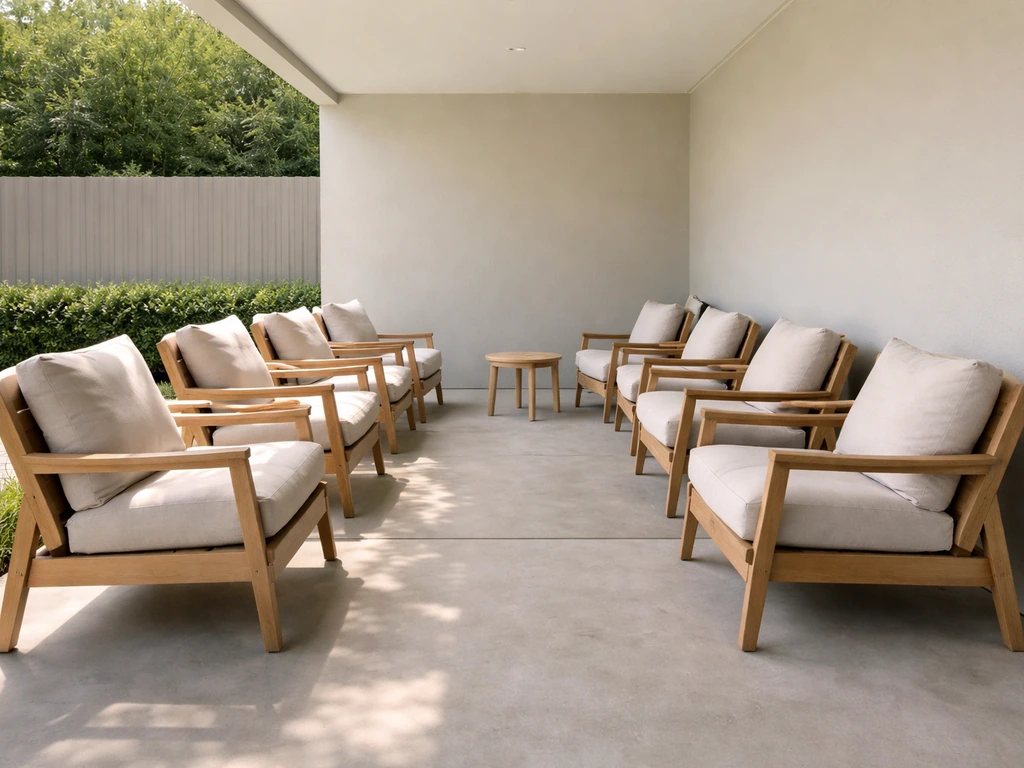
Push your seating to one long side or the far end, angled inward slightly so chairs face each other. If the pool is the focal feature, arrange your seating so people can move around it comfortably and still see the water from the main lounge or dining spot Push your seating. Leave the opposite side and the door zone completely open. A small side table or coffee table sits between the chairs, not beside the wall. This works especially well on narrow rectangular patios because it preserves the full width of the walking lane. It's also the easiest layout to add to later, a single chair or small bench can slot in across from the grouping if you gain a little more square footage.
Layout 2: Centered dining table with perimeter chairs
Place a small round or square dining table in the center of the usable zone (which is usually the far half of the patio, away from the door). Chairs sit on three sides, with the fourth side left open toward the door or sliding glass. When chairs are pushed in, they occupy far less floor space. This works on 8-by-10 and larger patios and feels more intentional than chairs floating near walls. Use a round table if your patio is roughly square, it reduces tight corners and makes circulation around the table feel more natural.
Layout 3: Corner seating with diagonal focal point
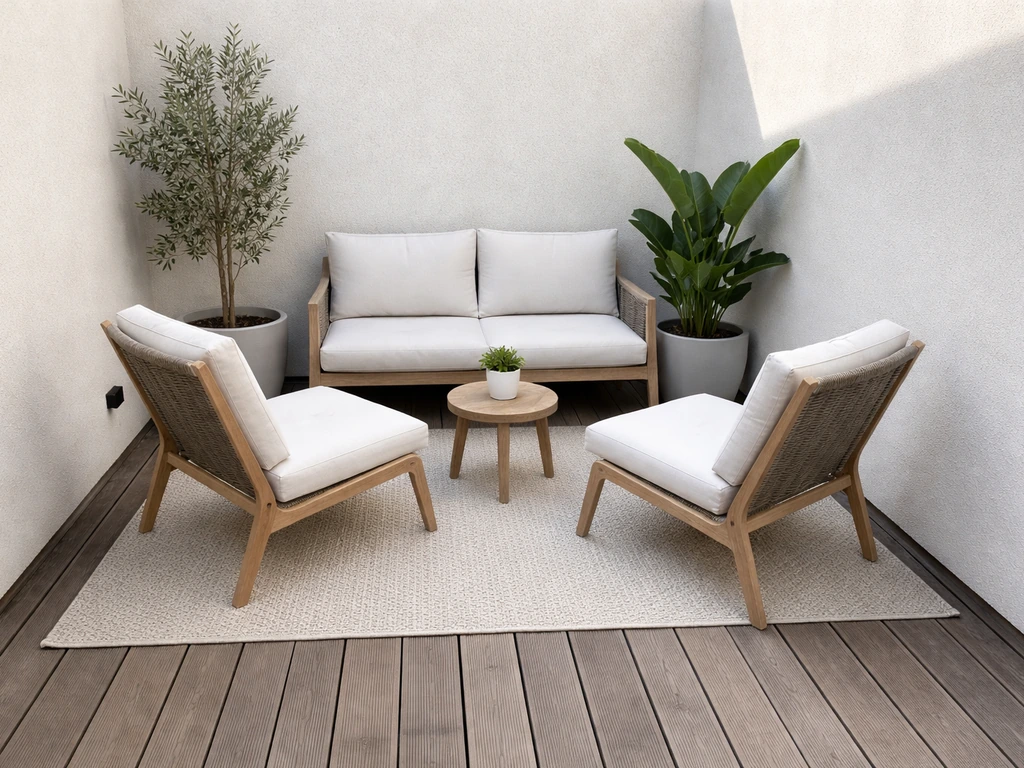
On patios with an awkward corner or L-shape, tuck a loveseat or two chairs into the corner and angle them diagonally toward the center of the patio. This makes the corner feel intentional rather than wasted, and it pulls the eye toward the open middle of the space. A round side table or small fire bowl placed where the sightlines converge becomes a natural focal point. If your focal point is a fire pit, place the surrounding seating so people can gather comfortably without blocking the main walking lane. This is a great layout if your door is on a side wall rather than a short end.
Walkways and clearances: the numbers to keep in mind
Clear paths are not optional on a small patio, they're what make the space actually comfortable to use versus just technically occupiable. If you plan a dedicated outdoor spot like a patio daybed, build it into your clearance plan so pathways and circulation still work clear paths are not optional on a small patio. Here are the clearances that matter most: For grill-and-dining layouts, plan movement spacing around the grill so you have a clear walking lane and enough landing space beside or near the grill, with commonly cited targets of about 36 inches for walking, 48 inches where chairs pull out, and at least 24 inches of landing space blank" rel="noopener noreferrer">movement spacing around a grill.
- Main walking lane (door to step or gate): aim for 30 inches minimum, 36 inches if you frequently carry food or drinks through it. Thirty inches is the livable minimum; 36 inches is genuinely comfortable.
- Behind dining chairs: leave 24 to 30 inches between the back of a pulled-out chair and any wall, railing, or other furniture piece. Less than 24 inches and people have to angle sideways to pass.
- Between seating and a wall or fence: 24 inches at minimum. This is barely enough to edge through; 30 inches lets someone walk through without turning sideways.
- Door swing zone: measure the full arc of any outward-swinging door and keep it completely clear. Nothing — not a chair, not a planter — lives in that zone.
- Around a grill or prep area: if you have a grill on the patio, give it 36 inches of clear lane on the working side, and at least 24 inches of landing space next to it for hot items.
When you're arranging, physically walk the path with your arms slightly out. If you feel cramped or have to turn your body, the clearance is too tight. Do this test before you finalize the layout and again after you add any accessories like a side table or storage bin.
Use shade, wind, and focal points to guide placement
Where you sit on a patio is heavily influenced by sun and wind, and getting those right is just as important as the geometry of the layout. On a small patio, you often don't have a choice of multiple spots, which makes this even more critical.
Orient seating around shade, not just aesthetics
Figure out where afternoon shade falls on your patio. If you have an overhang, a pergola, or a shade sail, your seating should sit within that footprint. On a west-facing patio, afternoon sun hits hard from roughly 2 p.m. onward, seating pushed to the east side of the patio (under an overhang or near the house wall) will be usable far longer. If shade is currently a problem, that's worth solving at the structure level, a retractable awning or shade sail can dramatically change which part of your patio is comfortable, and in turn, where your furniture belongs. Future additions like a pergola or enclosure will likely shift your best layout, so keep that in mind before you bolt anything down.
Use wind direction to your advantage
Prevailing winds matter more on a small open patio than they do on a large one because there's nowhere to escape to. If wind comes consistently from one direction, tuck seating against the wall or fence on that side, it gives natural shelter. Placing a taller planter, an outdoor screen panel, or even a wind-resistant shade structure on the windward side can make a small patio genuinely comfortable on breezy days. This is also one reason screened enclosures and patio curtains are so popular: they let you keep the furniture where it belongs without constantly fighting the weather.
Give the eye somewhere to land
On a small patio, a focal point makes the space feel designed rather than thrown together. This could be a small fire bowl centered between chairs, a potted statement plant in the corner, a lantern on a side table, or even a wall-mounted mirror on a fence. The key is placing it opposite the main seating view so your eye travels across the patio. This visual depth trick genuinely makes a small space feel larger. Orient your chairs toward the focal point, not toward the house wall or door.
Finishing the space: rugs, lighting, storage, and scale
Once the furniture is placed, the finishing layers, rug, lighting, and storage, are what make a small patio feel complete rather than sparse. Each one has a right and wrong way to do it in a tight space.
Outdoor rugs: anchor the zone without blocking the door
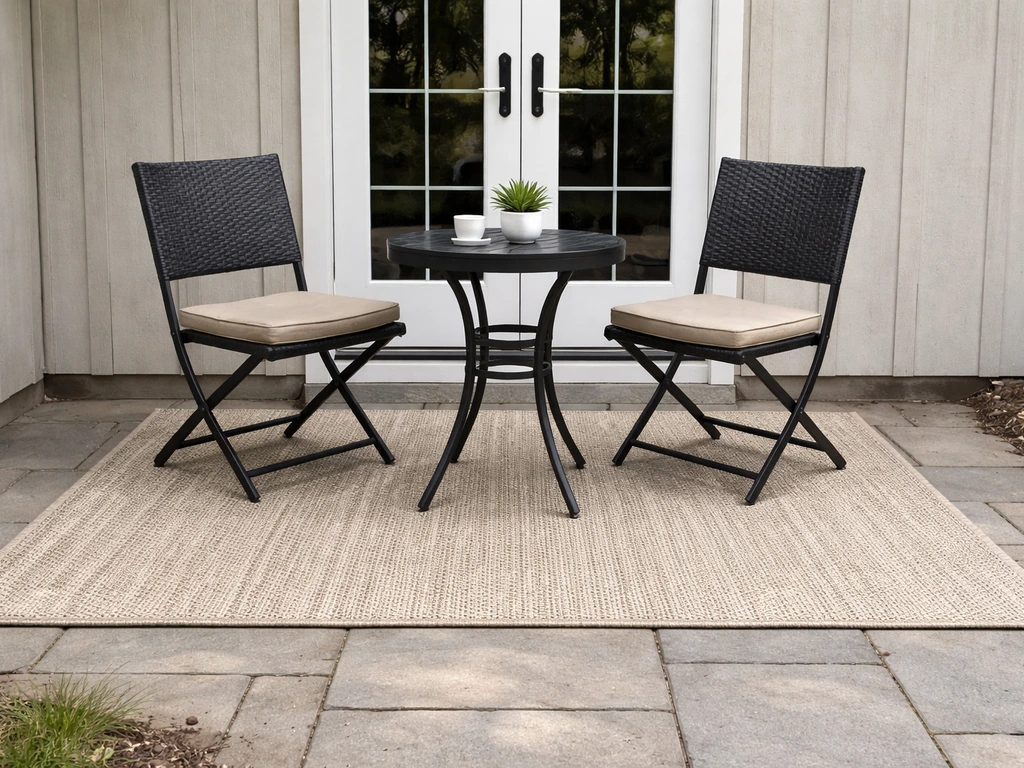
For a small patio, a 5-by-7-foot outdoor rug is the most versatile starting size. It anchors a bistro set or a small conversation grouping without overwhelming the space. For an 8-by-10 patio with a small sectional or four-piece chat set, an 8-by-10-foot rug can work if the furniture fits within it, aim to have at least the front legs of every seat sitting on the rug. Leave 12 to 18 inches of bare patio surface visible around the rug's perimeter so the space doesn't look swallowed. Most importantly, make sure the rug doesn't sit under an outward-swinging door. If it catches the door, pull the rug back a few inches. blank" rel="noopener noreferrer">A slightly smaller rug that doesn't fight the door is always the right call.
Lighting: hang it high and layer it outward
String lights hung at 8 to 10 feet above the patio floor give comfortable clearance and spread warm ambient light without glare. If you have a lower overhang, 7 to 8 feet works, just make sure lights clear head height when people stand. The trick on a small patio is to layer light outward rather than centering everything over the seating. Hang strings that connect to the far fence or a post at the patio's edge so the light pulls the eye toward the perimeter. This creates visual depth and makes the space read as larger than it is. A small solar lantern or low tabletop candle adds a second layer at seating level. If you eventually add a pergola or enclosure, plan your lighting attachment points now, it's much easier to run power or add hooks before structural elements go up.
Storage: go vertical, go hidden
Storage is where most small patios lose the battle against clutter. A deck box tucked against one wall can hold cushions, throws, and accessories without taking up visual real estate. Side tables with lower shelves do double duty. A wall-mounted hook rail on a fence or house exterior keeps tools, bags, and string light cords off the floor entirely. Avoid freestanding shelving units unless your patio has a protected corner, they catch wind and tip. Vertical space is your best friend on a small patio, so use the walls and fence whenever your local rules allow it.
Scale: the most overlooked detail
Everything on a small patio should be slightly smaller than you instinctively reach for. Chunky wide-arm Adirondack chairs look great in a catalog but eat six to eight inches more width than a slim-profile sling chair. An oversized umbrella with a 9-foot canopy on an 8-by-8 patio is a wind hazard and a visual block. A 28-inch side table does the same job as a 36-inch one and leaves 8 inches more breathing room. Keep a critical eye on footprint dimensions, not just overall height, when you're choosing pieces.
Quick do-this and avoid-this checklist
| Do This | Avoid This |
|---|---|
| Measure before you buy — bring your sketch to the store | Buying full-scale dining sets for sub-10-foot patios |
| Protect a 30-inch main walking lane from door to step | Placing any furniture in the door swing arc |
| Choose one primary use and build the layout around it | Trying to fit dining, lounging, and a grill on an 8×8 |
| Tuck furniture toward edges or one end to preserve open floor | Centering a large table in the only clear walking zone |
| Use a bistro set or 3-piece set on patios under 8×10 | Oversized sectionals or wide-arm chairs on small footprints |
| Go vertical with storage (wall hooks, deck box against wall) | Freestanding shelves or multiple large planters on the floor |
| Hang string lights at 8–10 ft and pull them toward the perimeter | Bunching all light directly above center seating only |
| Anchor seating area with a 5×7 rug, legs on the rug | Running a rug under an outward-swinging door |
| Orient seating toward shade and your focal point | Placing chairs facing a blank wall or the house door |
| Plan around future shade/enclosure upgrades before anchoring anything | Assuming the current layout works forever once a pergola goes up |
How patio upgrades will change your best layout
It's worth thinking one step ahead here, especially if you're planning any patio improvements beyond furniture. Adding a pergola, shade sail, retractable awning, or screen enclosure changes everything about where your furniture wants to be. A pergola sets a defined footprint, your seating should center under it, not spill outside its posts. A screen enclosure reframes your patio as a room, which often means the door-clearance rules shift (screen doors typically swing inward and are narrower, changing your entry zone). An awning creates shade along one edge, pulling seating in that direction. The time to think about this is now, before you buy furniture and arrange it around a layout that a future upgrade will make obsolete. If a screen or shade structure is on your radar in the next year or two, sketch it in before you finalize where the chairs go.
If you're working with a deck instead of a ground-level patio, many of these same principles apply, the clearance rules, the edge-tucking strategy, and the focal point thinking all translate. On a small deck, the same clearance-first approach works, just be sure to factor in the deck’s railings, stairs, and door or sliding access points how to arrange patio furniture on a small deck. The railing line effectively becomes your perimeter wall. And if you're thinking bigger, furnishing a larger patio, building a custom sectional or daybed, or arranging around a fire pit or pool, each of those scenarios has its own spatial logic worth thinking through separately, since the scale and traffic-flow priorities shift considerably.
FAQ
Can I arrange furniture for both dining and lounging on a small patio without making it feel crowded?
Most patios only need one primary zone, but if you must combine dining and lounging, keep one of them “serviceable” rather than fully staged. For example, place a bistro dining table in the far zone and use two lounge chairs only if they can still keep a continuous 30-inch path back to the door (including space to pull chair legs in and out).
What should I do if my patio has an outward-swinging door and I want to use an outdoor rug?
Yes. If the door swings outward, treat that swing arc like part of your walking clearance. Pull the rug back enough so the door does not catch it when opened fully, and then re-test the path with the door open because the clearance problem often shows up only at that moment.
Is the 30-inch walking lane measurement flexible, or do I need to hit it exactly?
A 30-inch lane is a good target, but the real test is two-handed navigation. Walk the route with arms slightly out both before and after adding accessories (side tables, storage bins, planters). If you have to twist or pivot your body to get through, widen the furniture-to-edge gap or reduce the number of pieces in that corridor.
In what order should I place items when arranging furniture on a small patio?
Start with the largest “traffic influencer” first. Dining tables, conversation group seats, and any storage that sits near a door should be placed before side tables, then measure chair pull clearance, then finalize rug and lighting. Changing order later usually forces you to move the rug and cords, which is harder than repositioning one small chair.
How can I seat more people on a small patio without buying a full dining set or bulky sectional?
If you want seating that feels open but still supports multiple people, use a single wider bench or a narrow loveseat angled toward the conversation focal point, rather than adding a full extra chair. Benches also reduce the number of legs and side angles that eat into the clear lane.
What if my patio layout cannot keep a full clear path from the door to the seating?
If you cannot protect a full 30-inch route from the door to the main seating, you typically have two options. Either shrink the furniture scale (switch to bistro or a single lounge chair) or change the layout so the furniture sits on one edge and the door zone stays completely open. Mixing zones often fails because both areas steal from the same corridor.
How do I know if a round dining table will work on my small patio layout?
To test circulation around a round table, measure clearance at the “pinch point,” usually between the table edge and the door or wall. Round tables often help cornering, but they still require chair pull-out room, so check that chairs can move in and out without bumping the table or side seating.
If I buy a modular sectional, how do I arrange it so it still works after I reconfigure it?
Modular sectionals can work, but only if you plan the path when the sectional is both in its “lounge” and “reconfigured” positions. Leave clearance that stays valid when you remove or shift a segment, otherwise you’ll open up the seating area but accidentally block the door route.
Where should I place my focal point, and how close can seating be to it on a small patio?
Choose a focal point that is visible from the main entry or the most common seated position, then orient chairs so people face it. If your focal feature is a fire pit, keep the seating tight enough to gather but do not place side tables where they force people to stand in the middle of the walking lane.
How do I choose the best furniture placement if shade moves across the patio during the day?
If afternoon sun hits hard, you usually want shade that covers the seating area’s “time window,” not just a portion of it. Position chairs under the available shade or in the direction where shade appears after about 2 p.m. If you add an awning or shade sail later, keep current arrangements close to the house side so the upgrade is easier to integrate.
What’s the best way to handle strong wind on a small patio without blocking the walkway?
On breezy patios, avoid placing the most vulnerable seating (the side you lounge on) directly in the wind. Tuck against the windward wall or fence, and use taller, anchored elements like planters or an outdoor screen panel to reduce gusts. If you use curtains or screens, confirm they do not block the door-clearance route when people enter.
Where should I put storage on a small patio so it does not interfere with movement?
If you have to store cushions or small items, prioritize built-in or wall-supported solutions near an outer edge of the patio. A deck box against a wall is easier on circulation than freestanding shelving, because it does not create an additional “face” that pushes into the lane. Keep the storage side opposite the main path.
How can I tell whether my rug is the wrong size or positioned incorrectly for my patio layout?
If furniture looks “off,” it’s often due to rug size or rug position relative to doors and furniture feet. Use the rug as a boundary for the seating grouping, keep at least 12 to 18 inches visible around the edges, and ensure the outward door swing does not touch the rug during full opening.
Next Articles
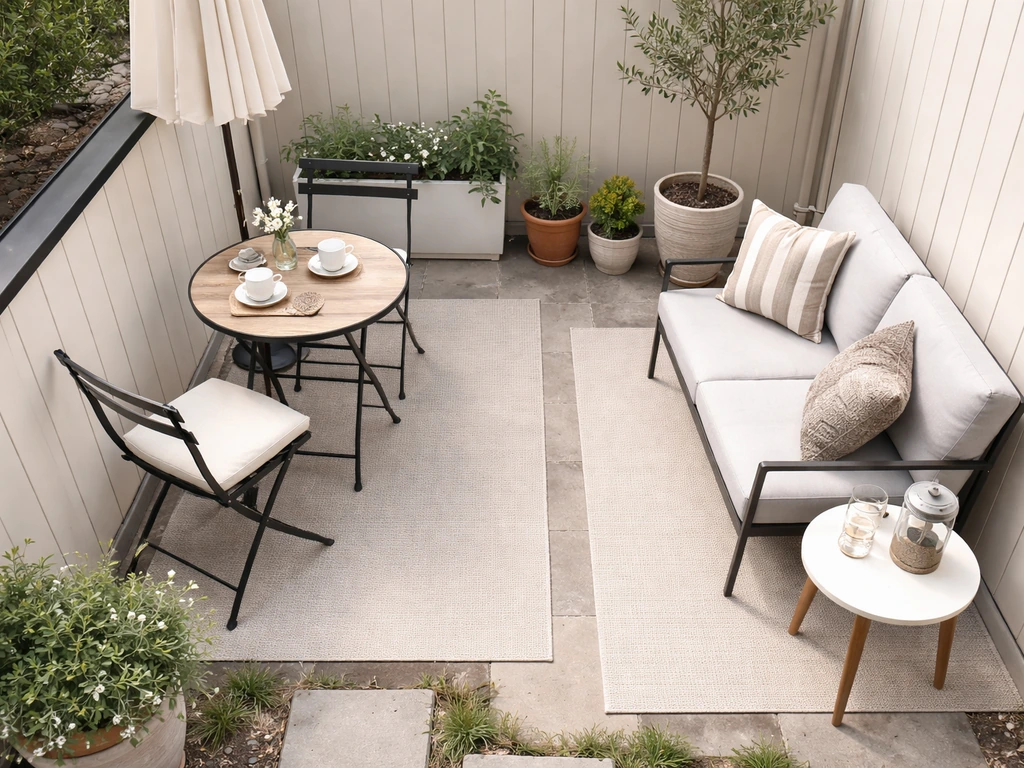
How to Furnish a Small Patio: Layout, Furniture, and Tips
Step-by-step small patio furnishing guide: layout, space-saving outdoor furniture, weather protection, and finishing tou
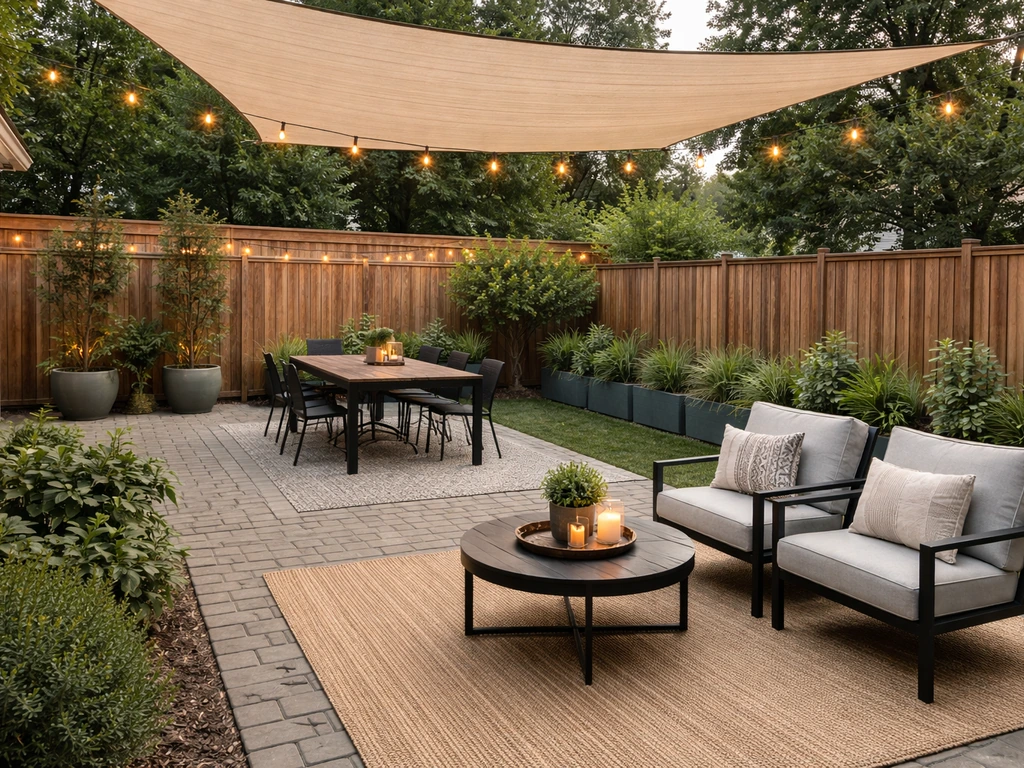
How to Furnish a Patio: Step-by-Step DIY Layout Guide
Step-by-step DIY guide on how to furnish a patio with seating, dining, shade, privacy, rugs, lighting, and maintenance t
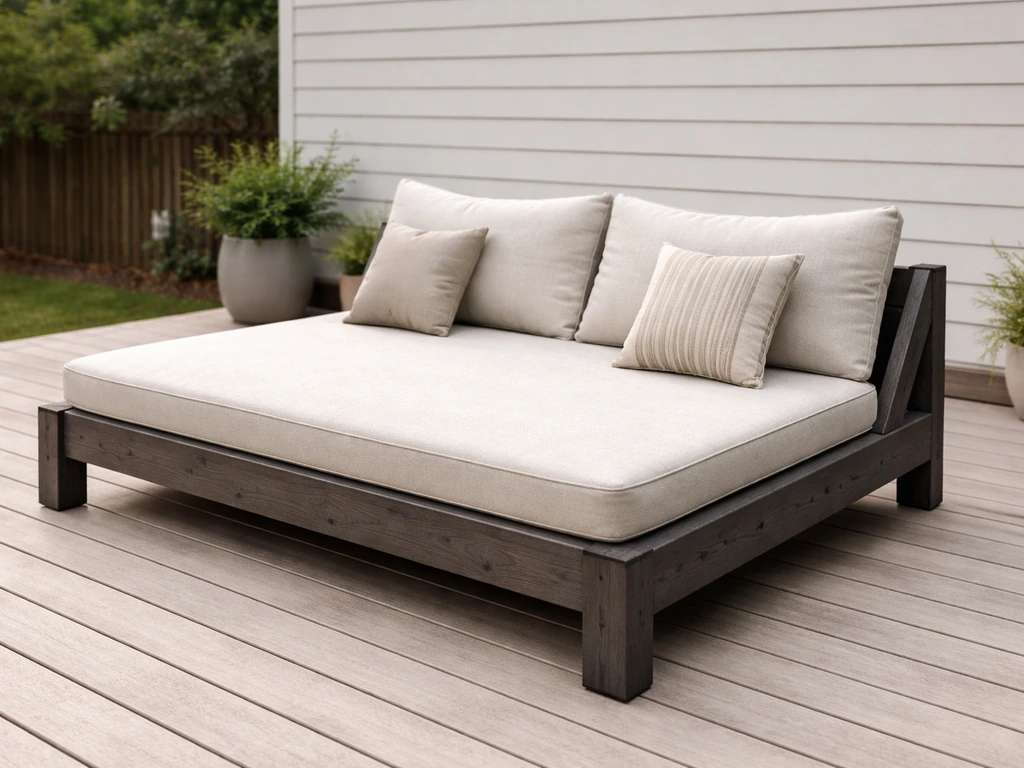
How to Build a Patio Daybed Step by Step DIY Guide
Step-by-step DIY plan to build a weatherproof patio daybed with materials, frame, backrest, comfort details, and upkeep.