Furnishing a small patio comes down to three things done in the right order: measure before you shop, choose furniture sized for your actual footprint, and leave enough clear space so the patio feels open rather than stuffed. Get those three things right and even a 6x10-foot slab can become a genuinely comfortable outdoor room. With those basics handled, you can start mapping out a smart layout, choosing space-saving pieces, and dialing in clear walking space how to arrange furniture on small patio.
How to Furnish a Small Patio: Layout, Furniture, and Tips

Felix Brennan
21 Jun 2026
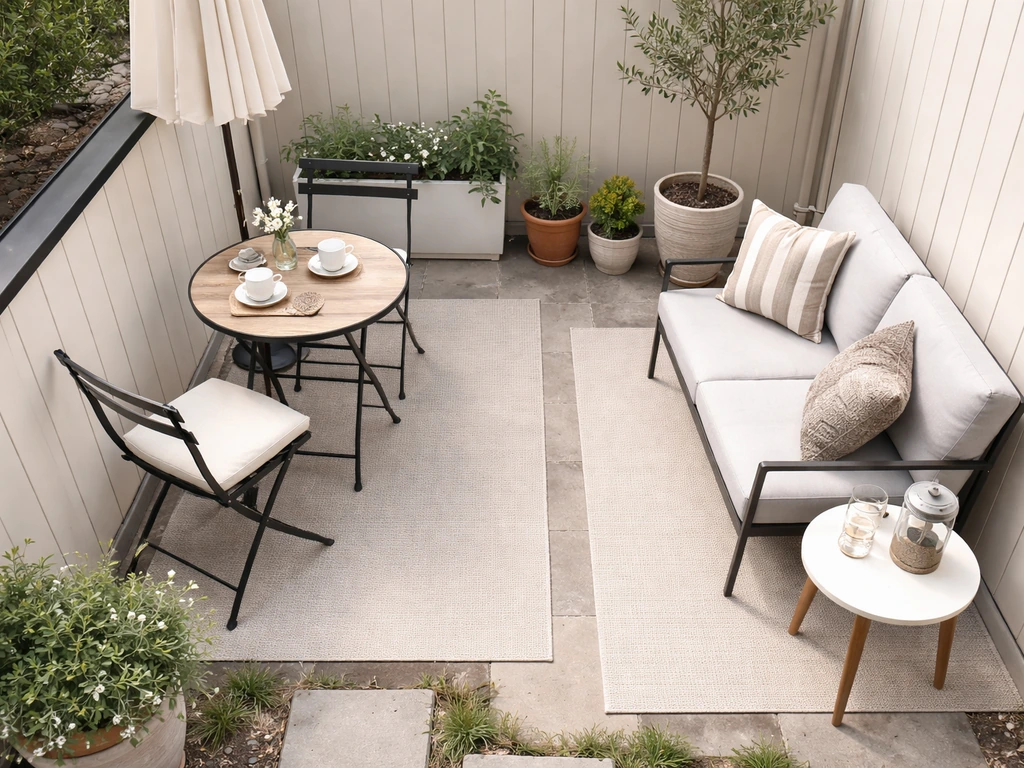
Start with measurements and how you actually use the space
Before you look at a single piece of furniture, grab a tape measure and spend ten minutes outside. Measure your patio's full length and width, note any jogs or odd corners, and mark where the door opens and which direction it swings. That door clearance matters more than most people expect: you need enough room to approach and open it comfortably without a chair leg blocking the path. While you're at it, note which direction the sun hits throughout the day and where wind usually comes from. These details drive every decision after this.
Then think honestly about how you use the space. Do you eat outside most nights, or do you mostly want somewhere to sit with a coffee in the morning? Do you host groups, or is this mostly for two people? Will kids or pets be running through? Your answers determine whether you need a dining setup, a lounging setup, or a hybrid, and they set hard limits on how much furniture you can realistically fit. A small patio trying to do too many things ends up doing none of them well.
Once you have your dimensions, sketch a rough floor plan on paper or use a free online room planner. Plug in your patio's length and width, then draw your door opening and any fixed features like a gas line, electrical outlet, or downspout. This sketch becomes your shopping filter: anything that doesn't fit on paper doesn't get ordered.
The clearance numbers you need to know
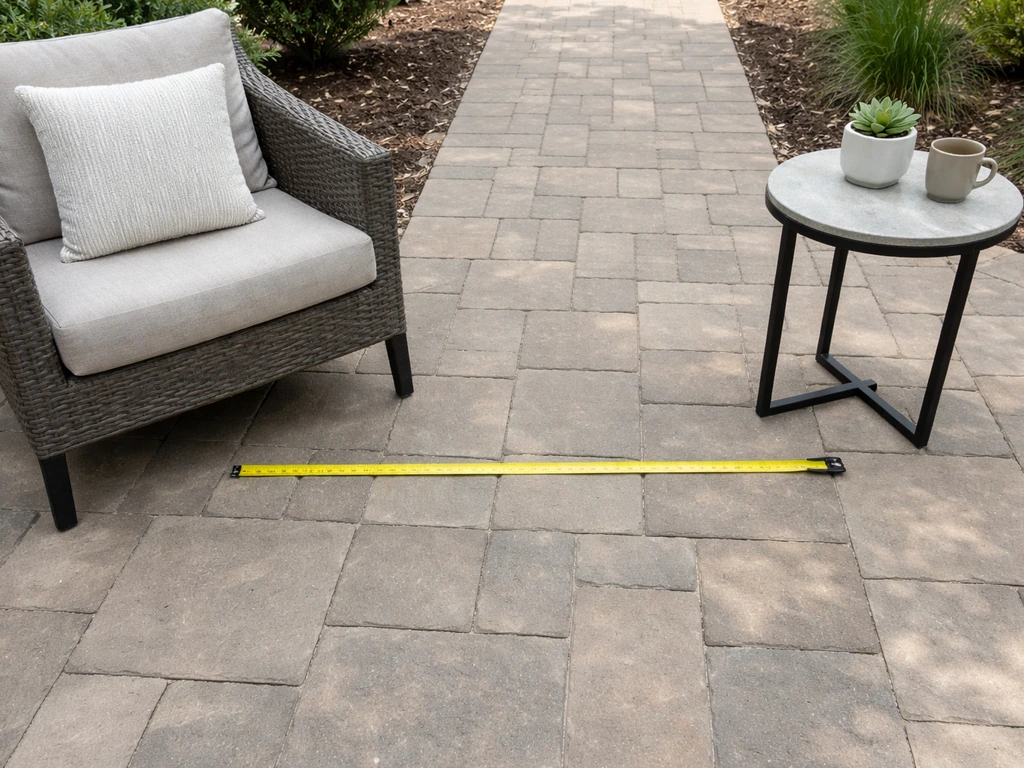
Plan for at least 36 inches of clear walkway width along any path you use regularly. That's the widely accepted minimum for comfortable, unobstructed movement and aligns with ADA accessible-route guidance. For a dining table, add 36 inches of clearance beyond each edge where chairs will sit, so someone can pull out a chair, sit down, and push back without bumping into a wall or fence. In practical terms, a 30x48-inch table needs roughly a 9x10-foot total footprint once you include that clearance on all sides. On a very small patio, that math often rules out a four-person table and steers you toward a bistro set instead.
Pick space-saving furniture types and sizes
Small patios reward furniture that works harder than it looks. The goal is pieces that give you full function without eating square footage you don't have. Here are the categories worth focusing on.
Dining
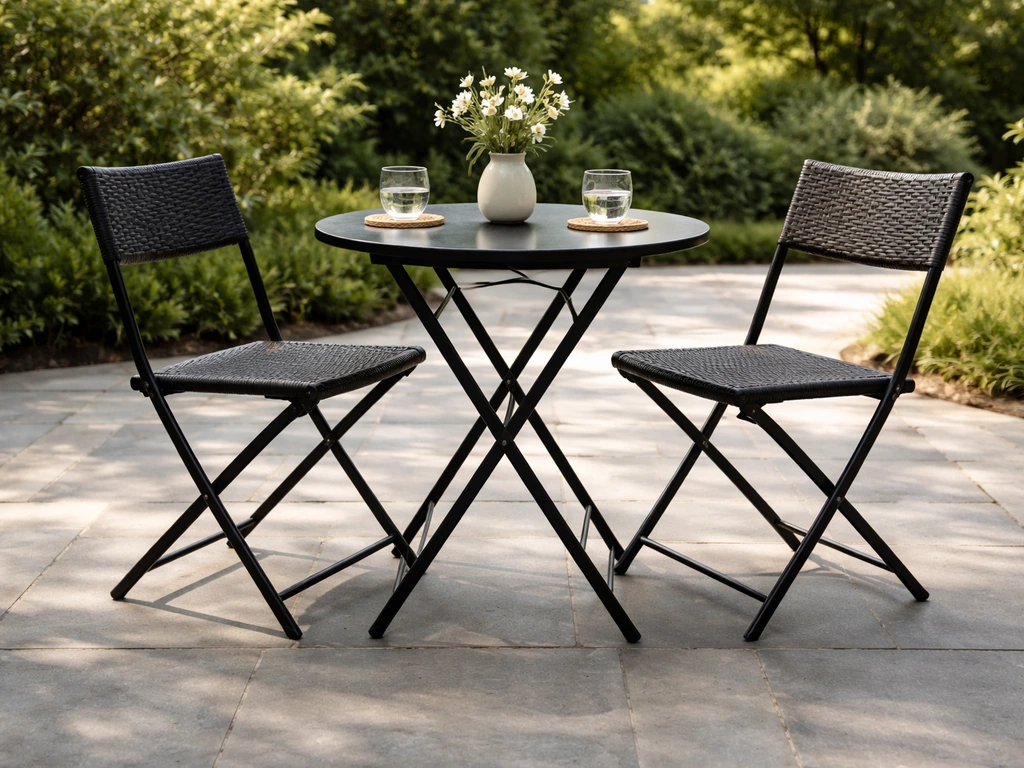
A bistro set, usually a round or square 24x24-inch or 28x28-inch table with two chairs, is the most space-efficient dining option for a small patio. Once you pick the right furniture layout and sizes, you can follow a step-by-step approach to how to furnish a large patio space-efficient dining option. It seats two comfortably and the round shape means no awkward corners. If you occasionally host more people, look for a drop-leaf or folding table that extends when you need it and folds flat against a wall when you don't. For seating, stackable chairs are worth every penny because they disappear into a corner when not in use.
Lounging
A small sectional or modular sofa built specifically for outdoor use can actually work well on a compact patio because the pieces configure around your exact layout. To get the best fit and comfort, focus on how to build patio sectional layouts that match your measurements and seating needs. A two-piece L-shaped sectional with a 60-inch sofa and a 36-inch chaise, for example, tucks into a corner and frees the rest of the patio. Look for pieces with a footprint in the 30-32 inch depth range rather than the deep 36-40 inch club chairs, which devour space fast. A standard club chair example from deck-planning guides runs about 32 inches wide by 36 inches deep, which is manageable, but two of them plus a coffee table can fill a small patio before you realize it.
Furniture types that punch above their weight
- Bistro sets (24–28-inch table, two chairs): ideal for patios under 80 square feet
- Folding or drop-leaf tables: full dining function that stores flat
- Stackable chairs: multiple seats with almost zero storage footprint
- Modular or sectional seating: customizes to odd-shaped corners
- Bench seating along a wall or railing: provides seating without protruding into walkways
- Ottomans with storage: doubles as a footrest, extra seat, and weatherproof bin
- Wall-mounted fold-down bar or ledge: adds a surface without permanent floor space
Layout plans for dining, lounging, and getting around
Layout is where small patios either succeed or frustrate. The single most common mistake is placing furniture first and hoping traffic flow works out. Do it the other way: draw your circulation paths first, then fit furniture around them. After you measure and plan your layout, use these guidelines to choose patio furniture that fits comfortably and looks cohesive draw your circulation paths first. This is the approach most outdoor furniture sizing guides recommend, and it's genuinely the right call.
Dining-focused layout
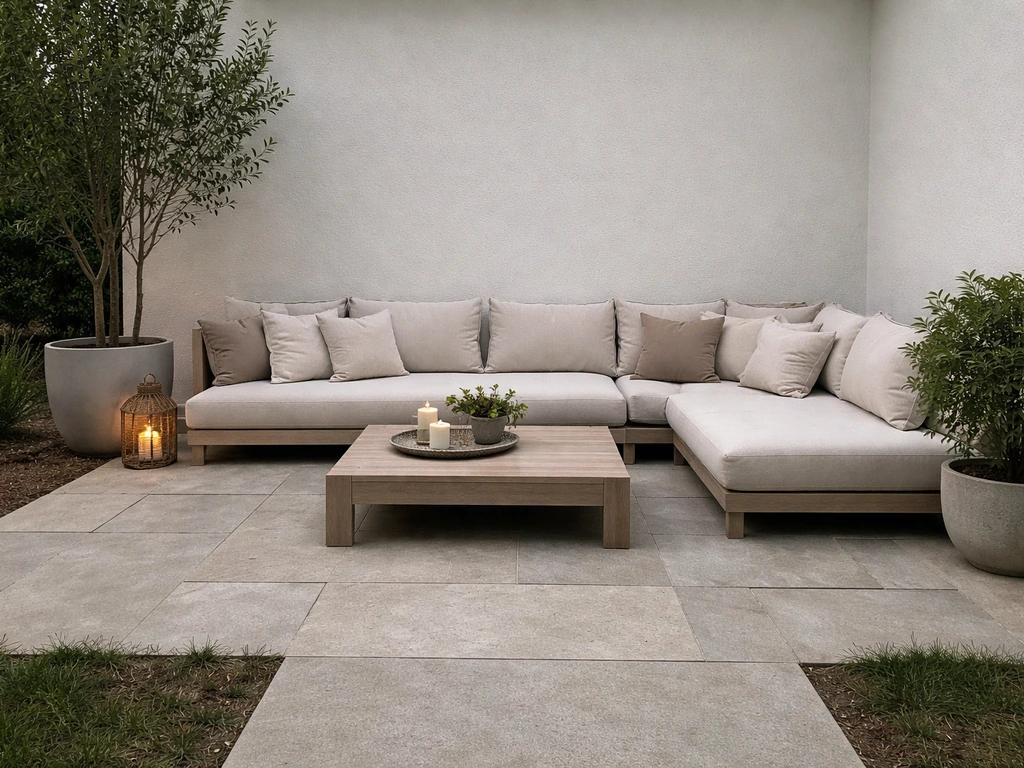
Position your table close to the house so the door swing doesn't conflict with chair pull-out. Leave 30 to 36 inches from the table edge to any wall, railing, or fence on the sides where chairs sit. The side closest to the door can go a little tighter, down to 24 inches, if that's a pass-by path rather than a chair-pull-out path. On a narrow patio (under 8 feet wide), a wall-mounted fold-down table with two stools tucked underneath is often the only realistic option for eating outside without sacrificing all your floor space.
Lounge-focused layout
Push seating into one or two corners using an L-shape or U-shape configuration with a low coffee table in the middle. Keep at least 36 inches of clear walkway from the door to the seating area. A low-profile coffee table, around 15 to 18 inches tall, makes the space feel less cluttered visually. If you're working with a truly tight patio (under 60 square feet), skip the full sofa and go with two armchairs angled toward each other with a small side table between them.
Hybrid layout (dining plus lounging)
Combining dining and lounging on a small patio is possible but requires discipline. Once you’ve planned the patio layout and clearances, you can follow a dedicated guide on how to build a patio daybed that fits your measurements. Zone the two areas by using an outdoor rug to anchor the lounge section and leaving a bare or differently surfaced zone for dining. The rug should extend roughly 24 to 30 inches beyond the coffee table perimeter, and any dining rug should extend at least 24 inches beyond the table so chair legs stay on the rug when pulled out. Keeping the furniture low and consistent in style helps the two zones read as one cohesive space rather than a crowded jumble.
Add comfort: shade, wind control, and enclosure basics
Furniture alone doesn't make a patio livable. When you add a fire pit, arrange your patio furniture so there is comfortable conversation seating around it while still keeping clear walkways arrange patio furniture around a fire pit. On a small patio, shade and wind protection are arguably more important than the furniture itself because they determine how many hours a day the space is actually usable. This is where the site's DIY niche really pays off: adding a simple shade structure or wind screen is a weekend project that transforms a patio that bakes in the afternoon into one you actually want to sit in.
Shade options
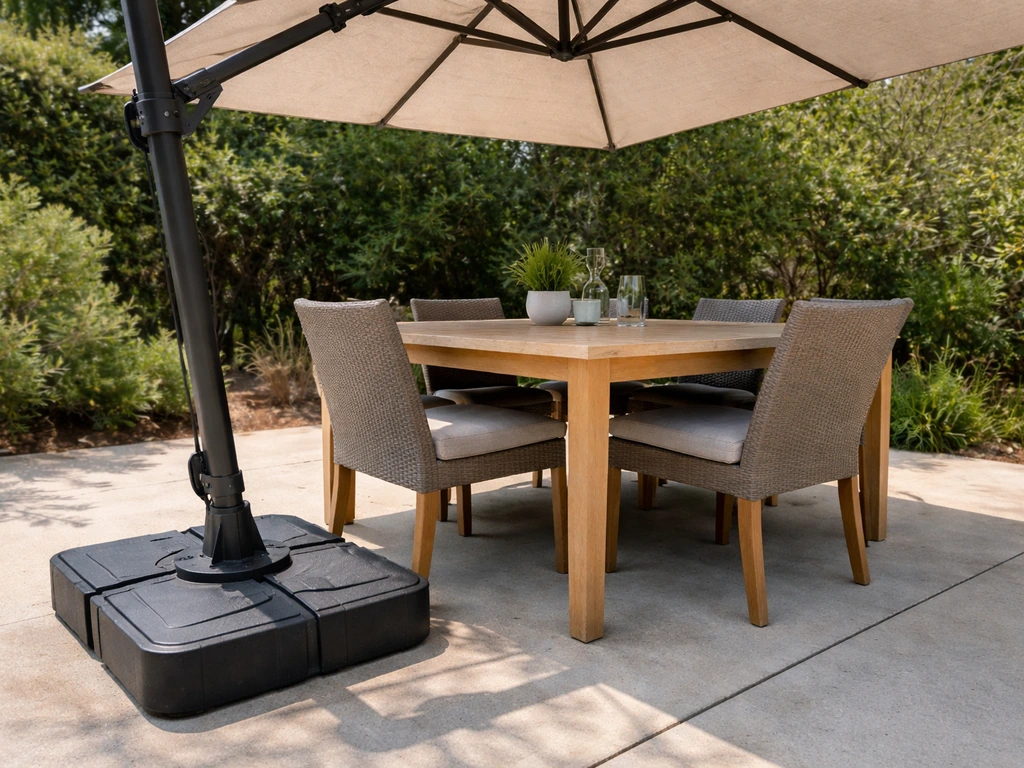
A cantilever umbrella works well for small dining setups because the base sits outside the table footprint, freeing up leg room underneath. A traditional center-pole umbrella saves money but you'll work around the pole when seating guests. Shade sails are a popular DIY option and genuinely attractive, but install them with enough slope to drain water: too flat a sail sags and puddles after rain, which shortens its life significantly. A pergola with a fabric canopy or lattice top gives more permanent shade and lets you hang lights or curtains, but it requires measuring your patio's exact dimensions before ordering a kit. For a screened or partially enclosed patio, retractable side screens can block afternoon sun and deflect wind, adding real year-round comfort without making the space feel closed in.
Wind control and enclosure
Wind is the underrated enemy of small patio comfort. Even a light, consistent breeze makes conversation hard and blows napkins off tables. Outdoor curtain panels hung from a pergola or tension rod give you flexible wind blocking without permanent construction. Retractable screen panels mounted on pergola posts can deflect wind and light rain and fold away when the weather is calm, giving you an adjustable level of enclosure depending on the season. A lattice privacy screen or bamboo fence panel along the windward side is a cheap, fast fix that also adds visual privacy. If you're planning a more complete patio enclosure, think about how the enclosure walls affect furniture placement before you build: an enclosed patio works more like an outdoor room, and furniture can sit closer to the walls without feeling exposed.
Weatherproof materials and what actually holds up outside
This is where a lot of people make expensive mistakes. Furniture that looks great at the store can turn into a rusty, faded mess within two seasons if the materials aren't genuinely suited for outdoor use. Here's what to look for and what to avoid.
| Material | Pros | Cons | Best for |
|---|---|---|---|
| Powder-coated aluminum | Rust-resistant, lightweight, durable | Can dent; cheaper versions have thin coating | Frames for chairs, tables, sectionals |
| Teak | Naturally weather-resistant, beautiful, long-lasting | Expensive; needs occasional oiling to maintain color | Dining tables, benches, premium furniture |
| HDPE (high-density polyethylene) resin | Zero maintenance, fade-resistant, very durable | Can look plasticky; heavier than aluminum | Chairs, Adirondack-style seating |
| Solution-dyed acrylic fabric (e.g., Sunbrella) | UV/fade-resistant, mold/mildew-resistant, water-repellent | Higher price than basic polyester | Cushion covers, umbrella canopies, shade sails |
| PVC sling fabric | Breathable, no cushion needed, easy to clean | Can stretch or fade over time on budget versions | Chair seats and backs, especially in hot climates |
| Steel (non-powder-coated) | Inexpensive, heavy/stable | Rusts quickly without protective coating | Avoid for outdoor use unless powder-coated or galvanized |
| Cedar or treated pine | Budget-friendly, DIY-friendly | Requires annual sealing; can warp or crack | DIY benches, planters, accent pieces |
For cushions, solution-dyed acrylic is the best investment. The color is locked into the fiber during manufacturing rather than applied on top, which makes it genuinely fade-resistant under UV exposure rather than just marketed as such. Sunbrella is the most recognized brand, but there are other solution-dyed acrylics worth considering. Whatever you buy, store cushions indoors or in a weatherproof bin when you're not using the patio for an extended stretch. Even the best outdoor fabric lasts longer with basic care.
For frames, powder-coated aluminum is the sweet spot for most small patios: rust-resistant, light enough to move around easily, and available at almost every price point. Check that the coating is thick and even before buying. Tap the frame with your knuckle and listen for a solid sound rather than a thin, tinny one, which usually signals a thinner-gauge metal that will dent and wear faster.
Decor, lighting, and privacy that don't eat your space
Small spaces respond really well to vertical thinking. Once your furniture and shade are in place, use the walls, fences, and overhead structure to add personality without consuming floor area.
Lighting
String lights hung overhead transform a small patio at night more than almost any other single upgrade. Aim for a hanging height of about 8 to 10 feet above the ground over a dining area for an intimate, warm ceiling effect. If people will walk underneath them, keep the lowest point at or above 9 feet so nobody ducks. Solar-powered string lights have improved dramatically and work well for most patios. For actual task lighting and safety, add a couple of low-profile path lights or a wall-mounted lantern near the door so you can navigate without stumbling.
Privacy
Privacy screens that mount to a fence or railing, outdoor curtain panels, and tall planters with columnar plants (like ornamental grasses or bamboo in large containers) all create visual barriers without eating into your floor footprint. Keep planters vertical and narrow rather than wide and sprawling. A single large planter in a corner anchors the space better than four small ones scattered around the perimeter.
Rugs and floor coverings
An outdoor rug is one of the best tools for making a small patio feel intentional and complete. It visually defines the seating area, softens a concrete or paver surface underfoot, and grounds the furniture arrangement. If your patio has a pool, use your outdoor rug to define the lounge area and keep the furniture layout feeling cohesive how to arrange patio furniture around a pool. Size it so chair legs stay on the rug when pulled out, which means the rug should extend at least 24 inches beyond the furniture perimeter on seating sides. For a small patio, this often means going slightly larger than you'd initially think. A 5x7 or 5x8 rug is usually the right starting point for a bistro-and-two-chairs setup. Make sure the rug is rated for outdoor use and can drain moisture, otherwise it becomes a mold trap.
Plants and vertical decor
Wall-mounted planters, vertical garden panels, and hanging baskets all bring greenery to a small patio without occupying floor space. A simple trellis panel against a wall with climbing plants can become a living privacy screen within one growing season. Keep color and pattern consistent across cushions, rugs, and planters so the small space feels curated rather than cluttered. Two or three colors maximum is a good rule.
Finishing touches, storage, and your pre-shopping checklist
The last 20 percent of a small patio project is where a lot of people stall or overspend. Here's how to close it out without second-guessing yourself.
Storage
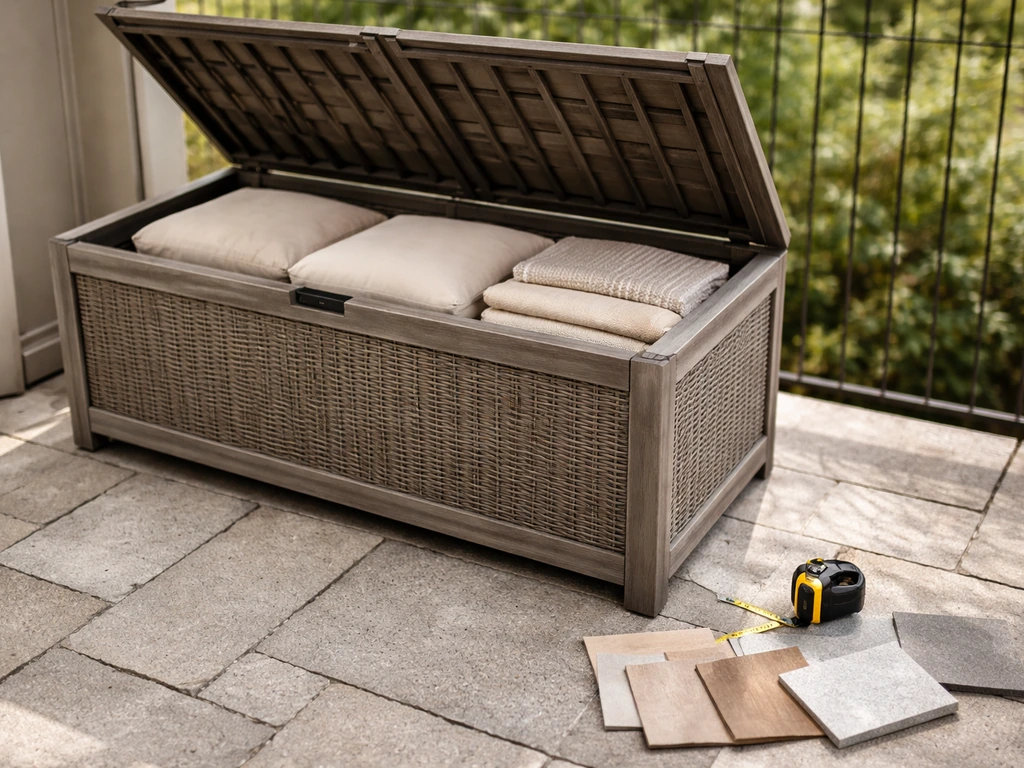
A deck box or outdoor storage bench is worth its footprint on any small patio. It keeps cushions, throws, candles, and small tools dry and out of sight, which makes the patio look tidier in seconds. Look for one that doubles as extra seating, around 18 inches high, so it earns its floor space twice. Mount a small wall hook or two near the door for sunglasses, a light jacket, or a watering can so they don't end up on chair seats.
Seasonal and maintenance quick tips
- Store cushions indoors or in a weatherproof deck box during extended periods of rain or when not in use for several days
- Wipe down powder-coated aluminum frames a few times a season with mild soap and water to keep the coating from degrading
- Re-treat teak furniture once a year with teak oil or sealer to maintain color; left untreated it goes silver-gray (which is also fine if you prefer that look)
- Check shade sail tension and attachment points each spring; sagging sails collect standing water and fail faster
- Rinse outdoor rugs monthly and let them dry fully before laying flat again to prevent mold underneath
- Bring lightweight furniture inside or secure it before storms; even heavy-gauge aluminum chairs can blow into fences in strong wind
Measure before you order: quick checklist
- Write down your patio's exact length and width in inches, including any steps, columns, or fixed features
- Note which direction the door swings and how much clearance it needs fully open
- Mark where the sun hits hardest and at what time of day, and note the prevailing wind direction
- Decide your primary use: dining, lounging, or hybrid, then size furniture around that one function first
- Apply the 36-inch clearance rule: draw your furniture on paper and check that 36 inches of walkway remains along every regular path
- Verify that any table-plus-chairs footprint (table size plus 72 inches total for 36 inches of chair clearance on both sides) fits your patio dimensions
- Check doorway widths and any gate openings that furniture must pass through on delivery
- Choose frames (powder-coated aluminum recommended for most budgets), fabric (solution-dyed acrylic for cushions and canopies), and confirm all pieces are rated for outdoor, UV, and moisture exposure
- Select a shade solution (umbrella, sail, pergola, or retractable screen) and confirm its attachment points won't conflict with furniture placement
- Size your outdoor rug so it extends at least 24 inches beyond the table or coffee table perimeter on all sides where chairs sit
A small patio done right feels genuinely larger than it is, because everything in it earns its spot. Once you have your furniture and shade sorted, the natural next step is thinking about how to arrange it for maximum flow, which is worth mapping carefully before you commit pieces to a final position. Use the same spacing and flow rules when planning how to arrange patio furniture on a small deck, and your layout will feel comfortable instead of cramped arrange it for maximum flow. If your patio is attached to a deck, the layout considerations shift slightly because railing placement and deck boards affect sightlines and furniture angles differently than a slab does. And if you're working with a specific constraint like a fire pit or a pool nearby, those become the anchors your layout builds around rather than afterthoughts. Getting the basics right here first makes every one of those follow-on decisions much easier.
FAQ
What’s the minimum clear space I should keep on a small patio if I have a narrow walkway?
If you cannot hit the usual 36 inches, set a priority route that stays closest to full clearance, ideally 32 inches. Use narrower clearances only for non-daily movement (like reaching a grill), and keep chair pull-out space separate from the walkway so you do not trap yourself when someone sits down.
How do I measure for a dining table if my patio includes a railing or a fence at one edge?
Measure from the exact place the chair legs will be on the floor to the nearest obstacle on the sides where chairs pull out. Do not measure only the tabletop. Add clearance for the chair back plus room for the person to pivot, which is why a table that “fits” by footprint often still feels cramped.
Can I put a rug on a small patio without ruining drainage or causing mold?
Yes, but choose an outdoor rug designed to drain and keep airflow underneath. For wet climates, avoid thick pile rugs that hold water, and use a rug pad meant for outdoor use or skip the pad entirely if your patio already has good water flow.
How do I choose between an umbrella, shade sail, and a pergola when I’m tight on height?
If clearance above your patio is limited, prioritize options that keep the lowest point high, like a cantilever umbrella set for dining, or wall-mounted retractable screens. Shade sails work when you can achieve proper slope and secure anchor points, and pergolas are best when you want fixed shade plus the ability to add curtains and lighting later.
What’s the best way to block wind on a small patio if I cannot build a permanent structure?
Use a layered approach: start with a windward lattice or fence panel, then add outdoor curtains or tension rods that you can open and close. Position taller elements near the wind source, not randomly around the patio, and keep furniture low or angled so wind is deflected rather than funneled directly into seating.
How do I keep chairs from looking “stuck out” when my seating area is very close to a door?
Place seating so chair backs do not sit directly in the door swing path, and pick chairs with arms or a back height that matches your clearance needs. If space is tight, use armless stools or chairs that slide in cleanly, and keep a dedicated approach lane from the door to avoid scraping chair legs during daily use.
Should I prioritize storage like a deck box early, or is it better to buy furniture first?
Prioritize storage early because it can become the anchor for your layout and seating angles. A storage bench also affects circulation, so plan where you will open it (lid clearance) and whether it will sit inside or outside your main walkway.
What outdoor materials should I avoid on a small patio that gets intense sun?
Avoid standard indoor-cushion fabrics, painted or uncoated steel frames, and cushions that are not solution-dyed. Even if they look fine at purchase, sun and heat accelerate color fade and rust on the cheapest metal components, especially near the wind exposure side.
If I want both dining and lounging, how can I prevent the patio from feeling cluttered?
Use zoning that is based on function and visual separation, not just “two groups of furniture.” Anchor dining with a table that has pull-out clearance, anchor lounging with one properly sized rug, and keep coffee tables low. If you see duplicate small surfaces (two side tables, two trays, multiple planters everywhere), remove one category and consolidate.
How can I tell whether a coffee table size will work with my sectional or chairs?
Measure the distance from each seat edge to where the table would sit, then leave room for knees and for people to stand up without snagging. On small patios, a low table that sits close to the seating footprint usually works better than a tall one, because tall items visually add weight even when they fit physically.
What’s a good starting point for a patio rug size if I don’t know the exact seating layout yet?
Start by measuring the area you want to feel like one “room,” then choose a rug that extends at least about 24 inches beyond the furniture perimeter on seating sides. If you’re unsure, select a slightly larger size than you think you need, because an undersized rug makes a small patio feel chopped up into sections.
Do I need to think about deck board direction or railing placement if my patio is attached to a deck?
Yes. Furniture angles change with railing spacing, and sightlines can make corners feel tighter. Also consider how people will approach from the deck, meaning your 36-inch route should align with the real movement path from the door or stairs, not just the slab’s geometry.
Next Articles
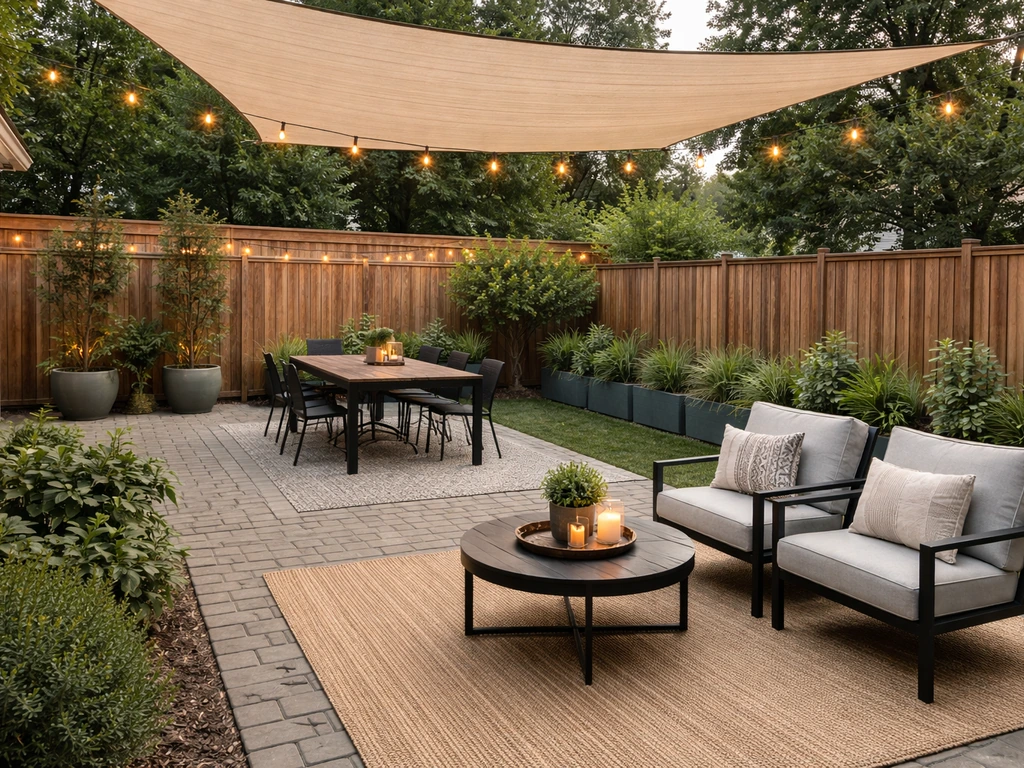
How to Furnish a Patio: Step-by-Step DIY Layout Guide
Step-by-step DIY guide on how to furnish a patio with seating, dining, shade, privacy, rugs, lighting, and maintenance t
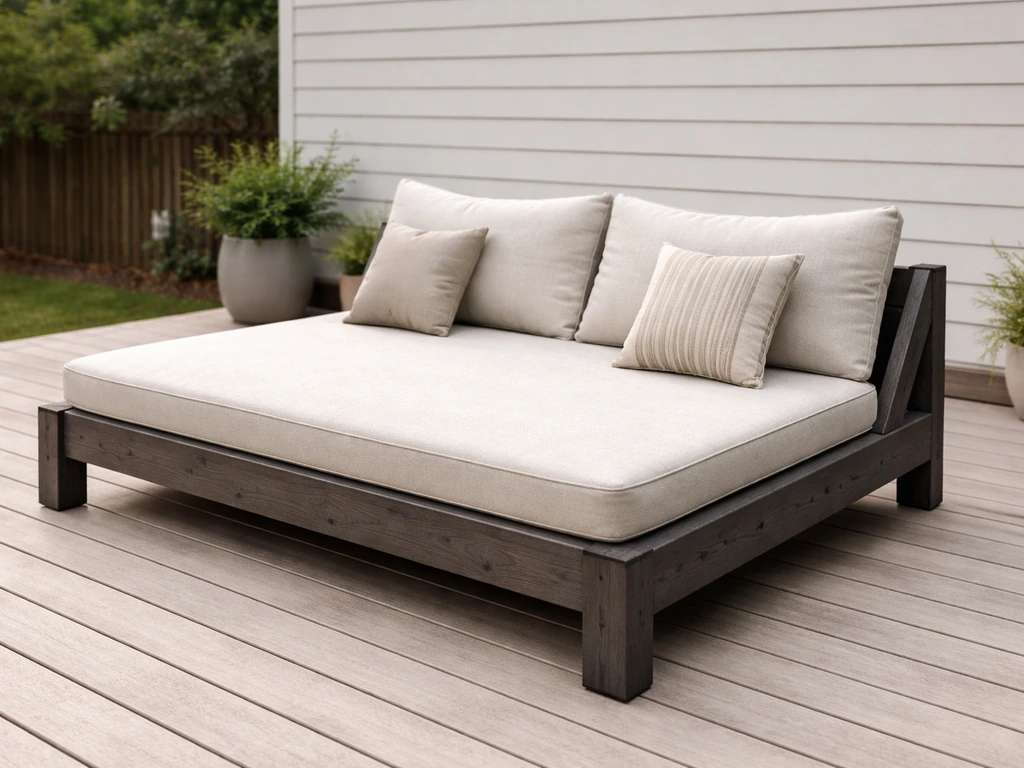
How to Build a Patio Daybed Step by Step DIY Guide
Step-by-step DIY plan to build a weatherproof patio daybed with materials, frame, backrest, comfort details, and upkeep.
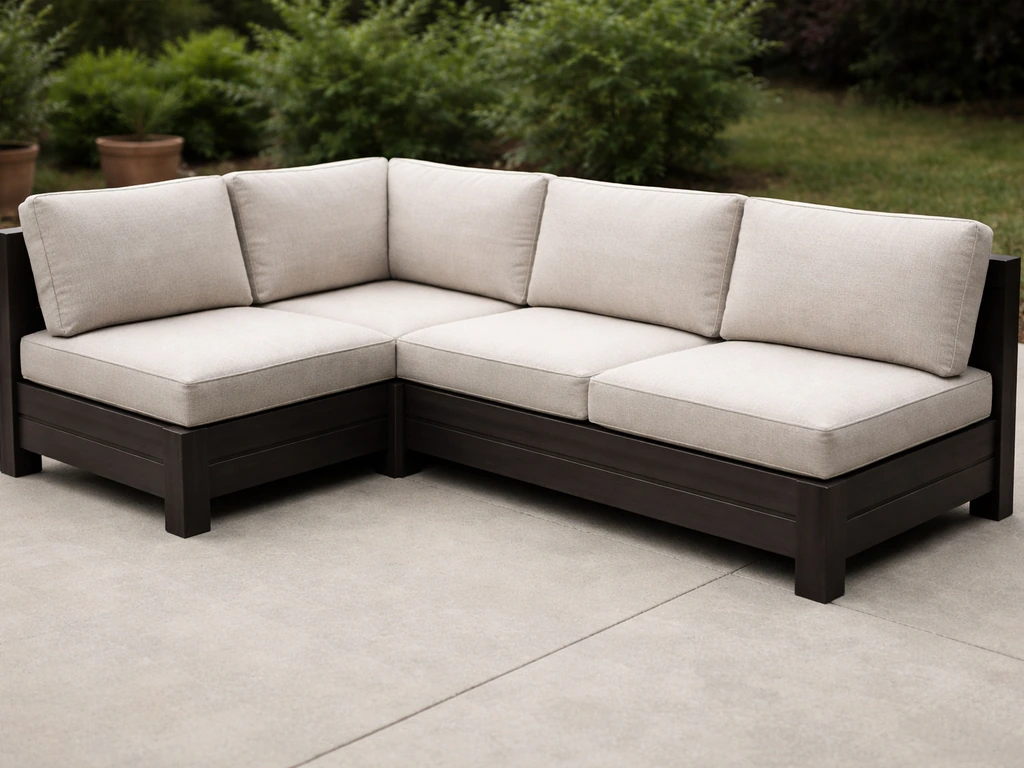
How to Build a Patio Sectional Step by Step
Step by step DIY guide to build a weatherproof patio sectional with plans, materials, frame assembly, and stable L conne