You can make a small patio cozy in a weekend without spending a fortune. The core moves are simple: anchor the space with an outdoor rug, add seating that doubles as storage, layer in soft textiles rated for sun and rain, hang lights at eye level or overhead, and block wind or sun from whichever direction makes the spot uncomfortable. Everything else, from container plants to privacy screens, builds on that foundation. The rest of this guide walks you through each step with real measurements, material specs, and renter-friendly options so you can start today and add to it over time. For more inspiration and step-by-step ideas on how to make your back patio look nice, see the related guide. For a quick step-by-step on how to make an apartment patio look nice, see this practical guide. For renters in apartments or condos, see our guide on how to decorate a small condo patio for renter-friendly layouts and product recommendations. For step-by-step tips and product recommendations on how to make a patio cozy, see our detailed guide. For additional inspiration and step-by-step styling tips, see how to decorate small patios.
How to Make a Small Patio Cozy: Practical Steps & Plans

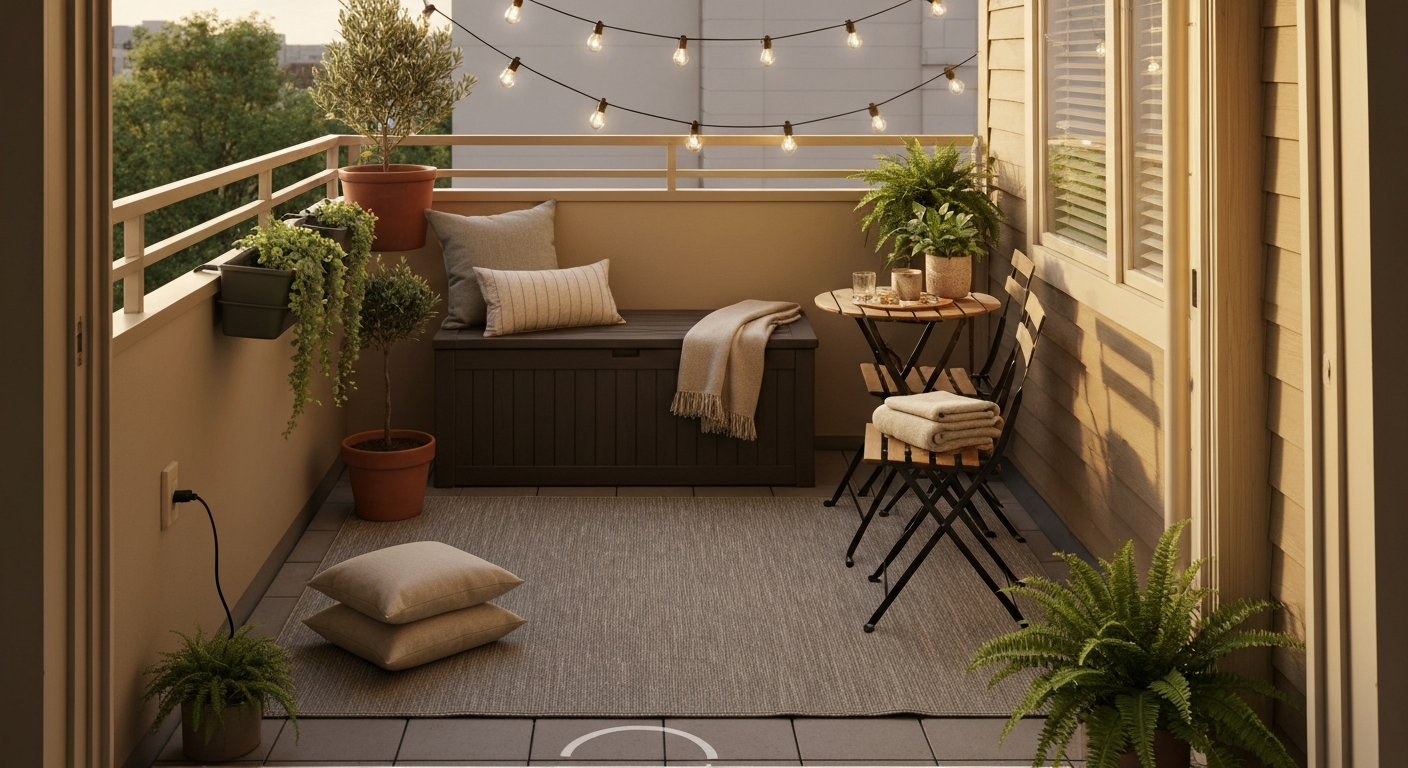
What actually makes a small patio feel cozy
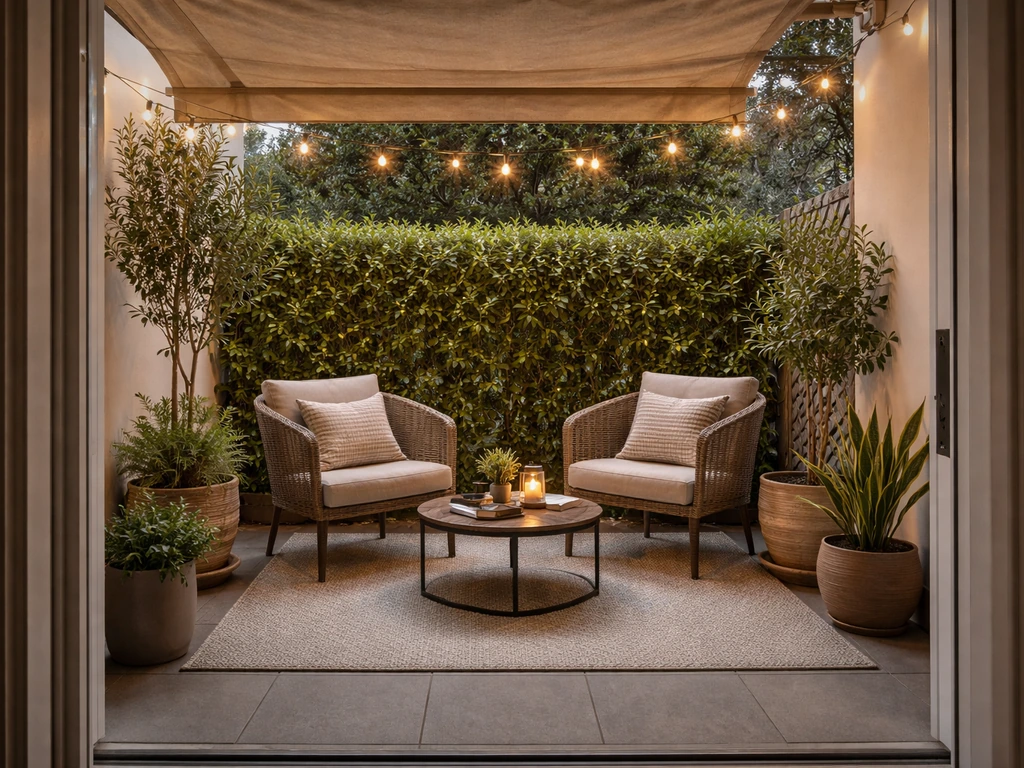
Coziness on a small patio comes down to four things: enclosure, softness, light, and scale. Enclosure means the space feels bounded, not exposed. Softness means textiles, cushions, and plants replace hard concrete and bare metal. Light means warm, low-level illumination rather than a single overhead flood. Scale means furniture and decor that fit the square footage instead of overwhelming it. When those four things are working together, even a 6x8-foot balcony feels like a real room. The goal is not to cram in features but to make every square foot earn its place.
Think of the project in phases. Phase 1 is layout and clearances. Phase 2 is furniture. Phase 3 is textiles and rugs. Phase 4 is lighting and plants. Phase 5 is shade and privacy. You do not have to do all five at once, and each phase makes a visible difference on its own. If you rent or have HOA restrictions, there is a version of every phase that uses no permanent fasteners.
Assess the space before you buy anything
Measure everything before you order a single piece of furniture. Write down the length and width of the usable floor area, then note where the door swings, where any railing posts are, and which direction the sun hits hardest at the times you actually want to sit outside. A small patio plan built on real measurements will always work better than one built from memory.
Structural load limits
Balconies and elevated decks have load limits set by building code. The 2018 IBC sets balcony and deck live loads at 1.5 times the live load of the area served, with a cap of 100 psf, though many jurisdictions amend this, and private balconies in some states are held to 60 psf. See 2024 North Carolina Building Code, Chapter 16 (illustrative of state-level adoption/amendments of IBC live-load language) for an example of how states adopt and amend IBC balcony/deck live-load provisions 2024 North Carolina Building Code — Chapter 16 (illustrative of state-level adoption/amendments of IBC live-load language). If you plan to place a hot tub, heavy planter boxes, or a crowded dinner party on a second-story deck, check with your local building department for the adopted value. For most ground-level patio slabs, load is rarely the limiting factor, but it matters the moment you go vertical.
Railing systems on any elevated patio need to resist a concentrated load of 200 pounds applied in any direction at the top of the rail per IBC Chapter 16. That matters if you plan to hang planters or lights from railing hardware. Use purpose-built railing hooks rated for the weight of what you are hanging, and do not suspend heavy objects from a single baluster.
Sun, wind, and HOA or rental rules
Stand on your patio at the time of day you most want to use it and notice where sun and wind come from. That observation drives your shade and enclosure choices more than any design guide can. HOA rules commonly restrict permanent structures, visible umbrellas of certain colors, string lights attached to the building, or anything that alters the exterior facade. Renters have similar restrictions baked into most leases. The checklist below helps you catch constraints before you invest in something you will have to undo.
- Measure floor area (length x width) and note door swing direction and clearance needed
- Record the height of any railing, overhead beam, or roof eave
- Identify which walls or surfaces are load-bearing versus decorative
- Check HOA CC&Rs or lease addendum for restrictions on structures, colors, and fasteners
- Confirm electrical outlet type (standard or GFCI) and its location; note that NEC 210.8 requires GFCI protection for most outdoor receptacles
- Note sun exposure by hour (morning, midday, afternoon) and primary wind direction
- Estimate existing furniture weight if the patio is elevated
- Check local noise ordinances if you plan water features or outdoor speakers
Plan your layout: traffic flow and placement rules
The single most common mistake on small patios is placing furniture first and discovering too late that you cannot move around it. Accessibility guidance and practical ergonomics both point to 36 inches as the minimum clear path width for comfortable single-person circulation. That is your baseline. Where two people need to pass, or where a wheelchair or stroller might travel, budget 44 to 48 inches. On a small patio, protecting one clear 36-inch path from the door to the seating zone makes the whole space feel more open, not less.
Start your plan by marking the door swing on a sketch of your floor area. Draw a 36-inch clearance arc from the door edge. That zone is untouchable by furniture. Then place your anchor piece, usually a small sofa, loveseat, or pair of chairs, against the wall or railing with the most protection from wind and sun. Orient seating to face outward if you have a view, or inward toward a focal point like a small table, lantern, or container plant if you do not. Keep the traffic lane open and let furniture hug walls or railings.
Layout templates with measurements
Below are four common small patio configurations with target dimensions. These are starting points, not rules. Adjust based on your measured floor area and the clearances you established above.
| Layout | Ideal Floor Area | Key Furniture | Core Dimensions |
|---|---|---|---|
| Single-seat lounge | 5 x 6 ft (30 sq ft) | One armchair, small side table, floor lantern | Chair: ~30"W x 32"D; Side table: ~18" diameter; 36" clear path to door |
| Two-person dining | 6 x 8 ft (48 sq ft) | Bistro table, two folding or stacking chairs | Table: ~24"–28" diameter or 24"x30" rect; Chairs: ~17"W each; 36" from table edge to wall |
| Outdoor workspace | 5 x 7 ft (35 sq ft) | Wall-mount folding table, one chair, vertical storage | IKEA ASKHOLMEN-style: 70x44 cm (27"x17"); Chair seat height 17–19" |
| Multi-use combo | 8 x 10 ft (80 sq ft) | Storage bench, small bistro table, one or two folding chairs, rug | Bench: 48"–60"L x 18"D; Rug: 5x7 ft minimum; 36" main traffic lane maintained |
For apartments and condo balconies, the single-seat lounge or two-person dining setup fits most spaces. If you need versatility, the multi-use combo with a storage bench and a folding bistro table is the most adaptable. The bench seats guests, stores cushions, and anchors the layout. The folding table tucks away when you want floor space for yoga or container gardening.
Sizing and placement cheat sheet
Keep this list handy when you shop. These are the numbers that prevent the most common small-patio sizing mistakes.
| Element | Recommended Dimension | Notes |
|---|---|---|
| Main traffic path | 36" (915 mm) minimum clear width | Never block door swing; use 44"+ for two-way passing |
| Seat height | 17–19 inches | Ergonomic comfort range; match to table height for dining |
| Seat depth | 16–18 inches (40–46 cm) | Shallower seats free floor space; add cushions to fill depth |
| Dining table clearance | 36" from table edge to wall or railing | Allows chair pull-out without bumping railing |
| Outdoor rug size (small patio) | 5x7 ft or 4x6 ft minimum | Front legs of all seating should sit on the rug |
| Rug to furniture rule | Front legs on rug; back legs off acceptable for small spaces | Lowe's and major retailers confirm this as the small-space rule |
| Wall-mounted folding table | ~70 x 44 cm (27" x 17") when folded | IKEA ASKHOLMEN is a commonly available reference size |
| Balcony folding table (compact) | ~50 x 35 cm (20" x 14") | IKEA TORPARÖ-style; fits a 4-ft balcony railing section |
| Railing hook load rating | Check against IBC 200-lb rail load requirement | Use purpose-built hooks; do not exceed rated weight |
Multifunction furniture: what to buy and what to look for
On a small patio, every piece of furniture should do at least two jobs. A chair that only sits is a luxury you cannot afford in 30 square feet. Focus on folding, nesting, stacking, and storage-integrated designs. Here is what to evaluate for each category.
Folding and nesting chairs and tables
Folding bistro chairs stack flat against a wall or hang on a hook when not in use. Look for powder-coated steel or aluminum frames with a rust-resistant finish; powder-coated aluminum is lighter and will not rust in humid or coastal climates. Polypropylene resin chairs are the budget-friendly option and hold up to UV reasonably well, though they may become brittle after 5 to 7 years of intense sun exposure. Nesting tables, typically sold in sets of two or three, let you expand surface area for a dinner party and then tuck the extras underneath.
Storage benches
A storage bench at 48 to 60 inches long and 18 inches deep gives you seating for two adults and roughly 4 to 6 cubic feet of interior storage for cushions, tools, or garden supplies. Look for a bench with a hinged, gas-spring lid so it stays open when you are digging around inside. Teak and eucalyptus are the premium wood choices; they weather gracefully and need only occasional oiling. Powder-coated steel or resin wicker over aluminum frames are lower-maintenance alternatives. Avoid benches with untreated pine or MDF components; they will not survive more than one wet season outdoors.
Convertible and wall-mount tables
A wall-mounted folding table is one of the highest-value upgrades for a tiny patio or balcony. Mounted at standard counter height (around 36 inches), it becomes a standing work surface. Mounted at standard dining height (29 to 30 inches), it seats two for meals and folds flat when you need the floor space. IKEA's ASKHOLMEN wall-mounted foldable table at 70 x 44 cm is a practical reference size. For renters, freestanding folding tables that lean against the wall and lock into position avoid the need for wall fasteners. Check the weight rating before you set a full dinner spread on them.
| Furniture Type | Best Material | Budget Range (approx.) | Renter-Friendly? |
|---|---|---|---|
| Folding bistro chairs | Powder-coated aluminum | $25–$60 each | Yes, no installation |
| Storage bench (48–60") | Teak or powder-coated steel | $120–$350 | Yes, freestanding |
| Wall-mount folding table | Powder-coated steel or teak slats | $40–$150 | No (wall anchors) / Yes (freestanding version) |
| Nesting side tables | Powder-coated steel or acacia | $50–$120/set | Yes, no installation |
| Convertible sofa/lounger | Aluminum frame, Olefin or acrylic cushions | $200–$500 | Yes, freestanding |
Storage solutions that do not eat your square footage
The floor is prime real estate on a small patio. Push storage up the walls and over the railing wherever possible. A vertical wall-mounted rack with S-hooks handles tools, garden gloves, a watering can, and a string of lights in a 12-inch-wide footprint. Over-the-railing planters and organizers clamp to most standard railing widths (3 to 4 inches) with no drilling required, which makes them ideal for renters.
- Storage bench (48–60" L): stores cushions, tools, and seasonal items underneath the seating surface
- Vertical wall rack (12"–16" deep): mount at eye level for frequently used items; use at shoulder height or above for seasonal gear
- Over-railing organizer bins: typically fit 3"–4" tubular railings; confirm railing diameter before ordering
- Pegboard panel (24" x 48"): mount on a fence or exterior wall; hang tools, small planters, and lanterns on steel hooks
- Corner shelf unit (freestanding, 3-tier): fits into a 12"x12" corner footprint; rated at 20–30 lbs per shelf for most resin or metal units
- Hanging shoe organizer (weatherproof canvas): repurposed as a vertical garden or supply caddy on a fence panel
- Magnetic or adhesive hooks on metal railing posts: rated at 5–10 lbs each for lightweight items like hats, tote bags, and small lanterns
For a ground-level patio with an adjacent fence or exterior wall, a simple pegboard or slatwall panel screwed into the fence framing (not the siding) gives you configurable storage that costs under $40 in materials and takes about an hour to install. That single panel can hold tools, a hose nozzle, seasonal decor, and small potted herbs, freeing your floor area for furniture and foot traffic.
Weatherproof textiles, rugs, and cushions
Soft furnishings are where a small patio starts feeling like a room instead of a slab. The key is choosing materials that can genuinely live outdoors and not indoor fabrics with a "weather-resistant" label that washes off after two seasons.
Outdoor rug materials and sizing
Polypropylene is the most practical fiber for outdoor rugs. It resists moisture, mildew, stains, and UV fading better than natural fibers at the same price point, and it dries fast after rain. Recycled PET (made from plastic bottles) is an eco-friendly alternative with similar performance. Avoid natural fiber rugs like jute or sisal in consistently wet climates; they will mold and deteriorate within one season. For size, follow this rule from major retailers: at minimum, the front legs of all seating should sit on the rug. On very small patios where a fully room-sized rug is impractical, front-legs-on is enough to anchor the visual space and prevent chair legs from catching the rug edge.
Cushion and upholstery fabric comparison
For cushion fabric, solution-dyed acrylic is the benchmark for outdoor performance. Sunbrella is the best-known brand, and its fabrics are 100% solution-dyed acrylic, meaning the color is locked into the fiber during manufacturing rather than applied as a surface dye. That process makes them significantly more fade-resistant and cleanable than piece-dyed alternatives. Sunbrella's care guide recommends a mild soap solution for routine cleaning and approves a diluted bleach solution for mold and mildew stains. Olefin (polypropylene fabric) is the budget-friendly alternative: it handles moisture and mildew well and costs less, but it fades faster under intense UV compared to solution-dyed acrylic, especially in south-facing or desert climates.
| Material | UV Fade Resistance | Moisture/Mildew | Cleanability | Relative Cost | Best For |
|---|---|---|---|---|---|
| Solution-dyed acrylic (e.g., Sunbrella) | Excellent | Excellent | Excellent (bleach-safe) | Higher ($) | Full-sun patios, long-term investment |
| Olefin/Polypropylene fabric | Good | Excellent | Good | Lower ($) | Covered patios, budget builds |
| Polyester (standard) | Fair | Fair | Fair | Lowest ($) | Occasional use, shaded spots only |
| Recycled PET fabric | Good | Very Good | Good | Mid ($) | Eco-conscious buyers, moderate sun |
Keeping cushions and textiles in place
Wind is the enemy of outdoor cushions. A few practical fixes: use cushion ties (most quality outdoor cushions have them) and actually loop them through the chair frame rather than leaving them decorative. Cushion clips or non-slip grip mats under seat cushions keep them from sliding on metal or wood frames. For throw pillows on a loveseat or bench, a lightweight mesh storage bag attached to the underside of the bench lets you stow them quickly when a storm rolls in rather than running inside with an armload. Store cushions in your storage bench or a weatherproof deck box when not in use for more than a day or two; even the best outdoor fabrics will last years longer with minimal overnight UV and moisture exposure.
Outdoor lighting: layered and code-compliant
String lights hung at or just above head height create the single most dramatic coziness upgrade for the money. Use lights rated for wet or damp locations depending on your exposure. UL listing guidelines define wet-location fixtures as those directly exposed to rain or water accumulation; damp-location fixtures are suitable for covered or protected exterior spaces. If your patio has an overhead cover, damp-rated is usually sufficient. An exposed balcony needs wet-rated fixtures. For any new or modified outdoor outlet, NEC 210.8 requires GFCI protection; if your existing outlet does not have a GFCI, use a plug-in GFCI adapter before connecting string lights or any other corded fixture.
Layer your lighting with at least two sources at different heights: overhead string lights or a pendant, plus one or two floor-level lanterns or solar stake lights. The combination eliminates the flat, institutional feel of a single overhead fixture and creates the warm, shadowy contrast that reads as cozy. Battery-operated and solar options remove any wiring concern entirely and are the cleanest solution for renters.
Privacy, shade, and wind protection
A patio that feels exposed to neighbors or harsh afternoon sun will never feel cozy no matter how nice the cushions are. Privacy and shade are structural problems that need structural solutions, even if those solutions are removable.
A freestanding pergola or shade sail is the most flexible shade option for small patios. Shade sails require three or four anchor points; on a patio without existing posts, pressure-treated 4x4 posts set in weighted planter bases (no digging required) work well for renters and temporary setups. A 10x12-foot or 12x12-foot shade sail covers most small patios and blocks 90 to 95% of UV depending on fabric density. For wind, outdoor privacy screens made from bamboo, polypropylene mesh, or woven resin panels can be zip-tied or clipped to existing railing without fasteners. These typically come in 6-foot panels and can be chained together along a railing run.
Container plants and vertical greenery
Plants bring the single biggest visual transformation per dollar on a small patio. The goal is not to build a garden; it is to add enough greenery to soften hard edges and create a sense of enclosure. A few tall container plants in corners and a railing box of trailing plants at the perimeter accomplish both.
Container size matters more than most people expect. University of Minnesota Extension guidance recommends roughly 3 gallons of soil per foot of expected plant height as a practical rule of thumb. University of Minnesota Extension, Container Gardening (rule‑of‑thumb: 3 gal soil per 1' plant) provides that guideline University of Minnesota Extension — Container Gardening (rule‑of‑thumb: 3 gal soil per 1' plant). For common edibles and herbs: leafy greens and herbs do fine in 2 to 3-gallon pots or wide shallow boxes; peppers and most herbs need 3 to 5 gallons; determinate tomatoes need at least a 5-gallon container; indeterminate tomatoes need 10 gallons or more. Undersized containers dry out fast, stress the plant, and require constant watering. On a windy balcony, use heavier ceramic or concrete pots as ballast, or place lightweight plastic pots inside decorative outer containers weighted with gravel.
- Corner anchor plant: use a 7–10 gallon container with a tall ornamental grass, small bamboo (clumping variety), or dwarf shrub to create enclosure in each back corner
- Railing boxes: mount over-the-railing planters with trailing plants like sweet potato vine, trailing petunias, or herbs to soften the perimeter
- Vertical wall pocket planter: a felt or fabric pocket panel on a fence or wall grows herbs, succulents, or trailing plants in under 6 inches of depth
- Tiered plant stand: a three-tier stand in a 12x12-inch footprint stages multiple pots at different heights, creating a layered green backdrop
- Self-watering containers: drip-free inserts or built-in reservoirs reduce watering frequency to once or twice per week in summer, practical for balconies where drainage is restricted
Renter-friendly and budget upgrades by phase
Not every upgrade needs to happen at once. Here is a phased approach organized by cost and commitment, with renter-safe options at each stage. This matches the way most people actually improve a space: do the free or cheap stuff first, confirm you love it, then invest more.
- Phase 1 (under $50, renter-safe): Measure and sketch the layout. Clear the space, establish the 36-inch traffic lane, and hang battery-operated string lights. Add one or two solar stake lights. Cost: mostly time.
- Phase 2 ($50–$150): Buy an outdoor rug sized for your layout (polypropylene, front legs of furniture on rug). Add clip-on railing planters with trailing plants or herbs.
- Phase 3 ($100–$300): Add a storage bench or folding bistro table-and-chair set. Swap bare chair frames for cushions in a solution-dyed acrylic or olefin fabric.
- Phase 4 ($100–$250): Install a shade sail on weighted post bases or a freestanding umbrella. Add a privacy screen panel zip-tied to the railing.
- Phase 5 ($150–$500+): Upgrade to a wall-mounted folding table (if allowed), add a patio enclosure screen or DIY screened panel for insect control, and invest in a full cushion set in performance acrylic fabric for permanent seating.
Seasonal maintenance to keep it cozy year-round
A small patio is easy to maintain if you build the habits into the change of seasons. In spring, pull cushions out of storage and inspect fabric for mildew; clean with a mild soap solution or, for stubborn mold on Sunbrella-type fabrics, a diluted bleach and soap solution per the manufacturer's care guide. Rinse thoroughly and let dry fully before use. Inspect any railing hooks, shade sail hardware, and privacy screen clips for rust or fatigue. In fall, store cushions and textiles in a dry space (the storage bench or a deck box), drain container plants, and cover or bring in lightweight furniture that might catch wind or snow. A mid-season wash of the outdoor rug, left to dry flat in the sun, extends its life significantly.
If you have gone through the trouble of adding a screened or enclosed patio element, inspect the screen mesh in spring for tears or warping. Small holes can be patched with mesh repair tape; larger damage is a full panel replacement job that is worth doing before insect season starts. Keeping the space weathertight and insect-free is what turns a cozy patio into one you actually use every day rather than just on perfect days.
FAQ
What are the first planning steps before you change a small patio, balcony, or apartment outdoor corner?
Measure the usable floor area (length × width) and note door swings, HVAC equipment, drains and slope. Check load limits, building codes and rules: many jurisdictions use IBC/ASCE live‑load rules for balconies (check local amendments; some set 60–100 psf) and IBC requires guard systems to resist a 200‑lb concentrated load at the top. Read HOA or landlord rules for attachments, planters, rail boxes and screening. Note available electrical outlets and whether outdoor receptacles require GFCI protection per NEC. Map sun/shade patterns and wind exposure for plant and textile choices.
How do I choose a furniture layout that fits a very small patio (under ~50 sq ft)?
Use a floor plan: allow 36 in (915 mm) minimum circulation where possible; for very tight spots prioritize one focal seating (bistro set or small loveseat). Follow furniture sizing rules: standard seat height 17–19 in and seat depth 16–18 in; choose tables where front legs of seating sit on the rug if using a rug. Folding, stackable or built‑in benches maximize function—e.g., a 2‑seat bistro set or 50×35 cm folding balcony table are good for narrow spaces. Keep 6–12 in clearance from a door swing if possible.
What are space‑saving furniture and multifunction ideas for balconies and small patios?
Options: folding wall‑mounted tables; narrow bench seating with hidden storage; modular cube seating that doubles as side tables; railing planters that convert to tray surfaces; vertical shelving for plants and décor; hanging swings or hammock chairs that free floor space. Choose pieces with clear product dimensions and foldable profiles before buying to confirm fit.
Which outdoor textiles and rugs work best for small patios, and how should I size/place them?
Use polypropylene or recycled PET outdoor rugs for moisture/UV resistance; solution‑dyed acrylic fabrics (e.g., Sunbrella) are best for performance cushions and pillows. Size rule: place a rug so at least the front legs of chairs sit on it—on small patios that often means a rug smaller than the full deck but centered on the seating area. Choose washable/bleach‑safe cushions and follow manufacturer cleaning guidance.
How do I layer lighting on a small patio to make it cozy and usable at night?
Combine three layers: ambient (string lights or wall lanterns), task (a small table lamp or clip light for reading), and accent (LED spot for planters or a solar pathway light). Use fixtures rated for the location: UL 'wet' for exposed rain, 'damp' for covered areas. For any new outdoor outlets, ensure GFCI protection per NEC and use outdoor‑rated wiring and weatherproof covers.
What are quick, renter‑friendly ways to add privacy and screening?
Use freestanding, lightweight screens (bamboo or framed fabric) that clamp to railing without drilling; tension‑rod curtains that hang from an overhang; tall potted plants or vertical planter walls on wheeled bases; removable adhesive trellis sections for vines. Avoid permanent attachments unless permitted by the landlord or HOA.
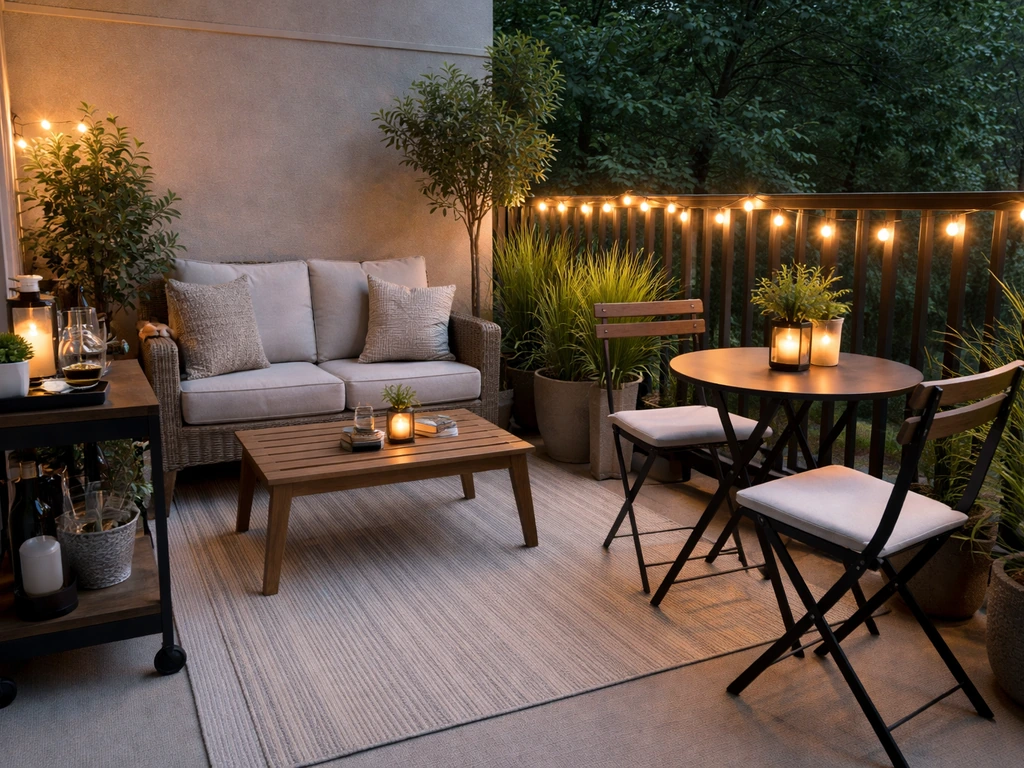
DIY steps and smart small-space decor ideas to style a condo patio with durable, low-maintenance furnishings and zones.
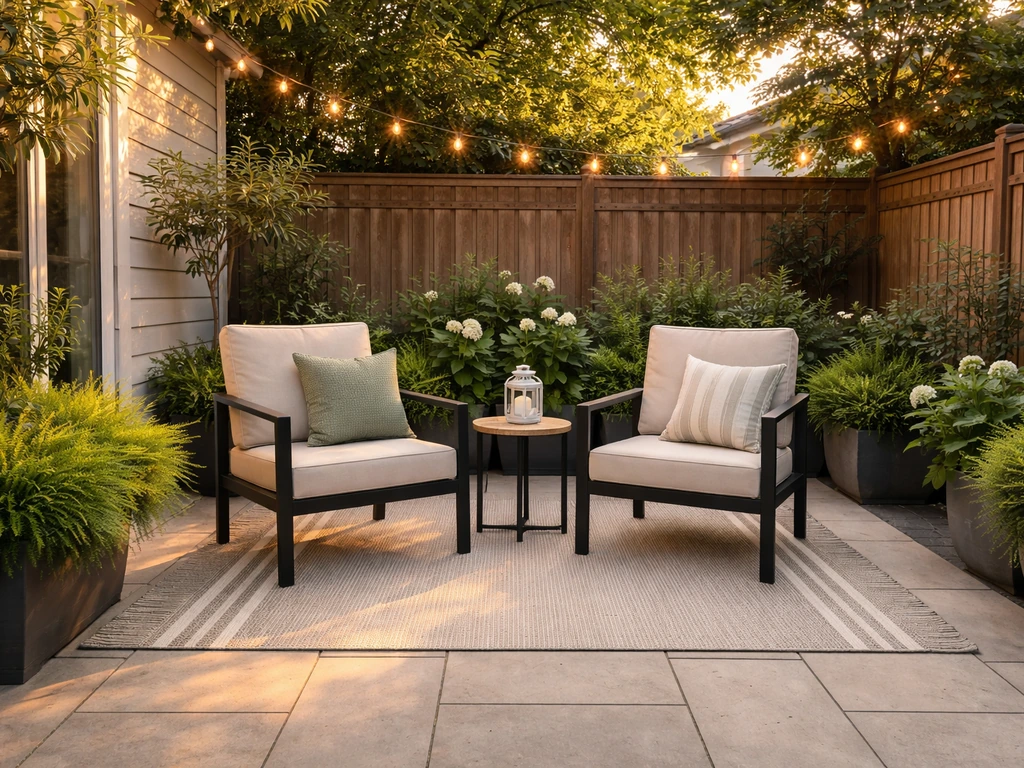
Step-by-step DIY upgrades to make your back patio look nice, from cleaning and lighting to furniture, greenery, and shad
Step-by-step DIY ideas to upgrade a small apartment patio today with layout, decor, lighting, privacy, shade, and easy u