The fastest way to make your back patio look nice is to work in order: clean it first, fix the surface, arrange your furniture intentionally, add a rug and some plants, layer in lighting, then think about shade and enclosure. Most patios go from drab to genuinely inviting with a weekend of cleaning and a few hundred dollars in targeted upgrades. You don't need a full renovation. You need a clear sequence and the right materials for your climate.
How to Make Your Back Patio Look Nice Step by Step

Felix Brennan
13 Jun 2026
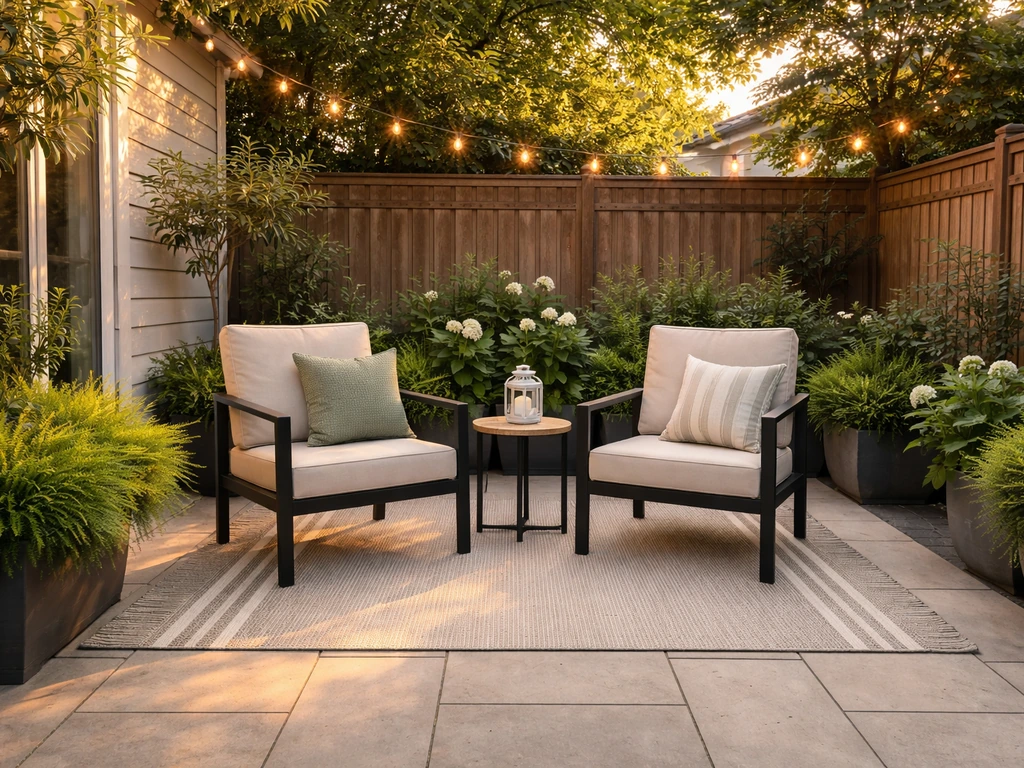
Quick makeover checklist: things you can start today
Before you spend a dollar, do a full walk-through and handle everything on this list. These are the highest-return, lowest-cost moves you can make, and doing them first lets you see what you actually need to buy.
- Remove everything from the patio and set it aside — furniture, pots, toys, tools, all of it
- Sweep or blow off all debris, cobwebs, and loose dirt from the surface, walls, and furniture
- Throw away or donate anything broken, faded beyond saving, or that you genuinely don't use outside
- Pressure wash or scrub the patio surface (see the next section for surface-specific tips)
- Wipe down all furniture frames and cushion covers before bringing anything back
- Assess what you have: what's worth keeping, what needs replacing, what's missing entirely
- Make a short shopping list — rug, plants, lights, a throw pillow refresh — before you buy anything
That last step matters more than people think. Lowe's outdoor design guidance specifically recommends adding items one at a time and stepping back to view the whole space as you build the look, rather than buying a cart full of stuff and cramming it in. Start with the biggest visual anchor (usually the furniture arrangement or the rug) and work outward from there.
Deep clean and surface refresh: concrete, pavers, and wood
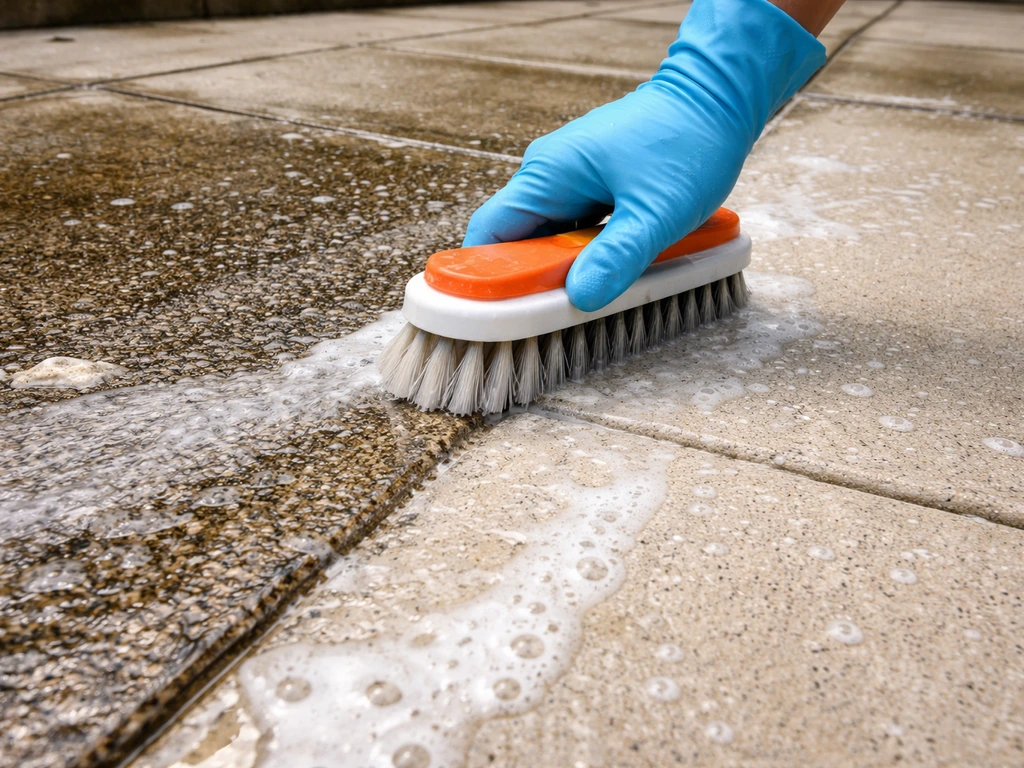
The surface your patio sits on has more visual impact than almost anything you put on top of it. A dingy, stained slab undermines even great furniture. Cleaning takes a couple of hours and the results are immediate.
Concrete slabs
For a standard concrete patio, start with a general-purpose concrete cleaner and a stiff brush. Always test any product on a small, inconspicuous area first to make sure it won't discolor your slab. For pressure washing, aim for 2,500 to 3,000 PSI max, use a 25-degree nozzle, and keep the wand moving at a consistent distance from the surface rather than hovering in one spot. Once it's clean and dry, consider applying a concrete sealer. You can do a simple water absorption test to know when it's time: drip water on the surface and if it soaks in rather than beading up, the sealer is worn out. Resealing protects the surface and makes future cleanups much easier.
Pavers
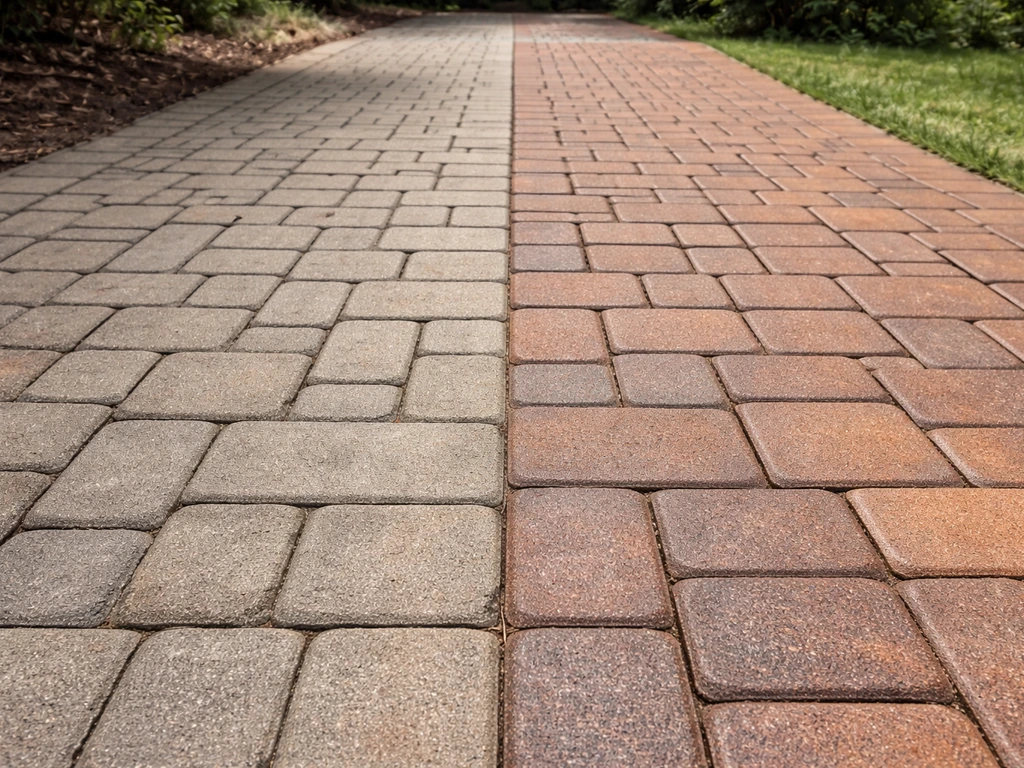
Sun exposure breaks down paver pigment over time, so even clean pavers can look washed out. A thorough cleaning often restores surprising vibrancy. Be careful with pressure washing on pavers though: too much force can expose the aggregate underneath the surface layer, so keep the pressure moderate and maintain a consistent distance. After cleaning, check your joints. If the joint sand has washed out or settled, top it off, because low joints cause pavers to shift and that uneven look ages everything fast. If you've recently installed polymeric sand, wait at least 30 days before cleaning and sealing. Sealer stabilizes joint material and makes the surface much easier to maintain going forward.
Wood decks and platforms
If your back patio has a wood deck surface, skip the chlorine bleach. It's commonly used but it's hard on treated wood fibers. Instead, use an oxygen bleach cleaner (sodium percarbonate, same family as OxiClean) and follow it with a wood brightener to restore the natural pH and color. Keep pressure washing below 500 PSI on wood, anything higher starts damaging the fibers. If you see splintering, warping, or cracking, those are signs of moisture intrusion and the deck needs to be restained. Solid stains typically need refreshing every 4 to 5 years. If the old stain is flaking badly, you'll need to strip it before restaining for a clean, uniform result.
Layout and styling: furniture, rugs, and color
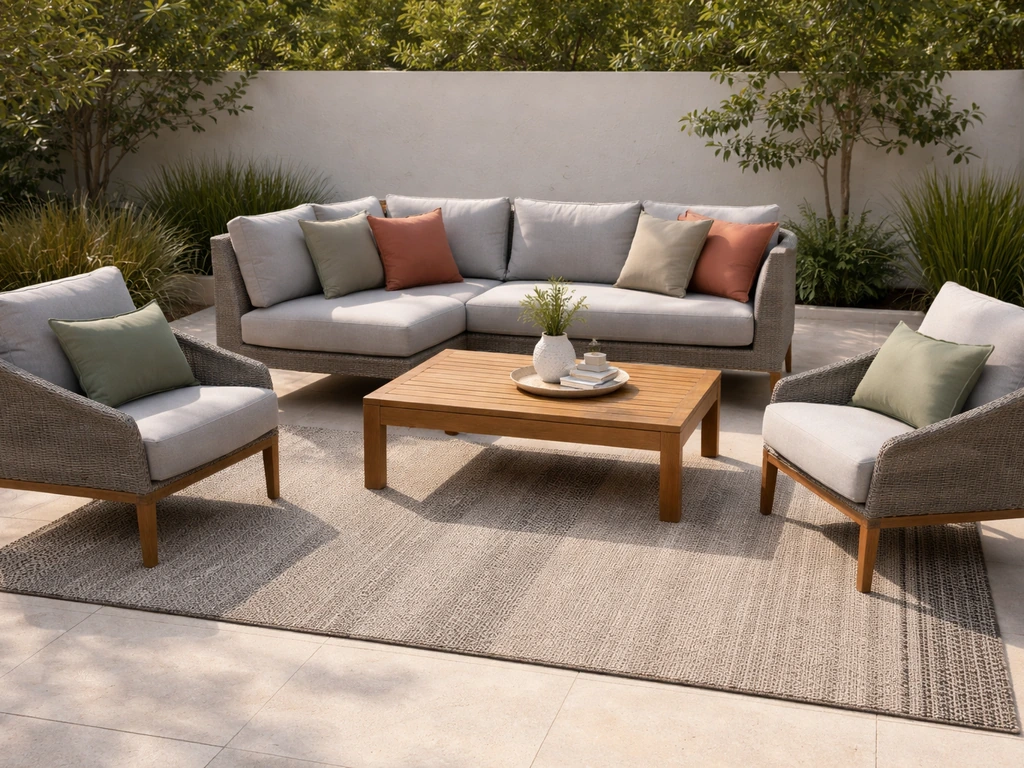
Once the surface is clean, the single biggest visual transformation comes from your furniture arrangement and the materials you layer on top of it. This is where your patio starts feeling like an actual room instead of a storage area with chairs.
Furniture that fits the space and your home's style
Patio furniture that complements your home's architecture makes the whole space feel cohesive and intentional. If your house is modern and clean-lined, chunky wicker furniture in a beach-cottage style creates visual friction. Match the general aesthetic. Beyond style, think about how you actually use the space: a conversation set with a coffee table works for relaxed evenings, while a dining table setup is better if you eat outside regularly. Small patios can feel extra cozy when you layer lighting, add a rug, and create a bit of shade how to make a small patio cozy. Don't try to do both on a standard-size patio. Pick the primary function and furnish for that.
Outdoor rugs anchor everything
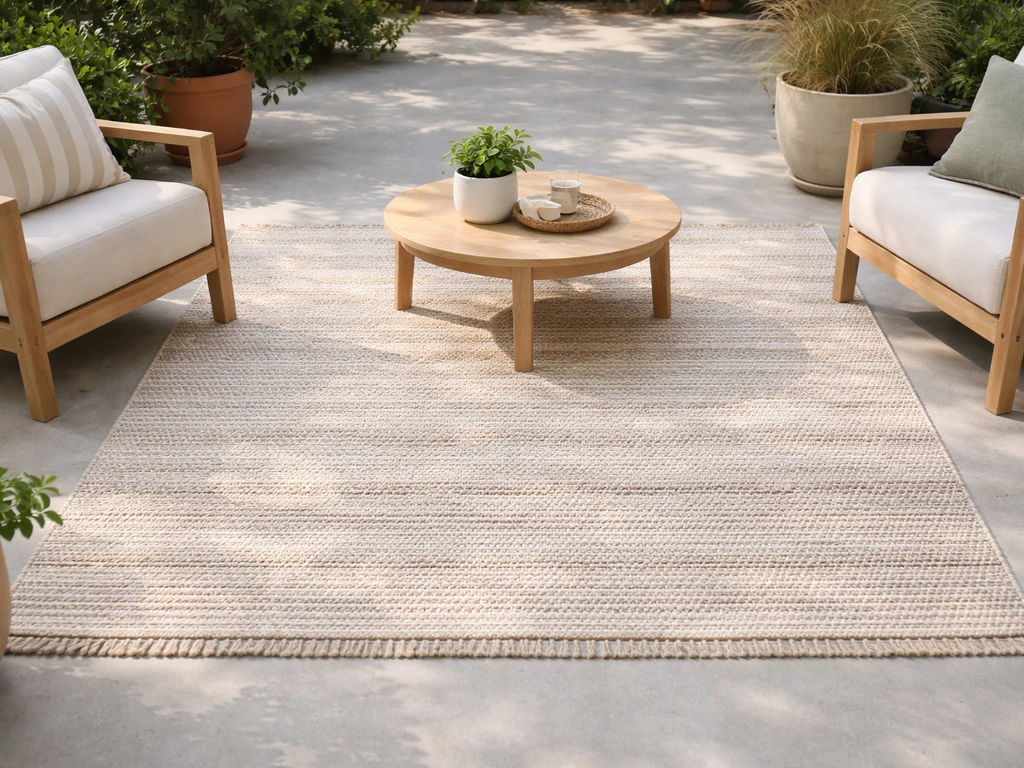
An outdoor rug is probably the cheapest way to make a patio look dramatically more finished. It defines the seating zone, adds color and texture, and softens the hard surface. Size up rather than down: the rug should sit under the front legs of all the furniture, at minimum. For maintenance, store or stow the rug when it won't be used for an extended period to prevent mold and mildew buildup underneath. Flat-weave polypropylene rugs are the most durable and easiest to clean for most climates.
Color and texture approach
Pick two or three colors and repeat them across cushions, throw pillows, planters, and small decor items rather than introducing a new color with every piece. This repetition is what makes a patio look curated rather than cluttered. For cushion care, if mildew builds up, use an oxygen-based cleaner and avoid undiluted bleach, pressure washers on fabric, or abrasive scrubbers, all of which damage outdoor cushion material. Fade-resistant, solution-dyed acrylic fabrics like Sunbrella are worth the investment if you're replacing cushions anyway.
Plants, planters, and greenery for instant appeal
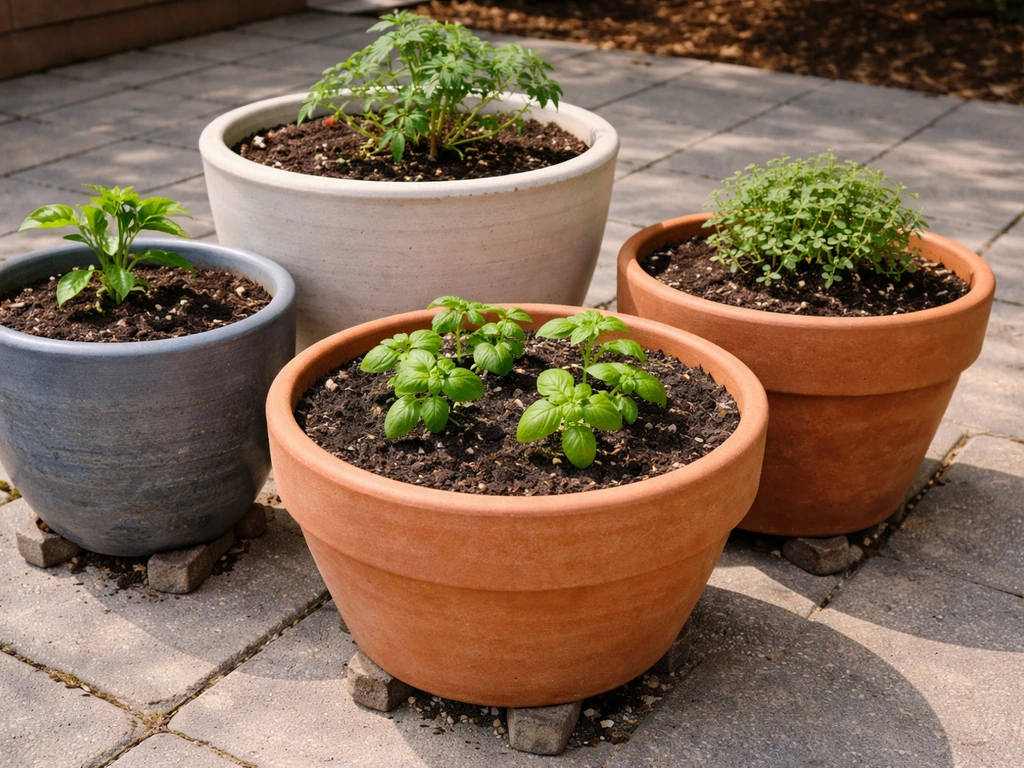
Nothing makes a patio feel more alive than plants, and containers give you total flexibility with no digging required. The trick is in how you pot them and how you arrange them.
Getting your containers right
Always use containers with drainage holes. On a hard patio surface, set pots on gravel or pot feet so water can actually drain rather than pooling and staining the surface. Use a potting mix that contains perlite or vermiculite for improved drainage, standard garden soil compacts in containers and suffocates roots. For larger plants like tomatoes or peppers if you want edibles, you need at least a five-gallon container to accommodate the root system. Smaller ornamental plants can go in smaller pots, but err on the side of more root space rather than less.
How to arrange plants for visual impact
The design principle that makes a patio plant display look intentional instead of random is layering by height. Use a foreground layer of low, trailing plants (spillers that drape over pot edges immediately soften hard lines and make everything look more established), a midground of medium-height plants with interesting foliage shapes, and a background or canopy layer of taller plants, climbers trained up a trellis or fence, or a larger potted shrub or ornamental grass. Mix plant shapes and textures within each layer to create contrast, and repeat a single flower color across multiple pots or height layers to unify the display. Climbers trained along a fence or wall also add a sense of vertical structure and privacy on patios that would otherwise feel flat or exposed.
Lighting and outdoor decor that elevates the whole space
Good outdoor lighting is what makes a patio feel like a destination after 6 PM. It also dramatically improves how your patio photographs and how it reads from inside the house looking out.
Stick with warm color temperatures
For a residential patio, the ideal bulb color temperature is 2700K to 3000K. That range produces the warm, inviting glow that reads as comfortable and relaxing. Avoid mixing color temperatures across your lighting elements, because the inconsistency looks unpolished and makes the space feel colder. LED bulbs in the 2700K to 3000K range on a 12-volt low-voltage system are energy-efficient and long-lasting, a good fit for pathway lighting, uplighting planters, or accent fixtures. For pathway or step lighting, space fixtures roughly 6 to 10 feet apart in an alternating pattern on each side of the path for even coverage without over-lighting.
String lights and safety
String lights are one of the most effective and affordable patio upgrades available. The key is doing it safely: always use outdoor-rated string lights and outdoor-rated hardware for hanging. Any outdoor electrical outlet you're plugging into must be GFCI-protected and rated for wet or damp locations. Don't use indoor extension cords outside. If you don't have a GFCI outlet on your back patio, that's a quick fix for a licensed electrician and absolutely worth doing before you start running lights.
Decor that adds personality without clutter
A few well-chosen decor items go further than a lot of small stuff. A weather-resistant lantern, a simple outdoor side table with a candle or plant on it, a coordinated set of throw pillows, these items add personality without creating visual noise. Use the same two or three colors from your furniture and cushion palette in your decor choices so the whole space reads as one intentional room.
Shade and wind protection: covers, awnings, pergolas, and screens
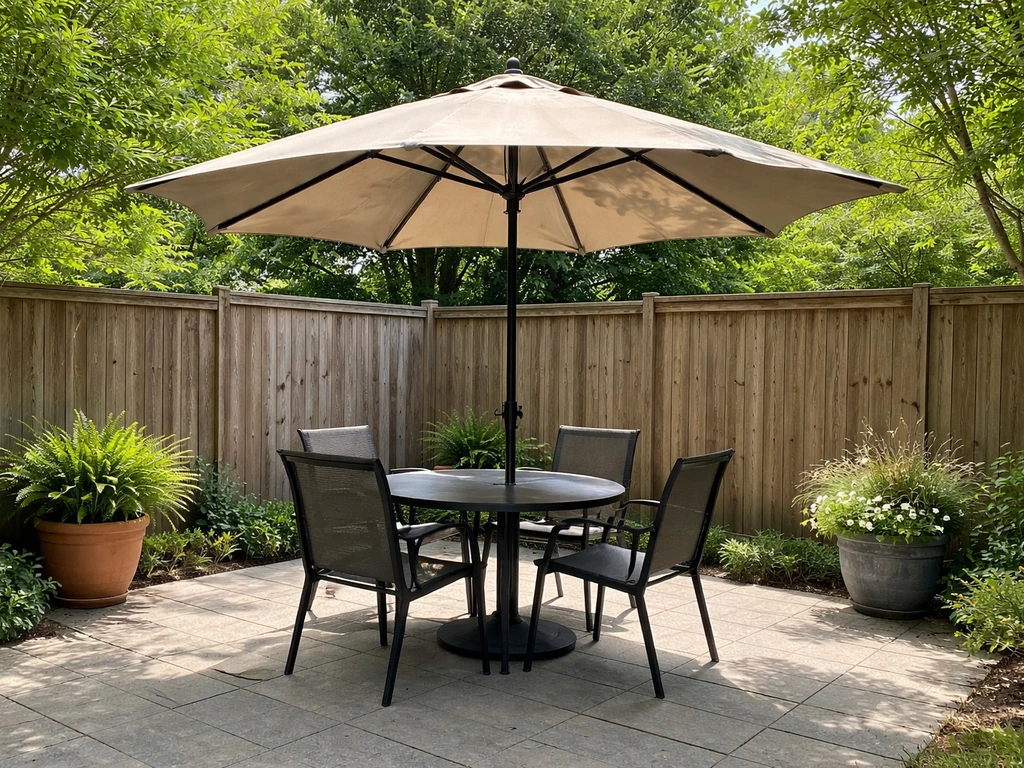
If your back patio is uncomfortable to sit on because of sun, wind, or insects, no amount of decorating will fix that. Shade and enclosure upgrades are where function and appearance come together, and they're the biggest single-project investment you can make to improve long-term livability. A patio can feel truly cozy when shade and enclosure upgrades make it comfortable to stay out longer, even when the weather changes.
Quick shade options: umbrellas and shade sails
Cantilever or offset umbrellas are the easiest DIY shade solution. They require no building permits, install in an afternoon, and can be repositioned as needed. A large market umbrella (9 to 11 feet) covers a standard seating area effectively. Shade sails are another budget-friendly option, they're tensioned fabric panels anchored to posts or the house and can be installed over a weekend. Both options are temporary and can be taken down seasonally.
Retractable awnings
A retractable awning mounts to the back of the house and extends over the patio on demand. They provide excellent sun coverage and retract in bad weather to extend their lifespan. If you're choosing a motorized model, set the wind sensor threshold 5 to 10 mph below the awning's maximum rated wind speed, this gives you a safety margin that protects the awning from unexpected gusts. Most retractable awnings are manageable as a DIY project if you're comfortable working at height with basic tools, though a two-person crew makes the installation much safer.
Pergolas and patio covers
A pergola adds structure, height, and a defined overhead plane to any patio. It creates the visual feeling of an outdoor room even before you add a shade fabric, climbing plants, or a lattice cover. Pergola kits designed for DIY installation have gotten significantly better in recent years, many attach to an existing concrete slab with anchor hardware and go together in a day or two. They're one of the best ways to add both aesthetic and functional value to a back patio simultaneously.
Screen enclosures and patio screens
If insects, wind, or privacy are your main pain points, a screen enclosure or screened-in patio is the most complete solution. A basic screen kit can be added to an existing pergola or patio cover, or you can build a freestanding screened structure. Full enclosures transform a patio into a true outdoor room usable for far more months of the year. For smaller budgets, outdoor privacy screens in aluminum or wood frame with fabric panels can block wind from specific directions without enclosing the entire space.
| Option | Best For | DIY Difficulty | Rough Cost Range | Seasonal? |
|---|---|---|---|---|
| Cantilever umbrella | Quick, flexible shade | Easy | $100–$400 | Yes, store in winter |
| Shade sail | Budget overhead shade | Easy | $50–$250 | Yes, take down seasonally |
| Retractable awning | Sun control on demand | Moderate | $800–$3,000+ | Partially (retracts) |
| Pergola kit | Structure, shade, aesthetics | Moderate | $500–$4,000 | Permanent |
| Screen enclosure | Bug/wind/privacy control | Moderate to hard | $1,000–$8,000+ | Permanent or seasonal |
Maintenance plan to keep it looking nice year-round
A patio that looks great in June but is a mess by September didn't have a maintenance plan. These habits take 20 to 30 minutes each and prevent the kind of seasonal deterioration that makes a patio look neglected.
Monthly tasks (10–15 minutes)
- Sweep or blow off the surface and wipe down furniture frames
- Check container plants for watering needs and remove dead foliage or blooms
- Spot-clean cushion covers with a mild detergent and let them air dry fully
- Check paver joints for erosion and top off joint sand if it's dropped noticeably
Seasonal tasks (once or twice a year)
- Deep clean the surface with appropriate cleaner for your material (concrete, pavers, or wood)
- Do the water bead test on concrete or pavers to determine if resealing is needed
- Inspect wood surfaces for splintering, warping, or cracking — signs the stain or sealer has failed
- Store or cover outdoor rugs during extended periods of rain or winter to prevent mold underneath
- Clean awning fabric and lubricate the retraction mechanism per the manufacturer's schedule
- Swap out container plants for season-appropriate varieties
Annual tasks (plan a dedicated day)
- Reseal pavers or concrete if the water test shows absorption (every 2–4 years on average)
- Restain or reseal wood surfaces on a 4–5 year cycle for solid stains, sooner if peeling appears
- Audit your furniture: tighten fasteners, replace worn strapping, and assess whether cushions need replacing
- Review your shade and screen components for any damage, loose hardware, or fabric wear
- Refresh decor and planters — sometimes a coat of spray paint on a planter or new throw pillows is all a patio needs to feel current
If you're working with a smaller or more compact outdoor space, the same sequence applies but the scale shifts, you're solving for proportion and density rather than coverage. Those challenges come up a lot in apartment patios, condo settings, or small urban back patios where every square foot has to do double duty.
With a small condo patio, focus on multi-use furniture, a properly sized outdoor rug, and vertical plants so the space feels cozy instead of crowded apartment patios, condo settings, or small urban back patios. These same ideas are especially helpful when you need to know how to make an apartment patio look nice despite limited space apartment patios.
If you're learning how to decorate small patios, the key is proportion, density, and choosing decor that anchors the space without crowding it small urban back patios. The principles are the same: clean first, anchor with a rug, layer in plants vertically, add warm lighting, and protect from the elements. If you’re aiming for a small patio, cozy details like warm lighting, layered textiles, and a little shade can make it feel inviting.
The order of operations doesn't change just because the space does.
FAQ
How do I stop my patio from looking “busy” even after I add a rug, plants, and decor?
Use a strict repeat rule. Choose two to three colors and reuse them in at least three categories (for example, cushions, planters, and throw pillows). Also limit the number of distinct patterns (one patterned textile max, the rest solid), because multiple patterns on hard surfaces makes the space read cluttered even when the pieces look nice individually.
What’s the best rug size if my patio is small or oddly shaped?
If you can, size so the rug sits under all the furniture “front legs” of your seating set. For irregular shapes, prioritize coverage of the seating zone over perfect geometry, and allow a few inches of walkway clearance. If the rug is too small, the seating area looks disconnected, even when you place pillows and planters correctly.
Can I pressure wash everything on a patio, including pavers and furniture?
Avoid treating all surfaces the same. For pavers, keep pressure moderate and maintain a consistent distance to prevent exposing aggregate, and never aim at furniture finishes. Fabric cushions and outdoor textiles should not be pressure washed, use gentle oxygen-based cleaners and hand or soft-brush scrubbing instead to prevent fiber damage and color streaking.
How do I know whether to seal a concrete patio now or wait?
Do the water absorption test. Drip water and watch how quickly it soaks in versus beads. If it soaks in readily, sealing is overdue. If it beads and stays beaded, you may not need sealing yet, but plan for periodic resealing because the protective layer thins over time.
What should I do if pavers look uneven or shift after cleaning and adding sand?
Check joint stability and top up joint sand after cleaning. Low or washed-out joints allow pavers to move, which creates a wavy look that makes the entire patio seem older. If shifting continues, you may need to address drainage issues or re-level sections before adding more sand.
Is polymeric sand the same as regular joint sand, and how does that change cleaning timing?
It behaves differently. Polymerically bound joints can take time to cure, so cleaning and sealing too soon can disrupt the joint material. If your patio recently had polymeric sand installed, wait at least the recommended window (30 days in most typical setups) before aggressive cleaning or sealing.
What’s the safest way to clean a wood deck patio without damaging the finish?
Skip chlorine bleach and use an oxygen bleach cleaner, then follow with a wood brightener to restore color balance. Keep the water pressure below 500 PSI, and stop if you see splintering, warping, or cracking, because those are warning signs of moisture intrusion that usually require restaining after proper prep.
How can I make outdoor lighting look cohesive without over-lighting or creating glare?
Pick one target color temperature (2700K to 3000K) and don’t mix it across fixture types. For placement, keep spacing consistent (about 6 to 10 feet for pathway or step lighting) and use alternating placement on each side to avoid dark gaps. If you see glare, reduce fixture height or turn toward the ground rather than aiming into seating eye level.
What electrical safety step should I confirm before hanging string lights?
Confirm the outlet is GFCI-protected and rated for wet or damp locations. Also use outdoor-rated cords and mounting hardware, and never run indoor extension cords outside. If you do not have a suitable outdoor outlet, hire a licensed electrician before installing any lighting system.
How do I keep plants from staining my patio or creating water damage under pots?
Always use containers with drainage holes, and elevate pots using gravel, pot feet, or a drain-safe base. Combine that with a fast-draining potting mix containing perlite or vermiculite. This prevents pooled water that can leave rings and helps reduce the chance of mold on the patio surface.
What container size should I choose for edible plants versus small ornamentals?
For larger edibles like tomatoes or peppers, plan on at least a five-gallon container to support root mass. For smaller ornamental plants, you can go smaller, but it’s usually safer to size up rather than down because shallow or tight pots dry out faster and look less healthy.
How can I layer plants by height without making the display look messy?
Keep each layer intentional. Use low trailing plants at the front so they visually soften edges, mid-height plants for foliage shape variety, and taller plants or climbers at the back for vertical structure. Repeat one flower color across multiple pots or height layers to unify the look, and avoid mixing too many bloom colors at once.
If my patio is uncomfortable due to bugs or wind, do I need a full enclosure?
Not always. If insects are the main issue, a screened-in section can help without enclosing every direction. If wind is the problem, targeted outdoor privacy screens can block airflow from specific angles. Consider your main “pain point direction” first, then choose the smallest solution that addresses that exposure.
What quick maintenance habits matter most so my patio stays nice from spring to fall?
Add a short seasonal routine. Do light cleaning and debris removal, check joints or grout lines for washout, and inspect furniture and textiles for mildew. Aim for 20 to 30 minutes per session, then address small issues early so they don’t turn into larger repairs later in the season.
I want to make an apartment patio look nice, but I can’t change the layout much. What should I prioritize?
Prioritize proportion and vertical interest. Choose multi-use furniture and a rug sized to anchor the seating zone, then add height with vertical planters or trailing plants. Keep the number of decor items limited so it doesn’t feel crowded, and rely on warm lighting plus a bit of shade to make the space feel cozy rather than exposed.
Next Articles
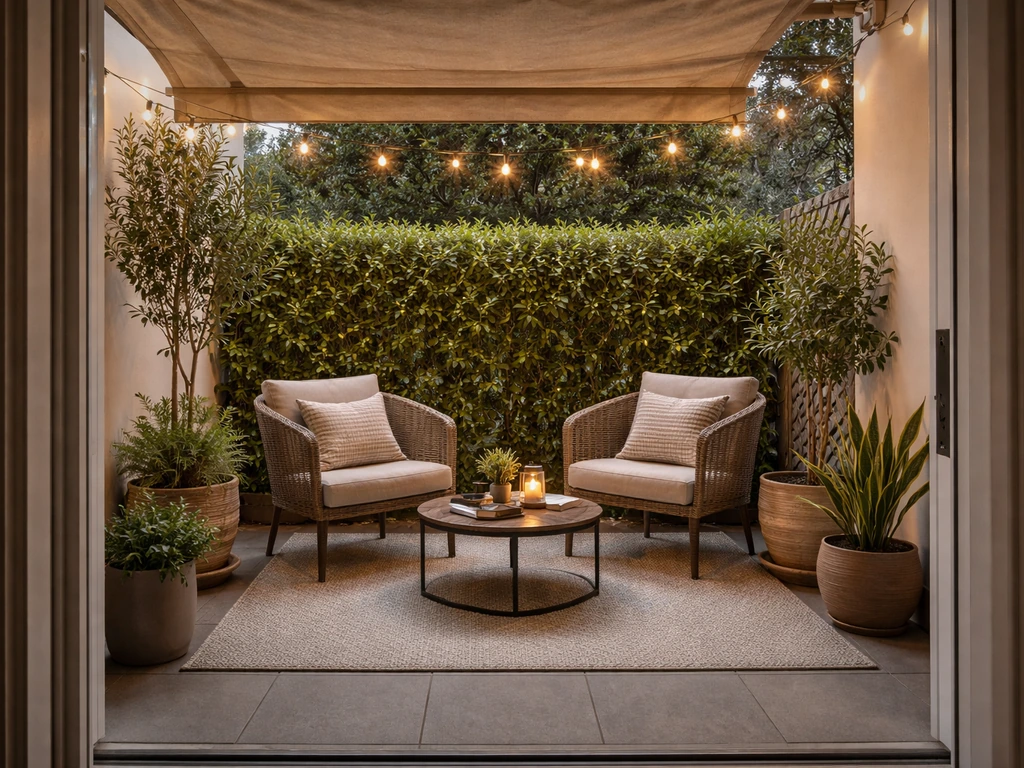
How to Make an Apartment Patio Look Nice Today
Step-by-step DIY ideas to upgrade a small apartment patio today with layout, decor, lighting, privacy, shade, and easy u
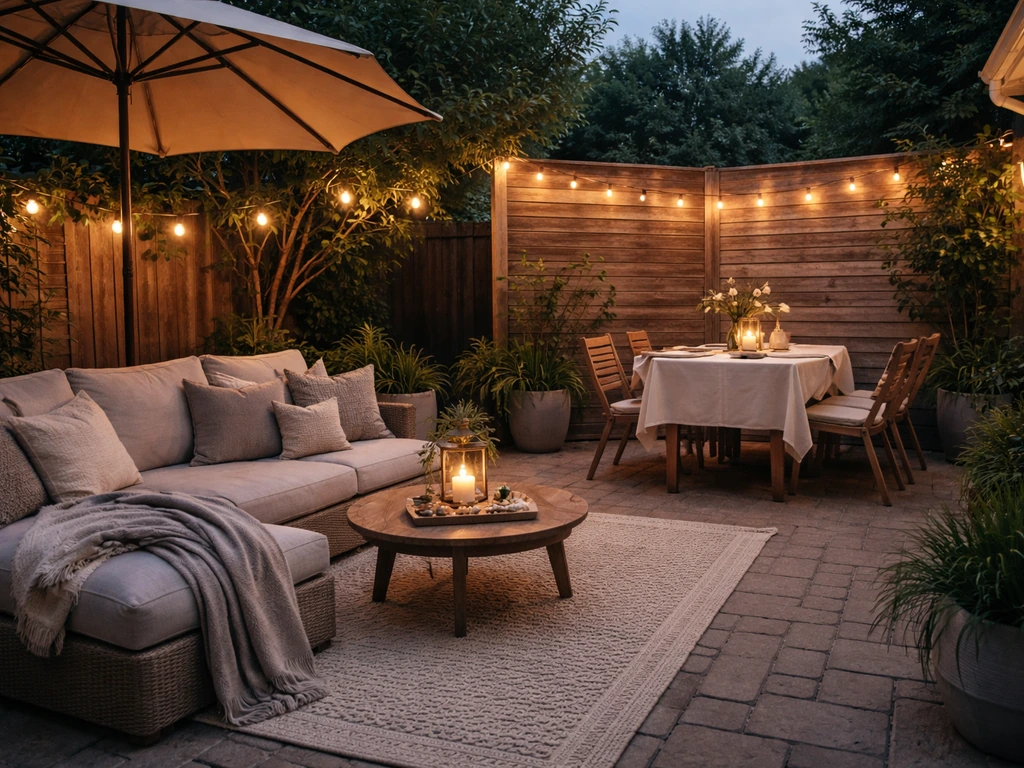
How to Make Patio Cozy: DIY Steps for Any Size
DIY steps to make any patio cozy with smart zoning, sun wind control, warm lighting, and comfort upgrades for large spac
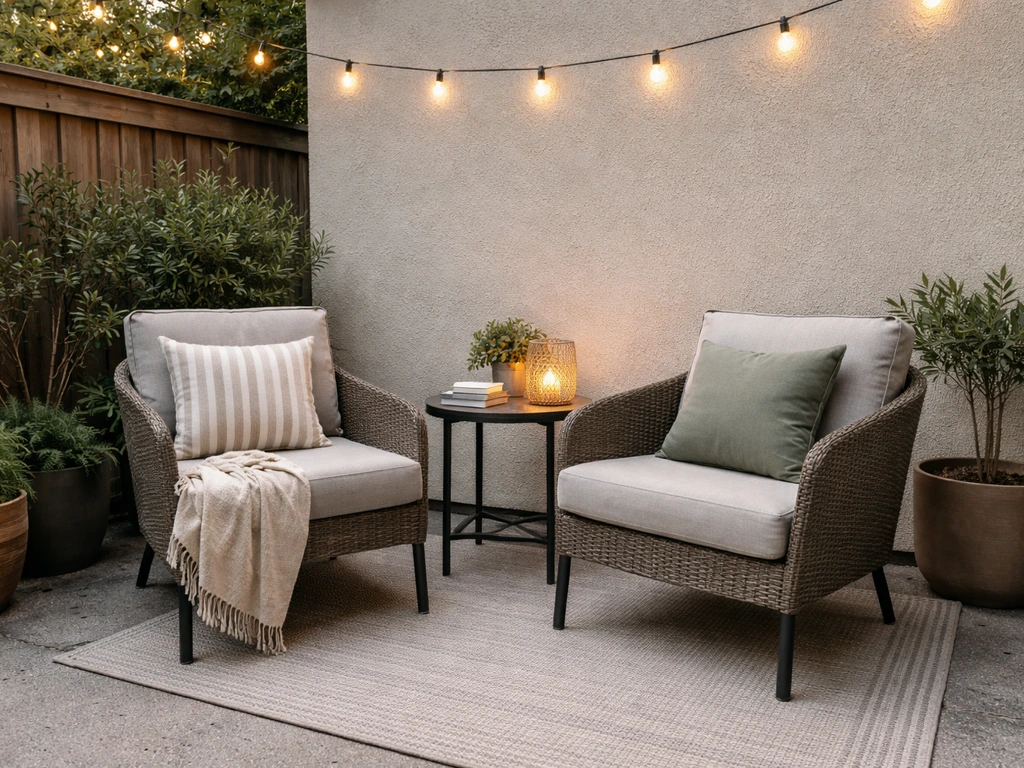
How to Decorate Small Patios: Layout, Furniture, and Style
Step-by-step tips on layout, space-saving furniture, decor, and shade upgrades to make small patios feel bigger and cozy