To decorate an enclosed patio well, start by measuring your space and identifying exactly what kind of enclosure you have, then build comfort first (temperature management, lighting, airflow, privacy), layer in a smart furniture layout with zones, and choose materials that can genuinely handle humidity, UV exposure, and temperature swings. The details below walk you through all of it in order, from your first measurements to your last plant placement.
How to Decorate an Enclosed Patio: Step-by-Step Guide

Felix Brennan
29 Apr 2026
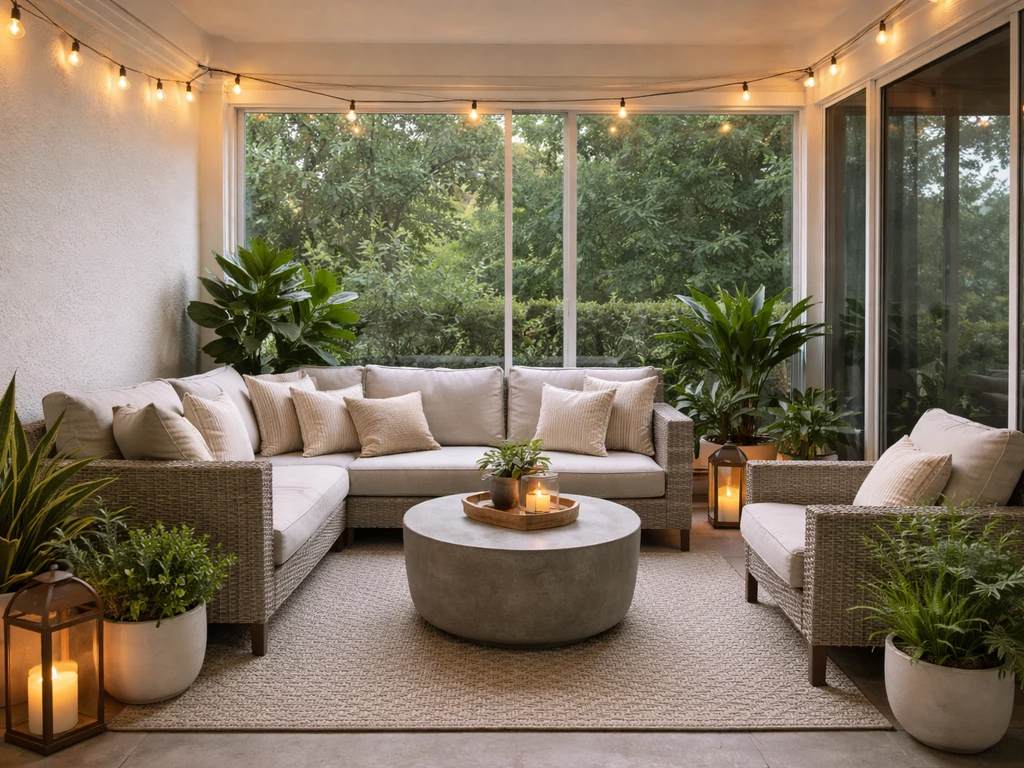
Start by figuring out your enclosed patio type and constraints
Not all enclosed patios behave the same way, and the decorating decisions that work for one type can completely fail in another. Before you buy a single cushion or hang a single light, spend 15 minutes figuring out what you're actually working with.
A screened porch filters bugs and provides shade but is not climate-controlled. When it's hot and humid outside, it will feel hot and humid inside. When it's cold, you'll feel that too. A glazed sunroom or four-season room is a different animal entirely: it's more enclosed and light-forward, but it comes with its own challenge in the form of condensation on glass surfaces when indoor and outdoor temperatures diverge. A semi-open 'Arizona room' or sun porch is built to maximize ventilation and sits somewhere in between. Knowing which type you have tells you how aggressively you need to plan for humidity, UV fade, and temperature management.
Once you know your enclosure type, grab a tape measure and write down these numbers before doing anything else:
- Overall floor dimensions (length x width)
- Ceiling height (especially important if you're hanging lights or fans)
- Location and size of screen panels or glass panels (to know where you can and can't anchor things)
- Location of existing electrical outlets and light fixtures
- Which walls or sides get the most direct sun and at what time of day
- Door and walkway openings (you'll need at least 36 inches of clearance for main paths)
Also note where the structural framing is. Screen panels and glass panels are not safe anchor points for shelving, heavy planters, or art. You need to find the frame members (typically wood or aluminum posts and top rails) for anything that requires screws or hooks. This step saves you a lot of frustration later.
Comfort upgrades first: weather, lighting, airflow, and privacy
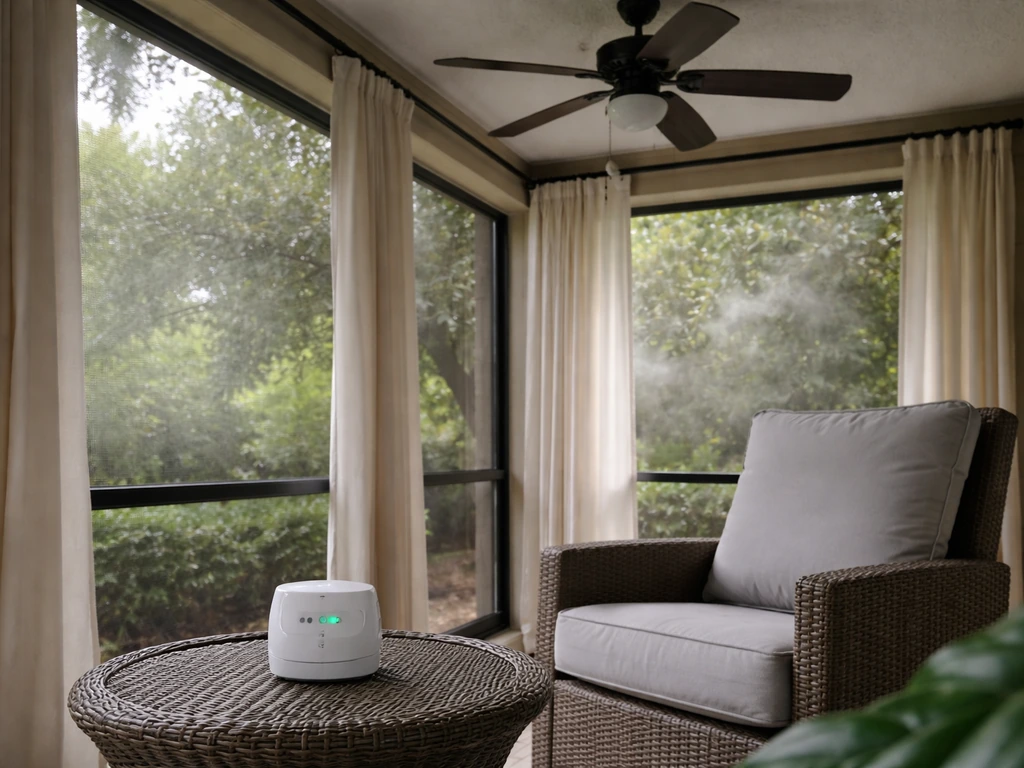
Function before furniture, every time. If your enclosed patio is uncomfortable, you won't use it, and no amount of throw pillows will fix that. Address comfort first, then decorate around it.
Managing temperature and humidity
For screened porches, a ceiling fan is the single most impactful comfort upgrade you can make. It keeps air moving, which makes the space feel several degrees cooler in summer and helps manage humidity. For glazed sunrooms dealing with condensation, good ventilation design is critical: operable windows or vents that let moisture escape are more important than any decorative element. If you're decorating a glass sunroom, factor in window treatments that can be opened wide during humid weather and pulled closed on extremely sunny days to manage heat gain.
Lighting baseline
Before you add decorative lighting, make sure you have adequate functional lighting for evenings. If your enclosed patio has stairs leading to the yard, those stairs need dedicated lighting because depth is judged poorly in low light and falls happen. Plan your base layer of lighting (overhead or wall-mounted) first, then layer in decorative options after.
Privacy
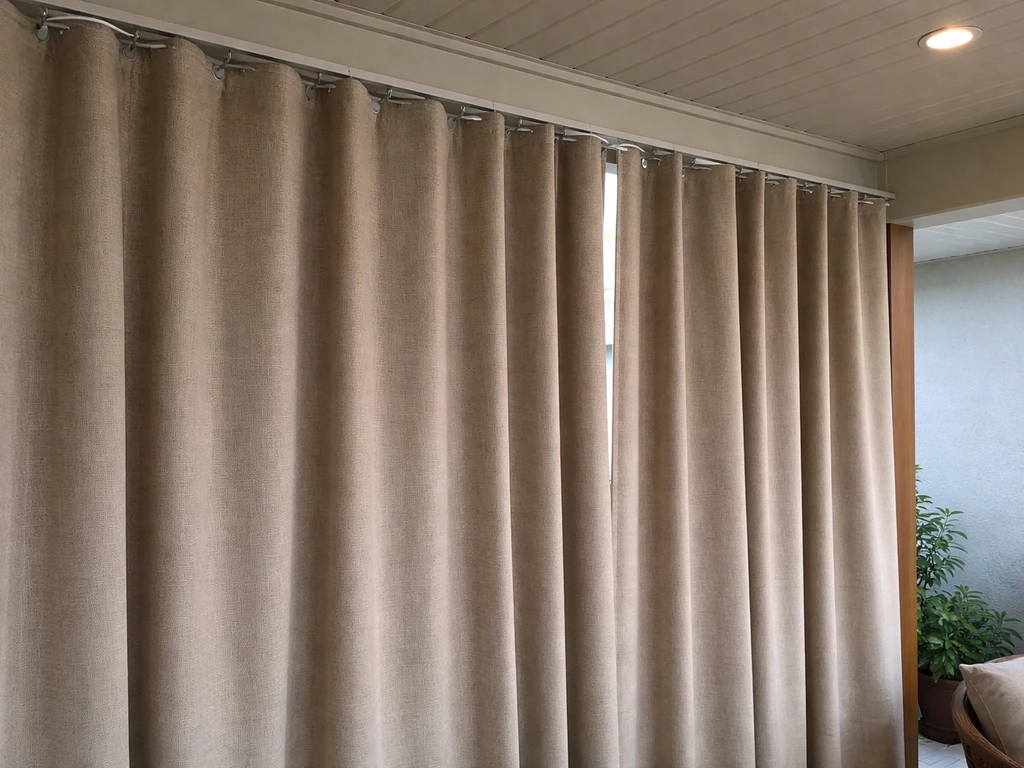
If your enclosure faces neighbors or a busy street, privacy matters before you get into aesthetics. Outdoor curtain panels mounted on tension rods or ceiling-mounted track systems are the easiest fix: they add softness, can be pulled back during the day, and give you the ability to close off sightlines in the evening. Bamboo roll-up shades are another low-cost option that works well on screened patios without blocking airflow entirely.
Decorating with the right layout and zones
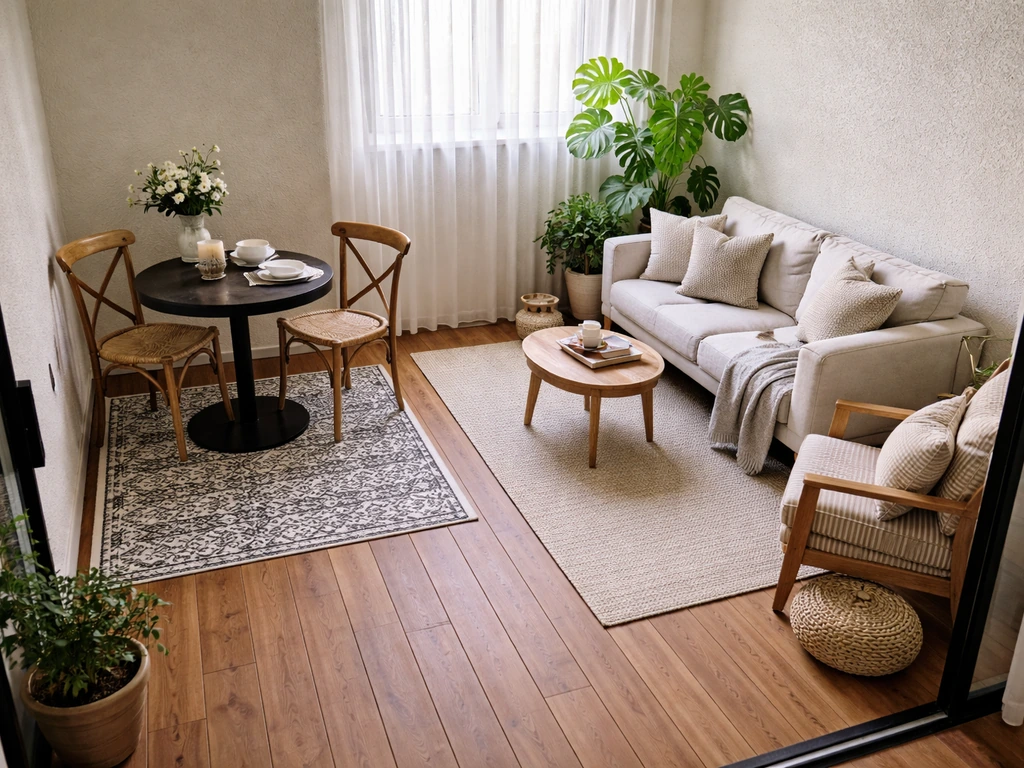
Even a modest enclosed patio benefits from being divided into zones. A zone is just a defined area with a purpose: a dining area, a lounging area, a reading nook. For a rectangular patio specifically, you can use zoning, rug sizing, and layout planning to make the space feel balanced and inviting how to decorate a rectangular patio. Zoning makes the space feel intentional instead of like furniture dumped in a room.
For most enclosed patios under 200 square feet, two zones are the sweet spot: one for dining or eating and one for seating or lounging. For larger spaces, you can add a third zone for a bar cart, potting bench, or reading corner. The key is making sure your walkways stay clear. Plan for at least 36 inches of walking clearance on main paths through the space, and at least 24 to 30 inches of chair pullout clearance around your dining table. If you're tight on space and choosing between a dining area or a lounge area, most people get more daily use out of the lounge zone.
Use a rug to anchor each zone visually. An outdoor rug under a dining set should extend at least 24 inches beyond the table edges on all sides so chairs stay on the rug when pulled out. Under a lounge grouping, the front legs of all seating pieces should sit on the rug. Keeping these proportions correct makes the zone feel cohesive without requiring any other visual tricks.
Outdoor furniture and fabrics that actually hold up
Enclosed patios occupy a middle ground between indoors and outdoors, and the furniture you choose needs to respect that. Even a screened porch sees humidity spikes, UV exposure through screens, and occasional windblown rain. Standard indoor furniture will warp, rust, and fade. You need materials rated for at least covered outdoor use.
Frame materials
| Material | Weather Performance | Maintenance | Best For |
|---|---|---|---|
| Powder-coated aluminum | Excellent: UV-stable coating, rustproof/corrosion-resistant | Very low: wipe clean, no sealing needed | Any enclosed patio type; especially humid climates |
| Recycled plastic / HDPE | Excellent: won't warp, crack, or splinter in moisture | Very low: hose off periodically | High-humidity screened porches and wet climates |
| Teak / hardwood | Good with maintenance: naturally rot-resistant but needs periodic sealing | Moderate: oil or stain every 1-2 years | Four-season sunrooms with climate control |
| Wicker / rattan (resin) | Good: resin weave handles moisture better than natural wicker | Low: wipe clean; check weave for cracking annually | Screened porches with moderate humidity |
Powder-coated aluminum is the most practical choice for most enclosed patios: it's light, looks great in almost any style, and genuinely won't rust even in a humid screened porch environment. It also doesn't require the periodic maintenance that wood does, which matters if you want a space you can enjoy rather than one you're always maintaining.
Fabrics and cushions
For cushions and upholstery, solution-dyed acrylic fabric is the benchmark for outdoor performance. In solution-dyed fabric, the color goes all the way through the fiber rather than sitting on the surface, which gives it exceptional UV fade resistance. Brands like Sunbrella are the most commonly cited example. The practical upside beyond fade resistance is that solution-dyed acrylic can be cleaned with a bleach solution when mold or mildew develops, which it will on any porch with humidity, without damaging the fabric. Coated polyester fabrics are cheaper and look similar at first, but many are only tested for a fraction of the UV hours that solution-dyed acrylic handles, and they don't clean as aggressively. If your budget is tight, solution-dyed acrylic is the one place I'd tell you to spend more money, because cheap cushions that fade and mildew in one season aren't actually cheap.
Wall and ceiling decor: screens, panels, and hanging options
Decorating the walls and ceiling of an enclosed patio requires a bit more thought than an open patio because you're working around structural elements you can't damage. To learn more, see our full guide on how to decorate a patio wall with materials and mounting options that work outdoors. Screen panels and glass panels are not anchor points. Period. Drilling into them or using heavy adhesive strips on them can compromise the enclosure and cause expensive repairs.
What you can hang and where
The safe anchor points are the structural frame members: posts, headers, beams, and top rails. Use these for ceiling fans, pendant lights, wall-mounted planters, shelving, and outdoor artwork. For lightweight items like small art, mirrors, or decorative signs, outdoor-rated removable adhesive products (like 3M Command Outdoor strips) are a good no-damage option on painted or smooth frame surfaces, but check the product specs before using them on porous or textured surfaces and be aware they're not rated for framed items that can shift and lever off the wall.
Ideas that work specifically for enclosed patios
- String lights or bistro lights strung between ceiling beams or posts: these are lightweight, add warmth in evenings, and don't require drilling into panels
- A ceiling fan with a light kit centered in the space: handles both airflow and overhead lighting in one fixture
- Outdoor-rated wall sconces mounted to structural posts on either side of a main seating area
- Lattice panels or decorative wood slat panels attached to solid frame sections to add visual texture without touching screens
- Hanging macrame or woven fiber art on a ceiling beam using a simple ceiling hook screwed into the beam
- Galvanized pipe or wooden dowel curtain rods mounted to posts for privacy curtains that also add softness and color
For ceiling decor on patios with exposed beam ceilings, consider a stained or painted wood treatment on the beams themselves. It costs very little and adds significant warmth to the space without any hardware at all.
Flooring, rugs, and color and material choices
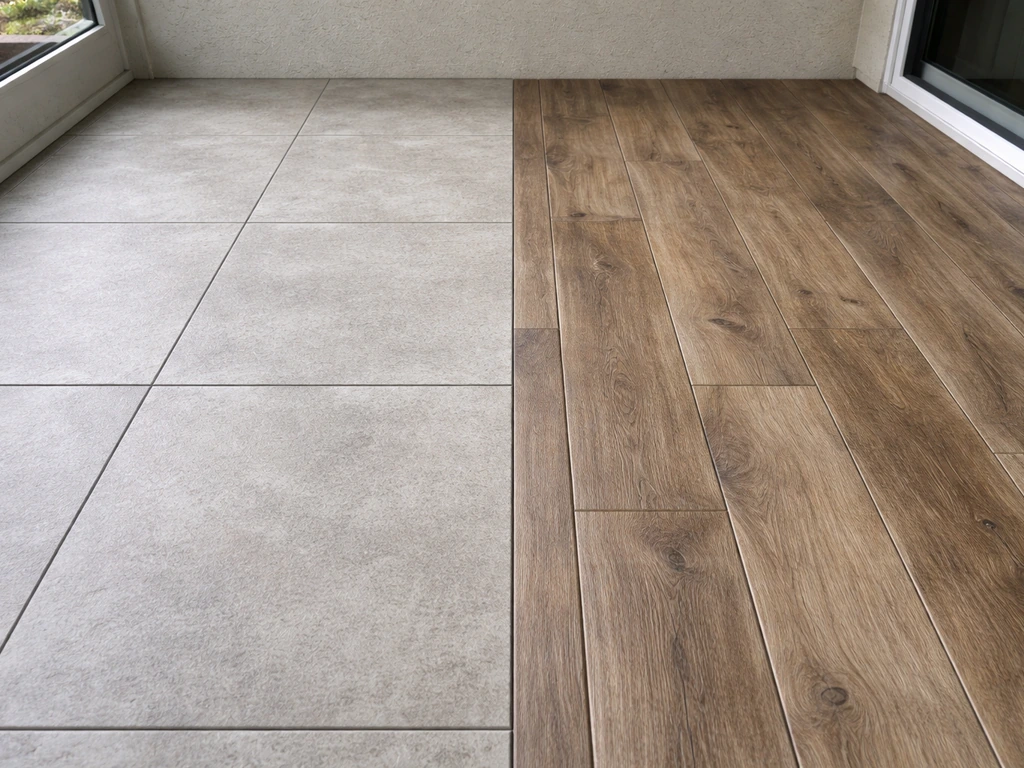
Hard flooring options
If your enclosed patio has a concrete slab, you have several good options for upgrading the floor. Outdoor porcelain tile is one of the most durable: look for tiles rated for exterior use with low water absorption (below about 0.5%) and a certified slip-resistant surface rating. These handle moisture, temperature fluctuations, and cleaning chemicals without issue. Avoid indoor-only tiles outside, they're not built for freeze-thaw cycles or sustained moisture and can crack or become dangerously slippery when wet.
Luxury vinyl plank (LVP) marketed for 'outdoor' use is worth scrutinizing. Some products carry outdoor labeling but have warranty terms that only cover fully covered porch use and exclude any exposure to direct rain, standing water, or UV. Read the fine print before you install it. For screened porches that get any windblown rain, a properly rated outdoor tile or composite decking tile is a safer long-term choice.
Outdoor rugs
For rug material, polypropylene (olefin) outdoor rugs are the standard workhorse: they're UV-resistant, easy to hose off, won't mold or mildew in most conditions if they can dry out, and come in a huge range of patterns. For a screened porch that sees occasional rain spray, make sure the rug can dry quickly and isn't sitting directly on a surface that traps water underneath it. Elevating rugs slightly with a rug pad designed for outdoor use helps airflow underneath and extends the rug's life.
Color palettes for enclosed patios
Enclosed patios that face heavy sun exposure should lean toward lighter, cooler tones on large surfaces (flooring, walls, large furniture pieces) to avoid heat absorption. Deep navy, forest green, and terracotta work beautifully as accent colors in cushions, rugs, and textiles where UV fade resistance is built into the material. If your porch is shaded and darker, warmer tones and richer colors in medium shades (warm whites, sand, sage, amber) help the space feel bright and welcoming rather than cave-like. Avoid very dark flooring in full-sun enclosed patios because it absorbs heat and can make the space significantly warmer underfoot.
Finishing touches: lighting layers, accessories, plants, and seasonal swaps
Layered lighting
Good patio lighting works in three layers: ambient (overall illumination, like a ceiling fan light or overhead fixture), task (functional lighting for a dining table or reading spot), and accent (decorative lighting that adds mood). For most enclosed patios, a ceiling fan light or overhead flush mount handles ambient, a pendant light or a table lamp rated for damp/outdoor locations handles task at the dining or seating zone, and string lights or LED candles handle accent. When placing any light near steps or transitions between the patio and yard, make sure those spots have their own dedicated lighting so depth changes are clearly visible at night.
Plants for enclosed patios
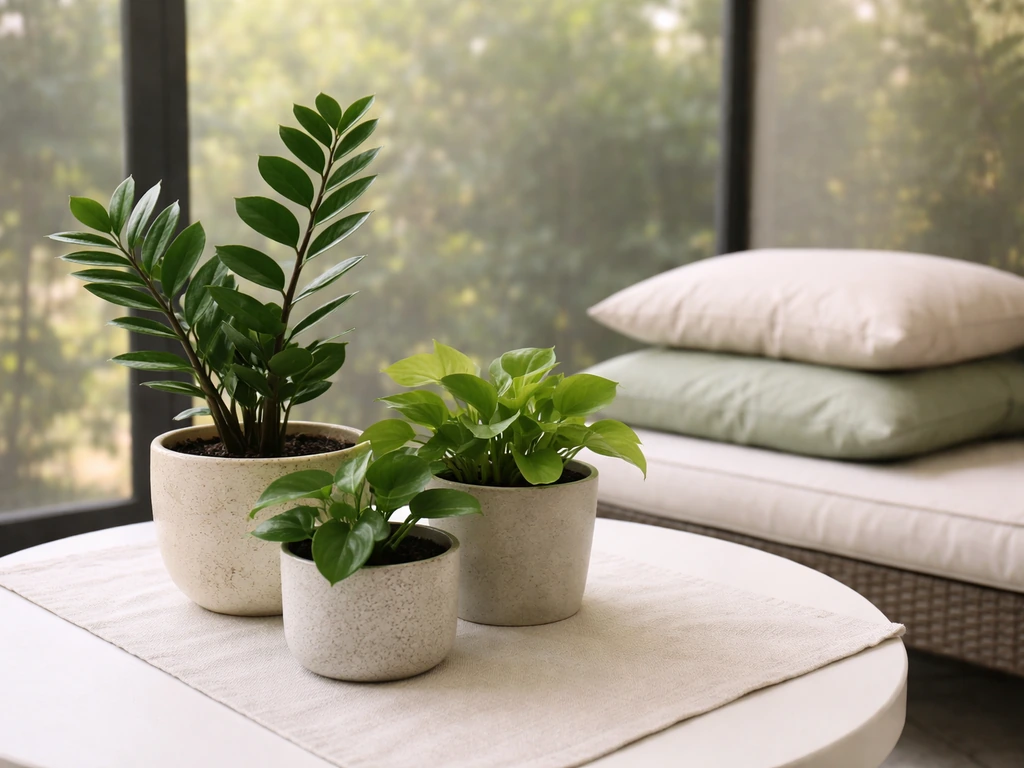
Plants transform an enclosed patio from a furnished room into a real outdoor living space. The right plant depends on how much light your enclosure actually gets. Screened patios with good sun exposure can support nearly any container plant. For lower-light enclosed patios (shaded by a roof overhang or tall trees), stick with plants that thrive in indirect or low light.
- ZZ plant: one of the most low-light tolerant options available; does best in deep shade or low indirect light and is nearly indestructible
- Snake plant: another low-light champion that thrives in indirect light and handles irregular watering well
- Pothos: handles low to medium indirect light; keep in mind that variegated varieties need a bit more light to maintain their color
- Ferns (Boston fern, bird's nest fern): love humidity and indirect light, making them ideal for screened porches in humid climates
- Peace lily: tolerates low light and adds white blooms indoors or in enclosed spaces
- Citrus trees in large containers: work well in sunny glazed sunrooms with good light and warmth
For containers, go with lightweight materials like resin, fiberglass, or fabric grow bags rather than heavy ceramic or terracotta if you're placing plants on elevated surfaces or wanting to rearrange easily. Make sure all containers have drainage: standing water in pots on a porch floor is a fast path to mildew and wood rot.
Accessories and seasonal swaps
Keep accessories simple and swappable. Throw pillows, an outdoor rug, a table runner, and a few plants are the fastest way to refresh the look of an enclosed patio seasonally without moving furniture. In spring and summer, lean into brighter colors and lighter textiles. In fall and winter (if you use the space year-round), swap to deeper tones, add a weatherproof throw blanket or two, and consider a portable outdoor-rated electric heater for a screened porch that you want to use into cooler months. This seasonal swap approach is much more practical than redecorating entirely and keeps the space feeling fresh.
Maintenance tips to keep the look great in rain, sun, and wind
An enclosed patio that looks great the day you decorate it but is faded and mildewy six months later isn't a win. A little regular maintenance goes a long way, and if you've chosen the right materials, it shouldn't take much.
- Brush off or hose down your outdoor rug every few weeks and let it dry completely before putting furniture back on it. Trapped moisture under a rug is the main reason rugs develop mildew and odors.
- Clean cushion covers at the start and end of each season. For solution-dyed acrylic like Sunbrella, a diluted bleach solution handles mold and mildew effectively without harming the fabric. After bleach cleaning, re-treat with a fabric water and stain repellent spray since bleach will temporarily reduce water resistance.
- Wipe down powder-coated aluminum frames with a damp cloth and mild soap a few times a year. This removes salt, pollen, and grime before they have a chance to degrade the coating.
- Check your screen panels seasonally for small tears, loose corners, or frame warping. Catching these early is much cheaper than waiting for a panel to fail.
- For glazed sunrooms, wipe condensation from glass surfaces when it appears and check the perimeter seals around panels annually. Condensation that sits and soaks into surrounding wood or drywall causes rot over time.
- Rotate plants a quarter turn every few weeks if they're growing unevenly toward a light source. This keeps them looking full and healthy rather than leaning or bald on one side.
- Before winter or extended periods of no use, bring in any cushions, throw pillows, and textiles or store them in a waterproof container. Even on a screened porch, fabrics left outside through winter collect moisture, mold, and pests.
Decorating a covered patio or a back patio shares a lot of these same principles, but the enclosed patio is its own category because of how the enclosure type shapes every material and layout decision. If you are working with an uncovered patio instead, you will still want to prioritize weather-ready materials and placement, but adjust for more direct sun and rain exposure Decorating a covered patio. Get the constraints right first, solve comfort second, and the rest of the decoration falls into place in a way that lasts. If you are planning the same kind of outdoor refresh for an uncovered patio, follow the tips in when to uncover patio furniture to choose the right timing and keep pieces protected.
FAQ
How do I know what kind of enclosed patio I have before buying furniture or decor?
Look for three clues, the presence of true glass walls, operable windows or vents, and whether there is mechanical or ceiling airflow (fan/AC vents). Screen porches usually have no way to remove humidity buildup quickly, glass sunrooms often show condensation on the inside of panes, and “Arizona rooms” often feel drafty even when sheltered. If you can open and close windows/vents, treat it more like a condensation problem than a pure shade problem.
Can I use wall anchors or heavy hooks on the screen or glass panels?
Avoid it. Even if it feels secure, screen and glass systems are not meant to take repeated loads or leverage. If you need hooks for things like lanterns or planters, mount only to frame members (posts, top rails, beams) and keep total weight low enough that a door or window movement cannot transmit force to the panel system.
What’s the safest way to hang ceiling lights or add a ceiling fan?
Use the structural ceiling framing, not the ceiling surface or screen track. Plan for wiring access, and confirm the fixture is rated for damp or wet locations, depending on whether rain can reach the fixture area. If you are unsure about ceiling structure, measure from the framing location (or use a stud finder rated for exterior walls) before drilling.
How much clearance is “enough” for walkways if my patio is small?
Use the same concept the article mentions, but also consider turning radius. If a door swings into the space, give yourself extra room where people must pivot or where chairs get pulled out, aim for about 36 inches on the primary path and keep dining chair pullout areas unobstructed even when chairs are extended.
Should I buy all-weather furniture up front, or can I mix in indoor pieces?
You can mix selectively. Avoid indoor upholstery and particle-based components, they swell or delaminate with humidity spikes. Metal frames can work, but confirm outdoor compatibility and protect wood with an exterior-rated finish and maintenance schedule. If a piece cannot be cleaned easily after mold appears, it will be a poor fit for humid screened patios.
What’s the best rug material if my patio is occasionally damp from rain spray?
Prioritize outdoor polypropylene rug designs that can dry quickly, and use an outdoor rug pad that promotes airflow. Also keep the rug slightly elevated on the pad so water does not pool underneath, if rain can blow sideways under furniture you may need to pull rugs temporarily during heavy storms.
How do I prevent condensation problems on a glazed sunroom that I decorate with textiles?
Choose textiles and storage that do not trap moisture. Use solution-dyed outdoor fabrics, keep throw pillows in breathable covers, and avoid sealing fabric or foam directly against glass. Add airflow through operable vents when humidity rises, and consider window treatments that can be opened wide during humid weather so moisture can escape.
What window treatments work best when I need privacy but still want airflow?
Outdoor curtain panels on tracks or tension systems are a flexible option, you can pull them back during the day. Bamboo roll-up shades can work on screened patios, but verify they won’t block airflow completely where heat and humidity accumulate. If your enclosure is glass-heavy, choose treatments that can be opened regularly to reduce trapped moisture near the panes.
Can I use outdoor adhesive strips for decor on frame surfaces?
Yes for lightweight items, but check two things: that the product is rated for outdoor or damp conditions, and that it is meant for the surface type you have (painted metal, smooth aluminum, sealed wood, textured materials). Avoid using them on anything that could shift, like framed signs, since leverage can cause failure over time.
How do I choose a paint or wall treatment for enclosed patios without ruining it in humidity?
Pick products intended for exterior or porch use, and verify mold and mildew resistance is included in the system. For framed walls near condensation zones, prefer paint that tolerates humidity swings rather than interior wall coatings. Also, plan for ventilation, because even the best coating can underperform when moisture repeatedly condenses on surfaces.
What plant setup reduces maintenance on enclosed patios?
Use containers with drainage and lighter-weight planters so you can move plants to improve light and airflow. For lower-light areas, select plants that tolerate indirect light and avoid placing them directly against cold glass where condensation risk is higher. If your enclosure is humid, water on a schedule, let soil dry slightly between waterings, and remove standing water from saucers.
How often should I do maintenance to keep an enclosed patio from looking mildewy?
Do a light check every couple of weeks during humid seasons. Quick wins are rinsing outdoor fabrics and rugs, wiping condensation-prone areas, and ensuring airflow pathways stay clear (vents, fan intakes, operable windows). Deep-clean fabrics only when they are rated for it, solution-dyed acrylic typically tolerates stronger cleaning than cheaper coated textiles.
Is it better to decorate seasonally with swaps or buy a second set of furniture?
Swapping accessories usually beats replacing furniture. Keep the heavy pieces (frames, cushions that match your environment) consistent, then refresh with weatherproof throw blankets, outdoor rug changes, and removable decor that you can store when conditions worsen. If you do add a second set, store it properly off the ground with breathable covers, so trapped moisture does not build up.
Next Articles
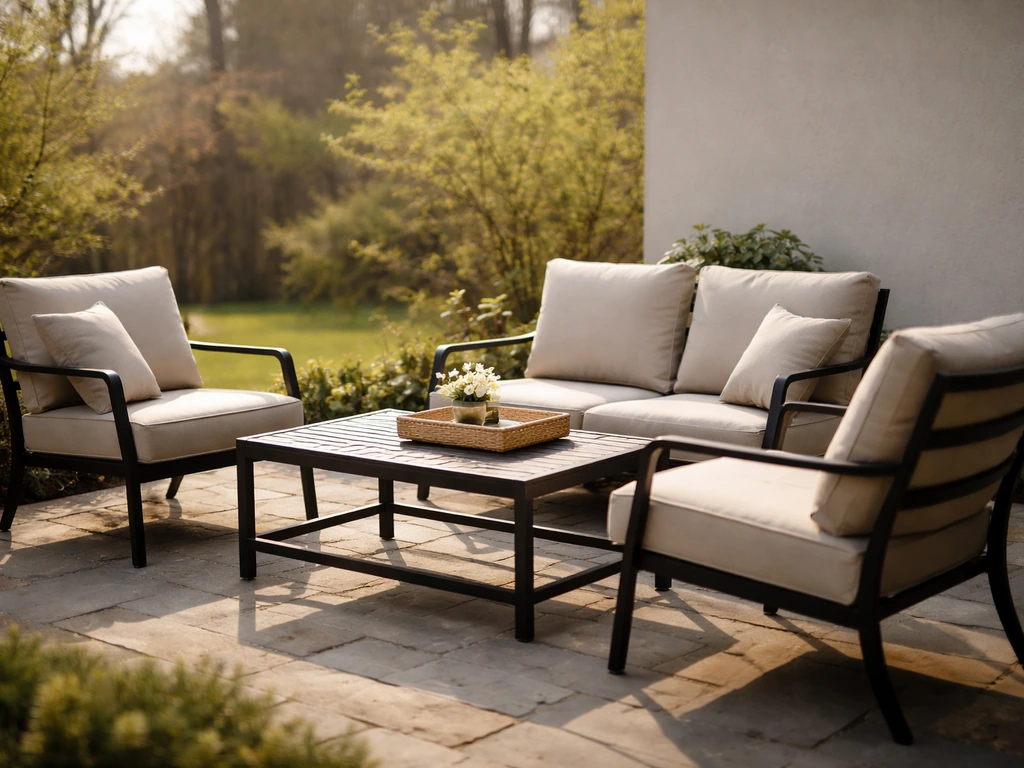
When to Uncover Patio Furniture: Timing and Readiness Guide
Learn when to uncover patio furniture after winter and how to check dryness, mildew, rust, and next-step cleaning
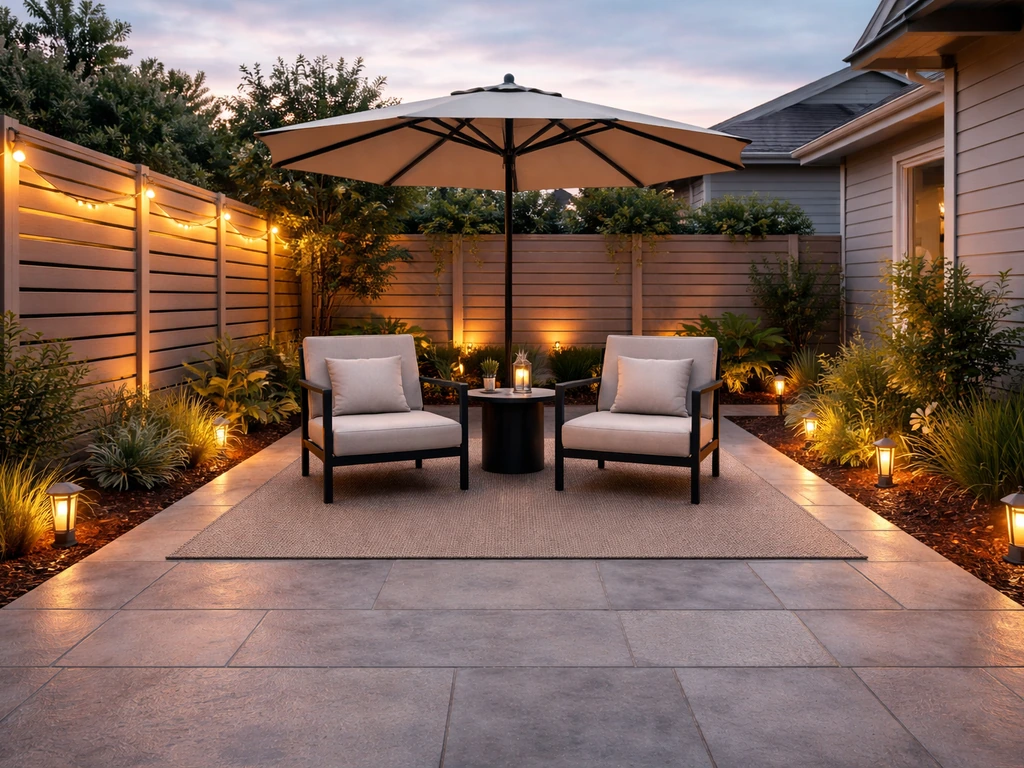
How to Decorate an Uncovered Patio: Step-by-Step Guide
Step-by-step how to decorate an uncovered patio with weatherproof flooring, furniture, shade, privacy, lighting, and sea
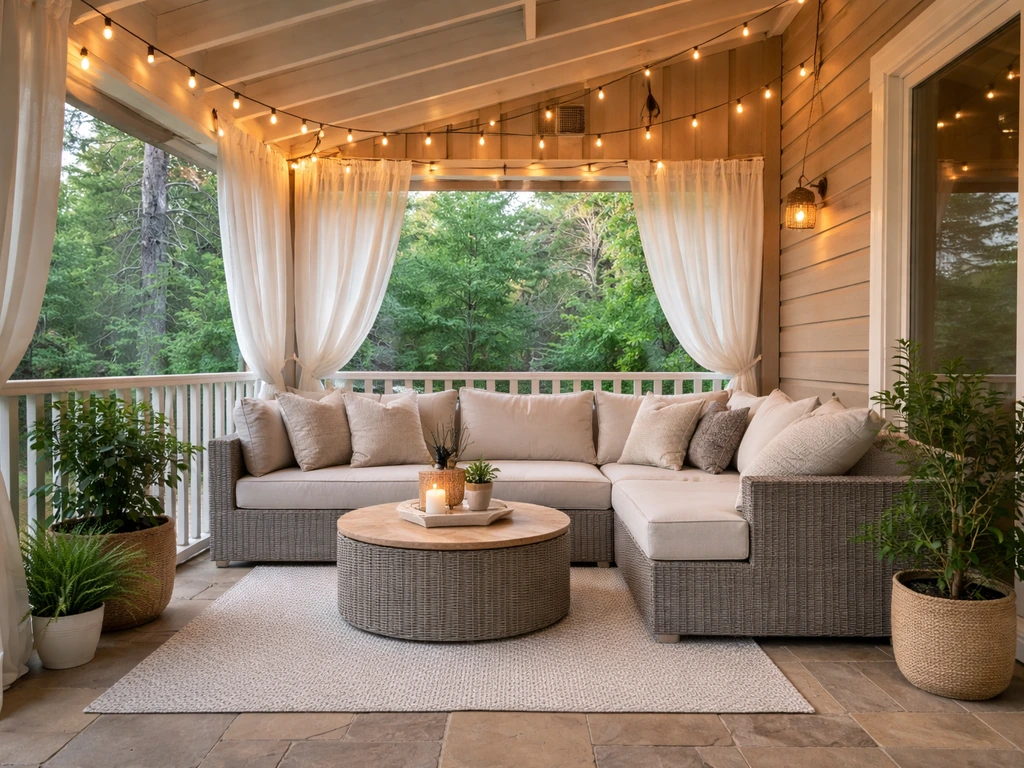
How to Decorate a Covered Patio: DIY Outdoor Room Guide
Step-by-step DIY ideas for decorating a covered patio, choosing weatherproof furnishings, lighting, rugs, curtains, scre