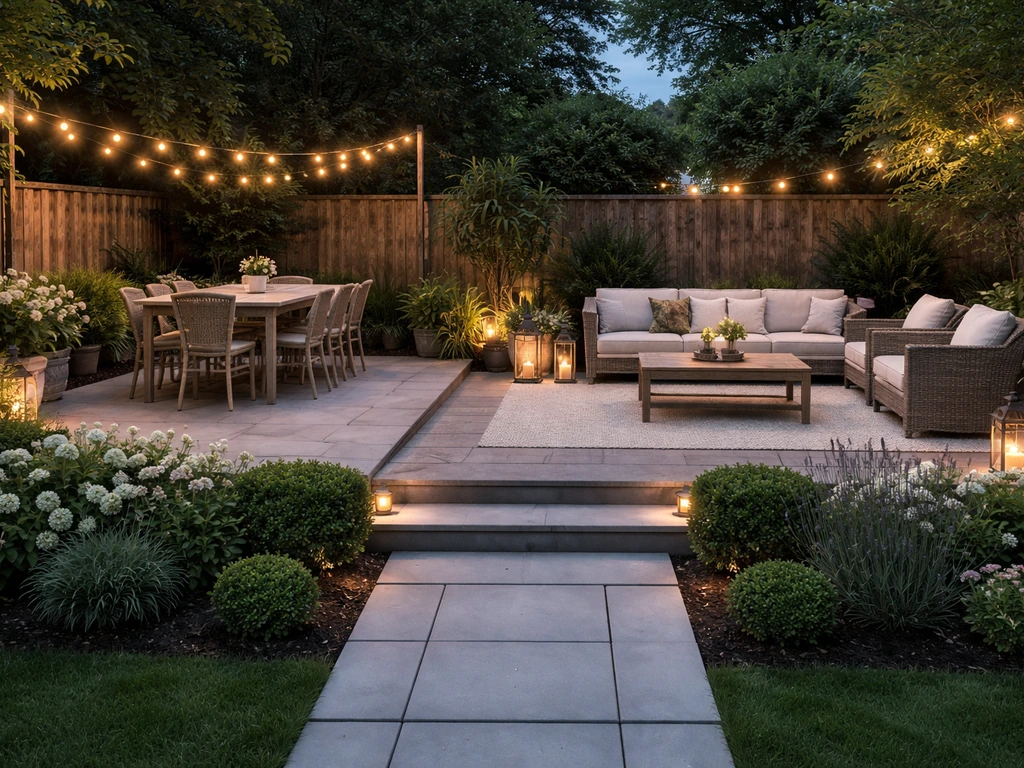
Decorating a rectangular patio comes down to three things: knowing your exact dimensions, dividing the space into clear zones, and choosing furniture and accessories that are scaled to fit without cramping traffic flow. Get those three things right and everything else, the rugs, lighting, plants, and cushion colors, falls into place naturally. Skip them and even the most expensive furniture looks awkward and the space feels hard to use.
How to Decorate a Rectangular Patio Step by Step

Felix Brennan
29 Apr 2026
Start with measurements and a clear goal
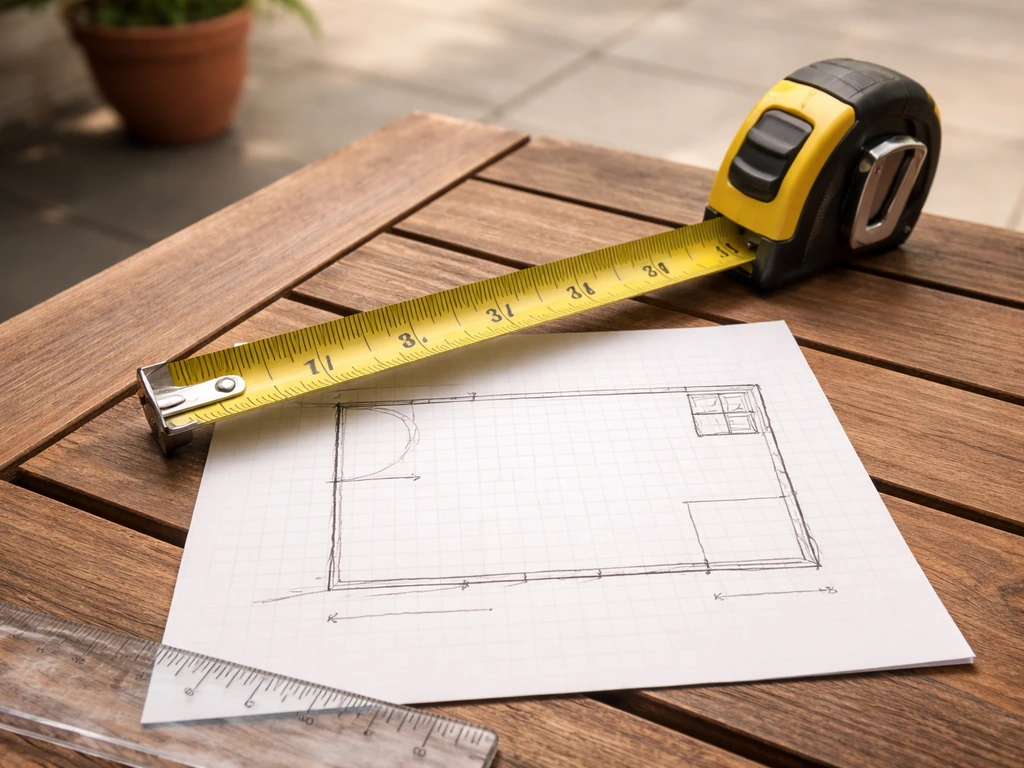
Before you buy a single piece of furniture, grab a tape measure and write down the exact length, width, and any fixed obstacles on your patio: door swings, AC units, gas line access points, step locations, and any columns or posts. These are non-negotiables that your layout has to work around, not through.
Once you have dimensions, decide what you actually want the space to do. A 10x16 patio can realistically handle a four-person dining set or a small lounge grouping, but probably not both comfortably. A 14x24 or larger gives you enough room to zone into two distinct areas. Being honest about this early saves a lot of expensive returns later.
The single most important planning rule is traffic clearance. Keep primary walkways at a minimum of 36 inches wide, and push that to 42–48 inches anywhere people regularly pass by seated guests or carry food and drinks. Around dining chairs specifically, budget at least 36 inches of clearance on the sides that need to pull out so a person can sit down and stand up without squeezing. Along walls or fences where traffic is lighter, 24–30 inches is workable. Sketch this out on paper before you do anything else.
Create a layout that works with the rectangle
A rectangle has a natural tendency to turn into a hallway if you line everything up parallel to the long edges. That "bowling alley" effect is the most common decorating mistake on rectangular patios, and it makes the space feel like a path rather than a destination. The fix is to introduce zones that interrupt the sightline and give people a reason to stop and settle in.
Zone it into two or three distinct areas
For a typical medium-sized rectangular patio (say, 12x20 feet), think in thirds: one zone near the house for dining or grilling, a middle transition area, and an outer lounge or conversation zone at the far end. On a wider rectangle (14x18 or so), you can split the zones side by side instead, with dining on one half and lounging on the other, separated by a planted container or a floor rug boundary.
On long, narrow rectangles, try angling one seating group slightly, somewhere between 10 and 25 degrees off the wall line. This one move breaks the parallel monotony, creates a more intimate conversation cluster, and helps the space read as designed rather than just filled. For a long, narrow patio, planning your zones and keeping clear pathways is what turns a hallway feel into a welcoming outdoor room how to decorate a long narrow patio.
Account for doors, gates, and traffic paths first
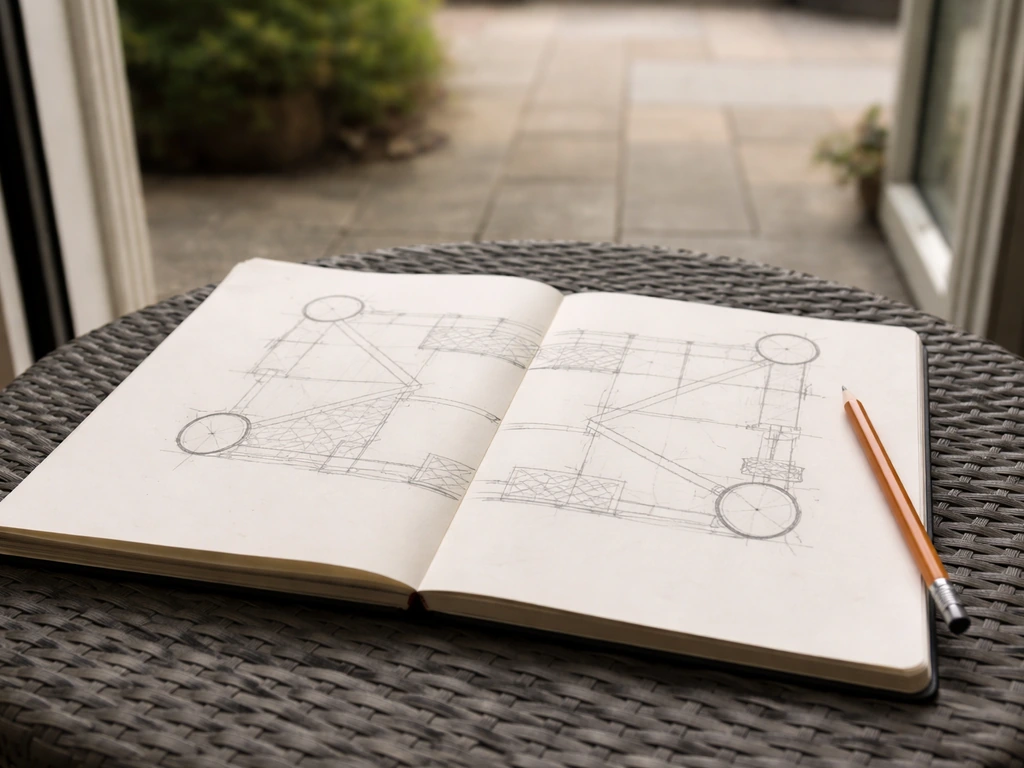
Map out every entry point on your sketch and draw the traffic lines between them. Those lines are sacred: nothing blocks them. Once you've protected those corridors, the remaining floor space is where your zones live. This approach prevents the common mistake of placing a sofa right in front of the back door because it "fit" on paper.
Choose furniture that fits the space and the activity
Scale matters more outdoors than it does indoors because there are no walls to anchor oversized pieces. A sectional that looks great in a showroom can eat an entire 10x14 patio and leave no room to actually walk around it. Match furniture size to what your zone allows after you've reserved clearance space.
Dining zone sizing
A standard 72-inch rectangular dining table seats six people comfortably (three per long side) and is the most practical starting point for a medium patio dining zone. Add 36 inches on each long side for chair pull-out and passage, and you're looking at a dining zone footprint of roughly 72 inches long by 108 inches wide minimum. Tables in the 72–84-inch range with 36–42-inch widths handle six to eight people and are a good fit for patios in the 14-foot-plus width range. If your patio is narrower, drop to a 60-inch or folding table and keep the clearances intact rather than squeezing in the bigger table.
Lounge zone furniture choices
For the lounge or conversation zone, an L-shaped sectional is more space-efficient on a rectangular patio and keeps one sightline open. A U-shaped sectional creates a more enclosed, intimate feel but needs more floor area to breathe properly. Both work well; the choice depends on whether you want the space to feel open or cozy. Modular furniture is worth the investment here because you can reconfigure it seasonally or when the patio gets repurposed.
| Setup | Best for patio size | Seats | Key clearance need |
|---|---|---|---|
| 72" dining table + 6 chairs | 12 ft wide and up | 6 | 36" on long sides, 24" on ends |
| 84" dining table + 8 chairs | 14 ft wide and up | 6–8 | 36–42" on all active sides |
| L-shaped sectional + coffee table | 10x14 and up | 4–6 | 18–24" in front of seats |
| U-shaped sectional + coffee table | 12x16 and up | 6–8 | 18–24" in front, clear entry point |
| Small bistro table + 2 chairs | Under 10x10 | 2 | 24" behind chairs minimum |
Add color and texture to make it feel finished
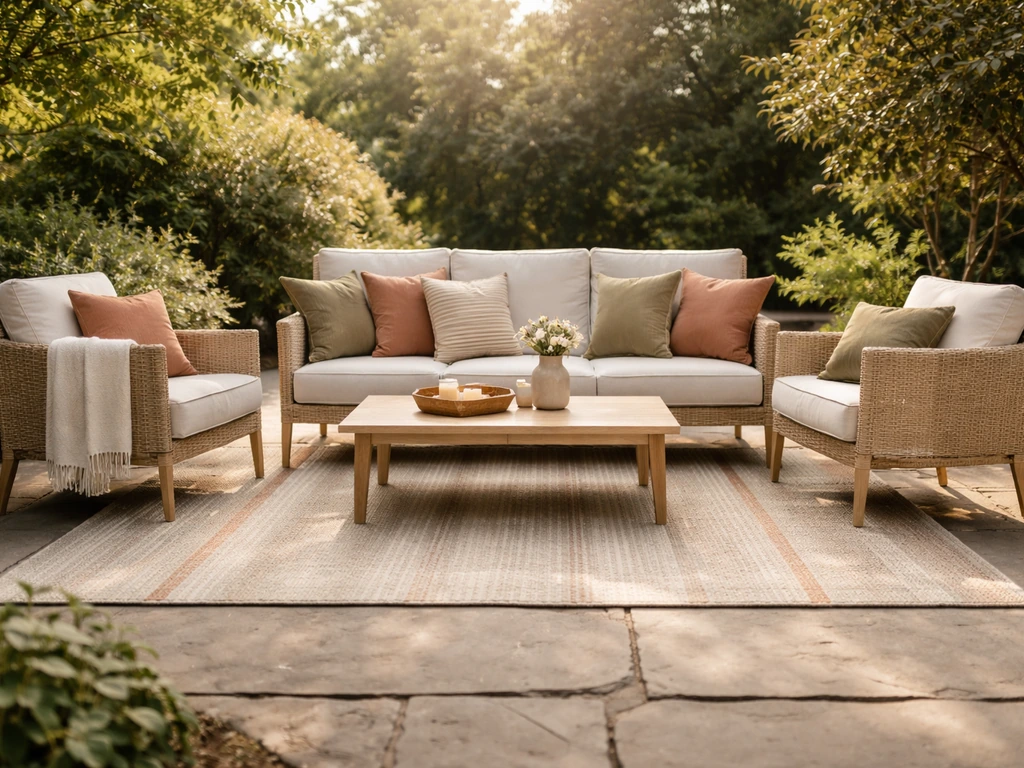
An outdoor rug is the single most impactful decorating move you can make on a rectangular patio. It visually defines a zone, softens the hardscape, and pulls furniture together into a cohesive grouping instead of leaving pieces floating on concrete. Choose a rug that extends at least 2–3 feet beyond each end of a dining table so chairs stay on the rug when pulled out. For a lounge grouping, all four legs of each piece should sit on the rug. Leave about 18 inches of bare floor visible between the rug edge and the patio border so the rug reads as a framed element rather than a wall-to-wall carpet.
Cushions and throw pillows are where most people add color, and that's the right instinct. Pick a base fabric color for seat cushions (something that coordinates with the patio floor and furniture finish), then use throw pillows to introduce pattern or a pop of accent color. Outdoor-rated fabrics like solution-dyed acrylic resist fading far longer than polyester blends, and they're worth the extra cost if your patio gets significant sun exposure. A Reddit thread in r/upholstery specifically discusses solution-dyed acrylic versus solution-dyed polyester for outdoor cushions, including comments about fade resistance and differences in feel and stiffness.
Outdoor curtains hung from a pergola or ceiling-mounted rods add texture, soften hard edges, and provide privacy or shade without requiring a permanent structure. They're especially effective on covered or screened patios where you already have attachment points. For uncovered patios, a freestanding curtain panel frame or shade sail can do similar work. Stick to UV-resistant, weather-treated fabrics and avoid anything with metallic thread that can rust in the rain.
For color balance, use the 60-30-10 rule: 60 percent neutral (the patio floor, furniture frames, walls), 30 percent a secondary tone (rug, large cushions, planter colors), and 10 percent accent (throw pillows, candles, small decorative objects). This keeps the space cohesive without looking like a furniture showroom display.
Lighting for evenings and real ambiance
Good patio lighting has three layers: ambient (the overall glow), task (enough light to eat or read by), and accent (to highlight plants or architectural features). Most people only install one layer and wonder why the space feels flat or harsh after dark.
String lights
String lights are the easiest and most effective ambient layer for a rectangular patio. Run them parallel to the long axis of the rectangle, zigzagging between anchor points, or in a simple straight run overhead. For every 10 feet of horizontal span, let the string sag about 12–18 inches at its lowest point so the drape looks intentional rather than sagging from neglect. Keep the lowest point above head height, generally 7 feet or more above the ground in walkway areas. Hang them at 8–9 feet above a dining table for comfortable task-plus-ambiance lighting without creating glare.
Task and pendant lighting
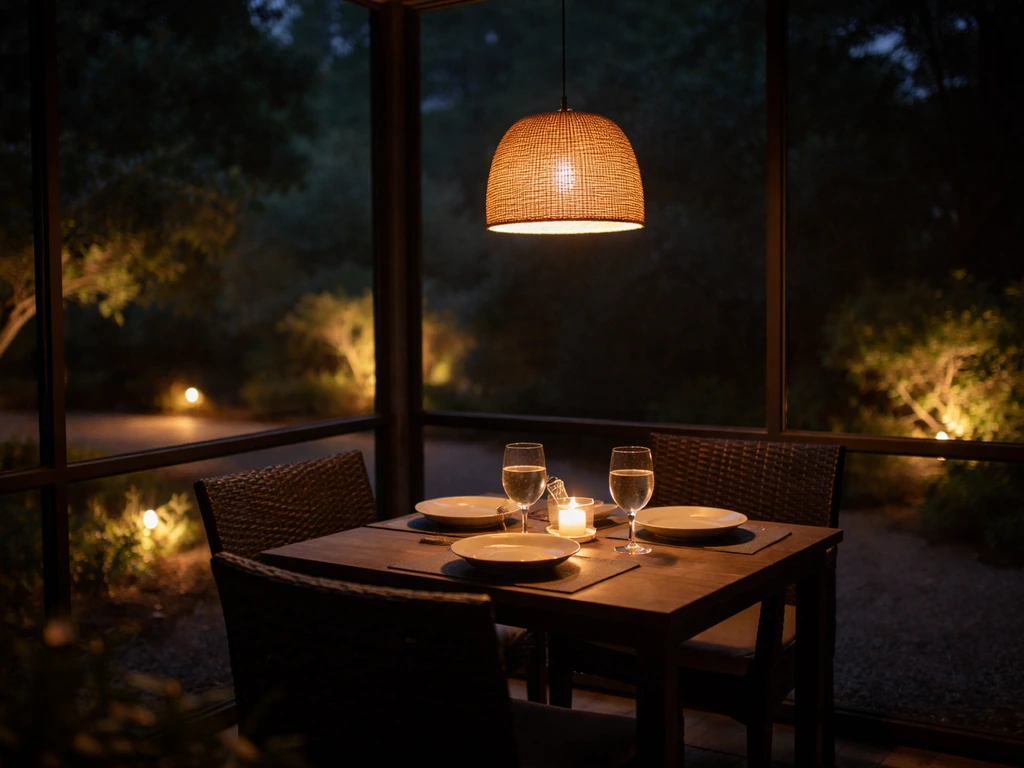
If you have a covered or screened patio with a ceiling, an outdoor pendant or flush mount above the dining table makes a big difference. The standard hanging height for an outdoor pendant over a dining table is 28–34 inches above the tabletop. Any higher and the light becomes too diffuse; any lower and it blocks sightlines across the table.
Path and accent lights
For path lighting along the patio perimeter or leading to a garden, space low-voltage fixtures roughly 6–10 feet apart. Use solar or low-voltage LED systems for easy installation without running line voltage. If you are running any line-voltage fixtures or outlets outdoors, GFCI protection is required, and all fixtures must be rated for wet or damp locations depending on their exposure. If you are running line-voltage outdoor outlets or fixtures, Eaton’s NEC reference PDF notes that NEC requirements address GFCI protection for outdoor outlets, including details tied to NEC 210.8(F) NEC 210.8(F) GFCI protection for outdoor outlets. For most DIYers, low-voltage LED landscape lighting is the safer and simpler choice.
Plants, privacy, and weather-ready decor
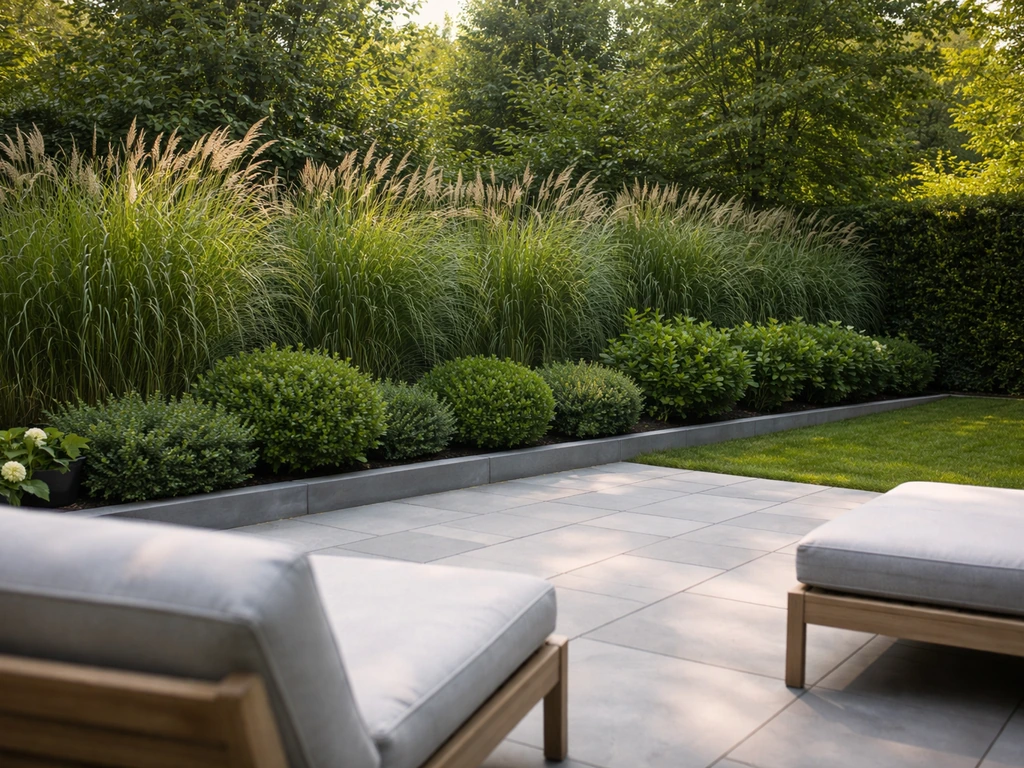
Plants do more work on a rectangular patio than people expect. They soften hard edges, define zone boundaries, add fragrance, and create privacy screening without the permanence of a fence. Large planters in the corners of a rectangular patio anchor the space and visually "close" the room. Groupings of three containers at different heights in the corners of a lounge zone break up the boxy geometry of the rectangle nicely.
Privacy screening options
For a planted privacy screen along one or both long sides of the patio, compact arborvitae is a reliable choice: mature varieties reach 12–14 feet tall with a spread of 3–4 feet, and you can plant them 3–6 feet apart for a dense screen. Bamboo in root-barrier containers works faster and creates a tropical feel. For immediate privacy, a combination of a lattice screen panel plus climbing plants gives you structure quickly and softens over time.
Shade and wind protection
If your rectangular patio is uncovered, a shade sail is one of the most flexible and visually interesting options. If you are working with an uncovered patio, focus on weather-ready materials, wind-safe lighting choices, and smart shade solutions so your decor lasts. A triangular or square sail over the dining or lounge zone blocks sun without requiring a full pergola build.
That said, shade sails experience significant lateral wind loads, so posts and hardware need to be properly engineered for your region's conditions. For high-wind areas, a retractable awning or a freestanding pergola with a louvered or polycarbonate roof is a more durable long-term solution. Decorating a covered patio opens up more stable options for hanging curtains, lights, and ceiling fans that provide both airflow and ambiance.
Weather-ready material choices
Every decorating choice on an outdoor patio should pass a basic weather test: will this hold up in rain, UV exposure, and temperature swings? Powder-coated aluminum and teak are the most durable furniture frame materials. For textiles, look for solution-dyed acrylic (Sunbrella is the most widely available brand) for cushions, and polypropylene for rugs. Avoid natural-fiber rugs like jute or sisal outdoors; they deteriorate quickly when wet. Candles are fine in calm conditions but swap them for battery-operated LED alternatives on windy nights to avoid fire risk.
Finishing touches and keeping it looking great through the seasons
A few well-chosen finishing touches separate a patio that looks "decorated" from one that looks "done": a side table within reach of every seat, a small outdoor bar cart or drink station near the dining zone, a coordinating lantern or two at floor level, and a doormat at every entrance that matches the overall palette. These small pieces fill the gaps between furniture zones and make the space feel considered.
Seasonal maintenance routine
Even the most weather-resistant materials need seasonal attention. The biggest mistake people make is storing cushions while they're still damp, which leads directly to mold, mildew, and musty odors by spring. Before storing cushions for winter, air-dry them for at least 24–48 hours until fully dry, then store in a breathable bag or indoor storage bin. Wet storage also causes zipper rust and fabric breakdown, which shortens the life of expensive cushions considerably.
In fall, clean furniture frames with mild soap and water, rinse thoroughly, and let them dry completely before covering or storing. Freeze and thaw cycles can damage furniture finishes and crack plastic components, so anything that can be stored indoors or in a dry garage should be. Covers are fine for aluminum and teak frames left outside, but make sure the cover fits snugly and allows some airflow to prevent trapped moisture from causing rust on hardware.
For container plants, reduce watering in fall as growth slows, and move frost-sensitive plants indoors before the first freeze. Potted arborvitae and similar evergreens are typically cold-hardy but benefit from windbreak protection in exposed locations. At the start of spring, wipe down the rug, fluff or replace cushions, check all string-light connections for weathering, and do a quick clearance walk to make sure nothing has shifted and blocked your traffic paths over the winter.
A quick seasonal checklist
- Spring: clean all surfaces, reconnect lighting, reposition furniture to zones, check rug for mold or wear
- Summer: monitor cushion drying after rain, check shade sail or awning hardware for stress, water container plants regularly
- Fall: deep-clean furniture frames, dry and store cushions fully (24–48 hours of air-drying first), cover or store frames before freeze season
- Winter: check covers after major storms, water evergreen container plants on above-freezing days, inspect post hardware for shade sails or privacy screens
Decorating a rectangular patio is really a series of small, sequential decisions rather than one big design moment. A patio wall can add color and interest, so plan what to mount or hang first and match it to your zones and materials how to decorate a patio wall. If you're wondering how to decorate back patio spaces, start with the same approach: measurements, traffic flow, and then zones for dining and relaxing.
For enclosed patios, the same zone-and-traffic approach works, with a focus on weather-ready finishes, privacy, and comfortable lighting how to decorate back patio. For a true enclosed patio, focus on weather-ready materials, privacy screening, and layered lighting so the space stays comfortable year-round how to decorate back patio. When you uncover patio furniture, do it gradually so fabrics and finishes have time to adjust before you start using the space again when to uncover patio furniture.
Nail the measurements and traffic flow first, define two or three clear zones, choose furniture that fits each zone with proper clearances, and then layer in rugs, lighting, plants, and color. Once you’ve planned your shade and furniture layout, layering in textiles and lighting is the next step for how to decorate uncovered patio spaces. Plan the shade and furniture layout first, then use the textiles, lighting, plants, and colors that are especially suited to when to uncover patio furniture when to decorate uncovered patio spaces. On a covered patio, you can use those same zone and clearance principles while adding weather-ready curtains, lighting, and privacy details.
Do that in order and you end up with a space that feels deliberate, comfortable, and genuinely usable, not just something that looks good in photos.
FAQ
How do I choose dining and lounge zones if my patio is too small for both comfortably?
If one zone has to shrink, prioritize whichever activity drives your day-to-day use, then use a space-saving swap. For example, choose a dining set, and keep lounge seating to two chairs plus a compact fire pit or a loveseat only at the far end of the patio. The key is to keep the main traffic corridor clear, then let the “secondary” zone borrow space from the outer third instead of trying to fit two full groupings at once.
What should I do if patio furniture doors or gates block part of the walkway when they open?
Map the swing arc of every door, gate, and access lid on your sketch, then treat the width of the arc as additional clearance. Even if your straight-line walkway measures 36 inches, a door swing can force people to detour. If you cannot preserve the corridor, change orientation of one piece of furniture or choose a round or extendable table so the seating does not intrude into the swing path.
Can I place the rug fully under a dining table and still maintain the right chair clearance?
Yes, but make sure the rug reaches beyond the tabletop edge far enough for chairs to stay on it when pulled out. Aim for rug length that covers the chair footprint in both pushed-in and pulled-out positions, then confirm with a quick mock test using masking tape on the floor. If the rug is too small, chairs will slide off it, creating an uneven look and more tripping risk at the rug edge.
How do I prevent the rectangular “hallway” look if I have to keep furniture parallel to the walls?
Use one deliberate interrupting element, such as angling a seating group, rotating a sideboard or bar cart, or using a second zone-defining rug that is oriented differently than the first. If you must keep everything parallel, vary heights instead (tall planters in one corner, a floor lantern near the lounge, and taller cushions or a light over the dining zone) so the eye does not travel in a straight line the entire length.
What if my patio width is just barely under the standard dining-table clearances?
Downsize the table footprint rather than squeezing clearance. A good strategy is to choose a narrower table (for example, 60 inches long or a compact 5- or 6-seat shape) and keep chair pull-out space intact. Alternatively, use an extendable table, so you can expand only when you need extra seats, while you keep the baseline layout comfortable for everyday walking.
How do I position outdoor lighting on a long patio without creating glare or dark spots?
Stagger lighting across the zones rather than placing fixtures in one straight line. For string lights, keep the lowest point high enough for the busiest walkway and avoid running lights directly over head-height traffic in the middle. For path lighting, create continuity by aligning fixtures with entries and key transitions, then add one accent light (for plants or a wall feature) to prevent the end of the patio from feeling visually unfinished.
Are solar path lights strong enough, or should I switch to low-voltage for a rectangular patio?
Solar works for low-effort, decorative guidance, but it often underperforms in heavy shade or in seasons with limited sun. If you have frequent nighttime use or want reliable coverage, low-voltage LED is easier to plan because brightness and spacing are consistent. A practical compromise is solar for the far perimeter and low-voltage for the main dining approach where people walk with drinks or dishes.
What’s the safest way to handle curtains on an uncovered patio during storms?
Use quick-detach hardware or a freestanding frame designed to allow you to take the panels down fast. Wind is the main risk, so choose UV-resistant, weather-treated fabric and secure the bottom edge only if you can remove it quickly. If you cannot reliably take them down, consider a shade sail or a retractable awning instead, since curtains can act like a sail in gusts.
How often should I re-check clearance during the season if I change cushions, rugs, or planters?
Every time you make a furniture or textile change, do a 2-minute clearance walk at the start of the season, and once after the first heavy rain or wind event. Items can shift slightly, especially rugs on smooth concrete or pavers. Look for three things: the main corridor width, chair pull-out space at dining, and any planter bases that might creep into walk paths.
What’s the best way to store cushions to prevent mold if my patio is humid?
Let cushions dry indoors, not just in open air on the patio. If you store them while any seams are still damp, mildew can develop even if the surface feels dry. Store in breathable bags or bins, and elevate the storage container off the floor so moisture cannot wick up from concrete or damp garage slabs.
Next Articles
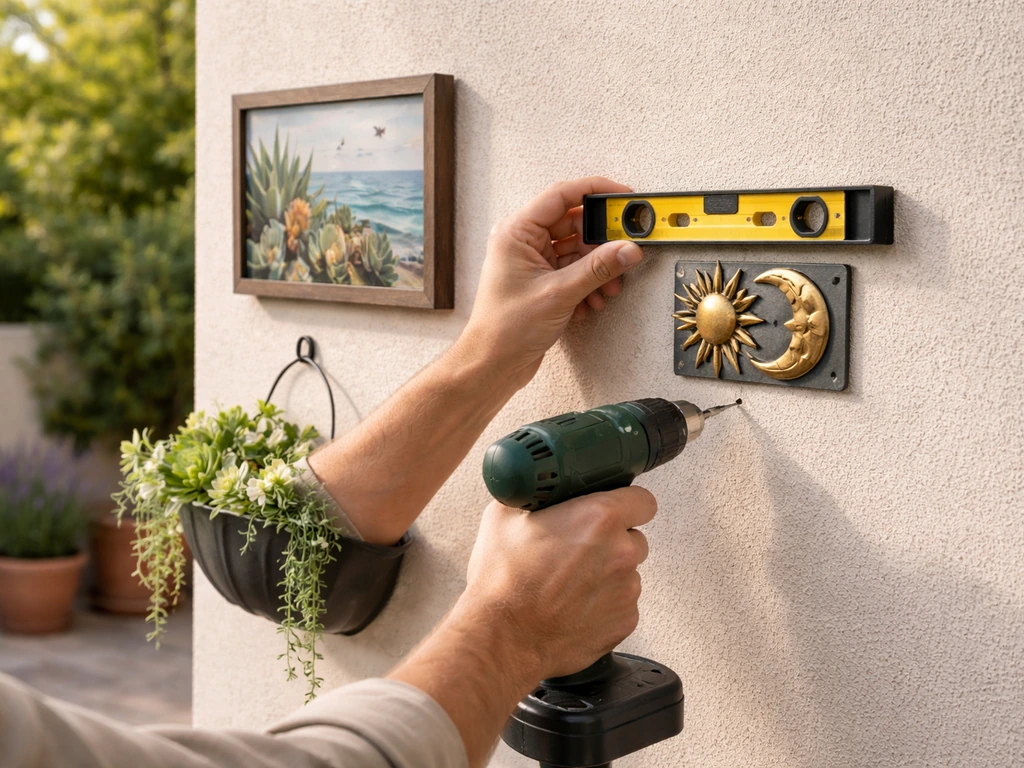
How to Decorate a Patio Wall: DIY Ideas and Mounting Tips
DIY patio wall decor for brick, stucco, wood, concrete, or siding with weatherproof mounting tips and maintenance.
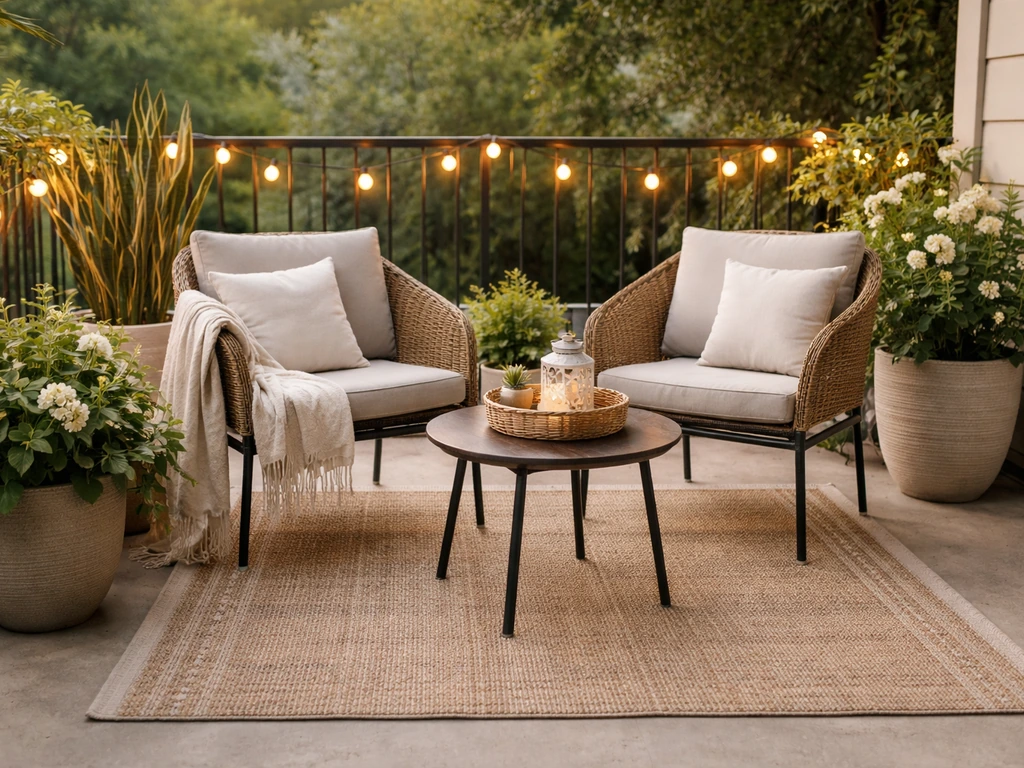
How to Decorate a Back Patio: DIY Plan, Layout, and Ideas
Step-by-step DIY guide for decorating a back patio with layout, durable materials, shade, privacy and a starter shopping
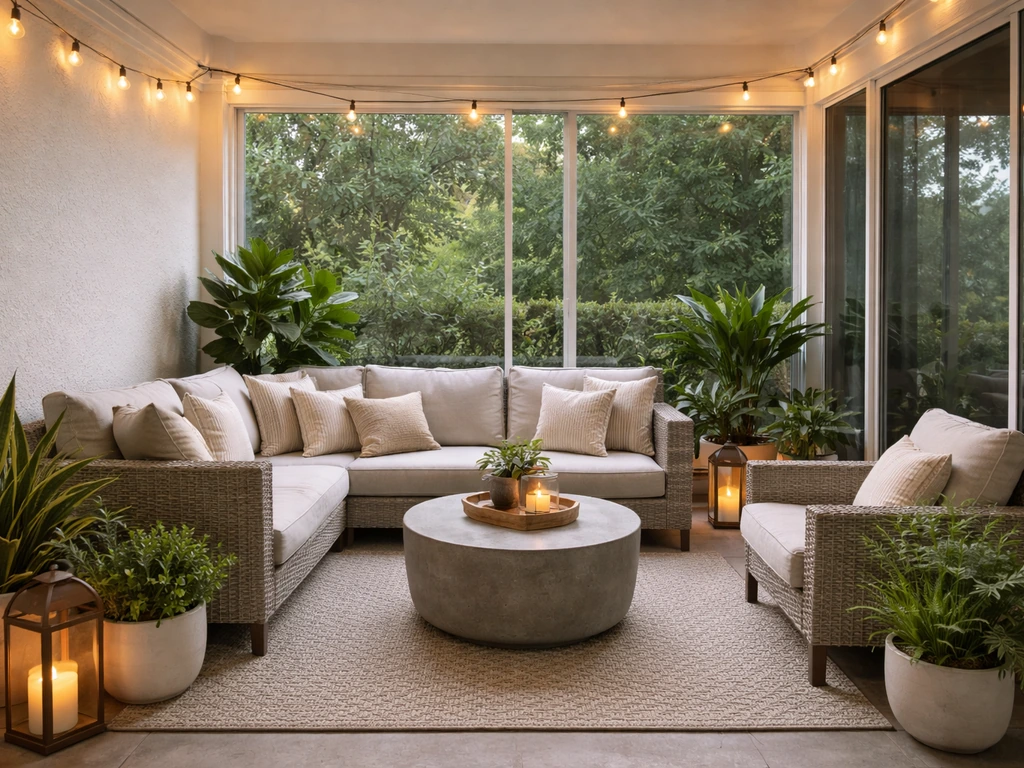
How to Decorate an Enclosed Patio: Step-by-Step Guide
Step-by-step plan to decorate an enclosed patio with durable furniture, lighting, rugs, plants, and easy seasonal mainte