You can absolutely watch TV outside on your patio, and it can work reliably year-round if you pick the right TV type, mount it at the right height and angle, protect it from weather and glare, and run your power and cables safely. For grill visibility and clean lines, you can also learn how to hide the grill on patio with simple covers, built-in storage, or a retractable enclosure watch TV outside on your patio. The setup does take more planning than an indoor install, but none of it is beyond a confident DIYer with a free weekend.
How to Watch TV Outside on a Patio: Setup Guide

Felix Brennan
19 Jun 2026
Pick the right outdoor TV setup
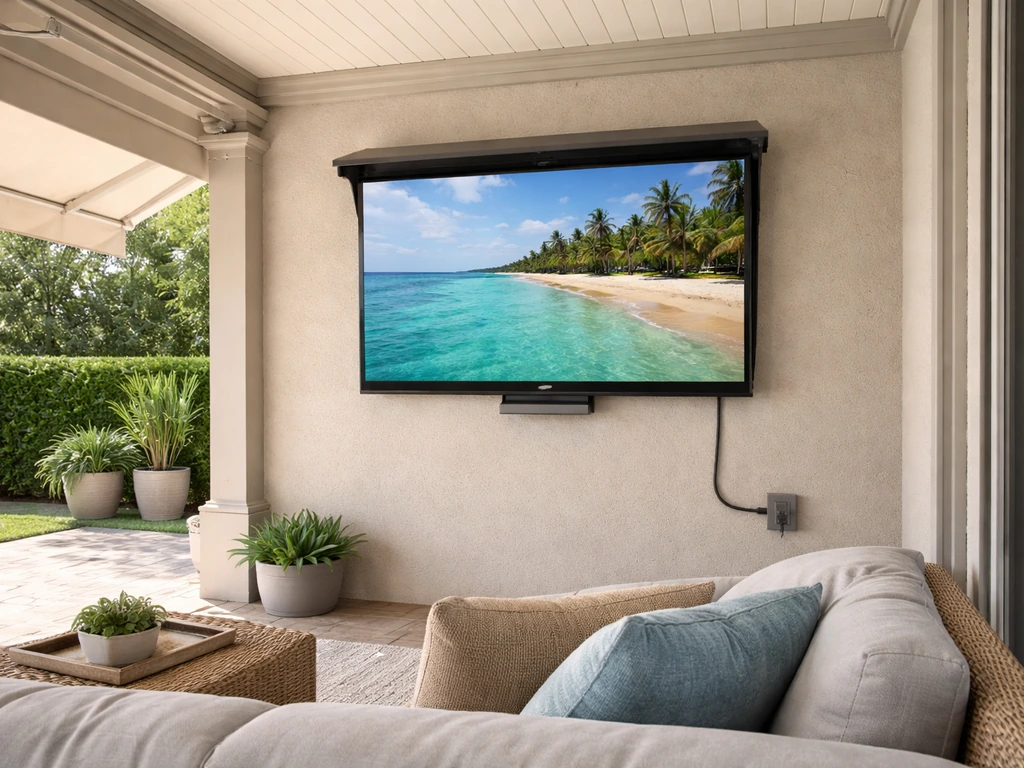
This is the single most important decision you'll make. Get it wrong and you'll be fighting glare, weather damage, or a dead panel within a season. You've got two real options: a purpose-built outdoor TV, or a regular indoor TV tucked inside a weatherproof enclosure.
True outdoor TVs
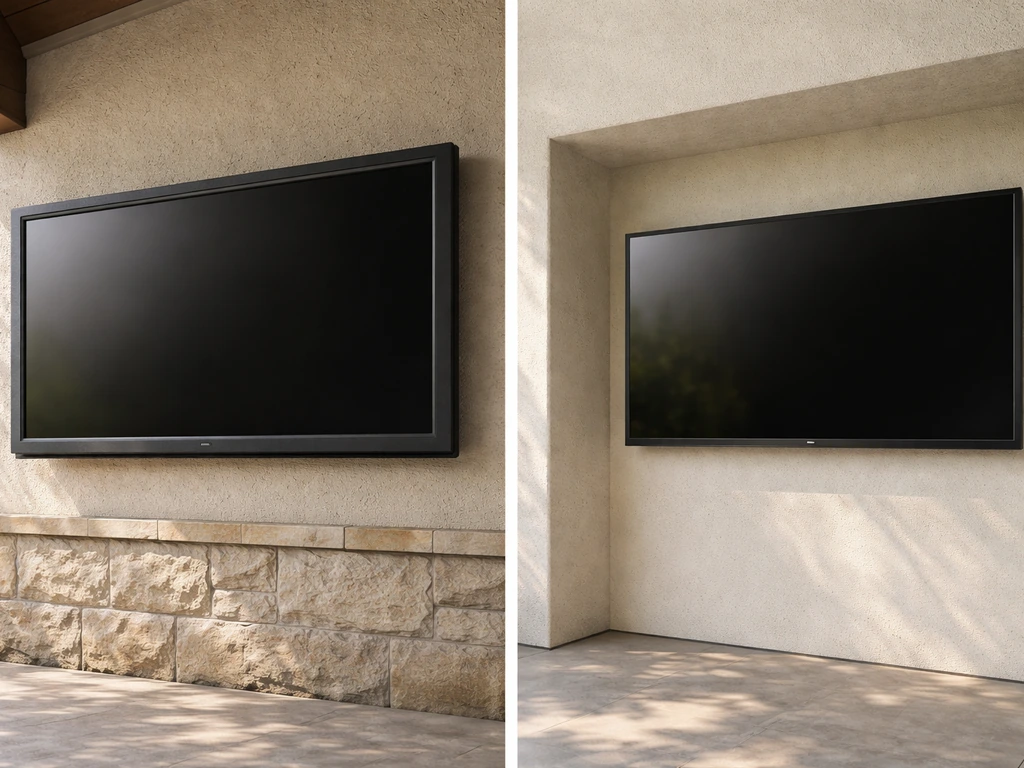
Outdoor TVs like the Samsung The Terrace and SunBrite series are built specifically for exterior use. Samsung’s blank" rel="noopener noreferrer">The Terrace uses an anti-glare screen and direct sun protection technology designed for full sun outdoor viewing. The Samsung The Terrace carries an IP55 rating, meaning it's protected against dust and low-pressure water jets from any direction. SunBrite's Veranda and Pro series carry similar ratings and use what they call TruVision anti-glare screen technology, which is genuinely different from a standard panel. In direct sun, you need a display pushing 1,500 to 3,000 nits of brightness just to see the picture clearly. Most indoor TVs top out around 400 to 600 nits. Outdoor models also have wider operating temperature ranges, typically from around 14°F to 122°F, so they won't shut themselves off on a hot afternoon or a cold fall evening. The SunBrite model comparison chart lists outdoor brightness ranges and weatherproofing by series, including operating temperature ranges. If your patio gets any direct sunlight during your viewing hours, a true outdoor TV is the right call.
Indoor TV in a weatherproof enclosure
If budget is tight, a weatherproof TV enclosure lets you use an existing indoor TV or a cheaper panel outside. A regular indoor TV can work on a covered patio if you keep it in a properly ventilated weatherproof enclosure and keep the screen shaded most of the day. These enclosures are typically rated IP55 or higher themselves and protect against rain, dust, and insects. The catch is that the TV inside is still just an indoor TV, so brightness and glare on sunny days will be a real problem. This option works best on a covered patio or screened enclosure where the screen is shaded for most of the day. You'll also want to make sure the enclosure has ventilation built in or that you add a small fan, because heat buildup will shorten the TV's life fast. If you're already building a patio enclosure or screened room, this is a cost-effective upgrade path worth considering.
| Feature | True Outdoor TV | Indoor TV in Enclosure |
|---|---|---|
| Typical brightness | 1,500–3,000+ nits | 400–600 nits |
| Weather protection | Built-in IP55 or higher | Relies on enclosure rating |
| Anti-glare screen | Yes (purpose-built) | No (standard panel) |
| Operating temp range | Wide (e.g., 14°F–122°F) | Narrow (standard indoor range) |
| Upfront cost | Higher ($800–$3,000+) | Lower (TV + enclosure cost) |
| Best for | Sunny or partially covered patios | Covered/screened patios with shade |
Bottom line: if your patio is fully covered or screened, an enclosure setup is workable and saves money. If you get any direct afternoon sun on the screen, spend the money on a true outdoor TV. You won't regret it.
Choose placement and mount for best viewing
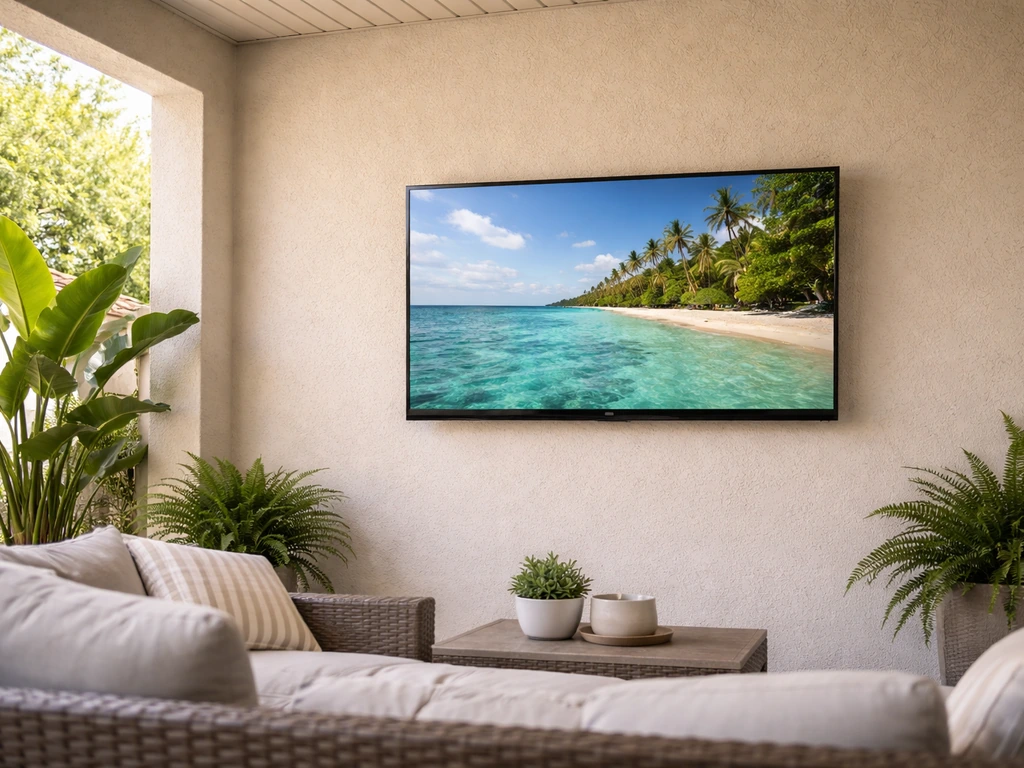
Outdoor mounting has a few more variables than indoor. You're dealing with sun angles, wind, viewing distances from a patio couch or dining table, and the structure you're actually mounting to.
Height and viewing angle
Mount the center of the screen at roughly seated eye level, which is about 42 to 48 inches from the ground for most patio furniture. People tend to mount outdoor TVs too high, especially on exterior walls, and then end up with neck strain. If you're wall-mounting above a bar or counter, keep the bottom of the screen no higher than 60 inches. For viewing distance, a 55-inch TV works well from 7 to 10 feet away, and a 65-inch screen handles distances up to 13 or 14 feet comfortably.
Wall, ceiling, and stand options
A masonry or stucco exterior wall is your most stable option, but you'll need a masonry bit and the right anchors. To keep your outdoor TV secure, make sure the mount and brackets are fastened into solid structure with proper outdoor-rated anchors secure grill to patio. A pergola post or beam works well too, provided it's structurally sound. Ceiling mounts under a covered patio are a great choice when wall space is limited, but use a full-motion ceiling bracket so you can tilt the screen toward your seating area. Freestanding TV stands designed for outdoor use are the most flexible option if you rent or don't want to drill into the structure, though they're more vulnerable to wind. Whatever mount you use, make sure it's rated for outdoor use and for the weight of your specific TV.
Ventilation and cable routing
Leave at least 2 to 4 inches of clearance behind the TV for airflow, even on outdoor models. Heat is one of the top reasons outdoor TVs fail early. For cable routing, plan your conduit path before you mount the bracket. Run cables through an outdoor-rated PVC conduit or weatherproof cable channel from the power source to the TV. Never let cables hang exposed on an exterior wall where they can collect water or get damaged by UV exposure over time.
Handle weather, sun, and glare
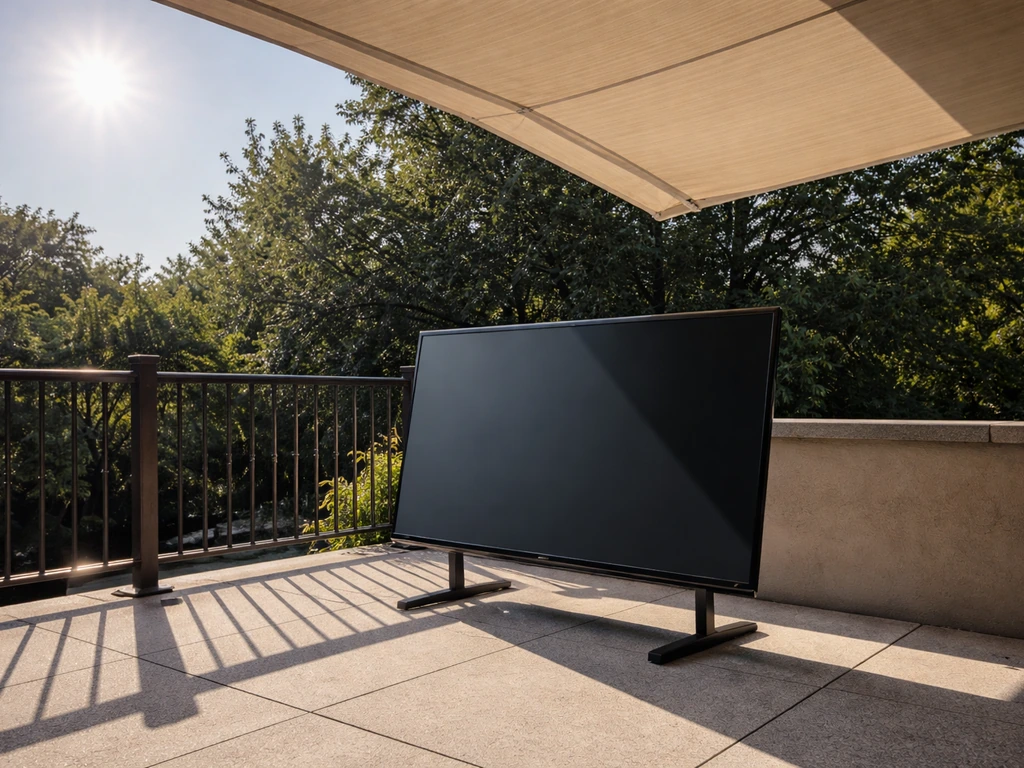
This is where most outdoor TV setups either succeed or fail. Even with a bright outdoor TV, bad placement relative to the sun makes viewing miserable. And a TV that gets rained on without proper protection becomes a very expensive paperweight.
Shade the screen, not just the patio
Position the TV so the screen faces away from the direction of the strongest afternoon sun. In most of the US, that means the screen should face north or east if at all possible. If your patio layout doesn't allow that, create shade directly over the screen. A pergola with a solid roof panel above the TV, a retractable awning extended during viewing hours, or even a simple shade sail rigged above the mounting spot can cut glare dramatically. On a screened patio, the screen mesh itself diffuses some light, which helps. If you're building or upgrading your patio cover and you know you want a TV, design the covered section with the TV location in mind from the start.
Wind and rain protection
Wind is a bigger issue than most people expect. It carries debris, pushes rain at angles that overwhelm even IP55-rated seams, and makes watching TV uncomfortable if you're constantly squinting. A screened enclosure or solid windbreak panel on the prevailing wind side solves this nicely. If you're on a fully open patio, a weatherproof TV cover is a must for when the TV isn't in use. These covers slip on like a sleeve and protect against rain, UV, dust, and bird activity. Get one sized for your exact screen dimensions and one that has UV-resistant material, not just a thin nylon bag.
Dealing with glare in real time
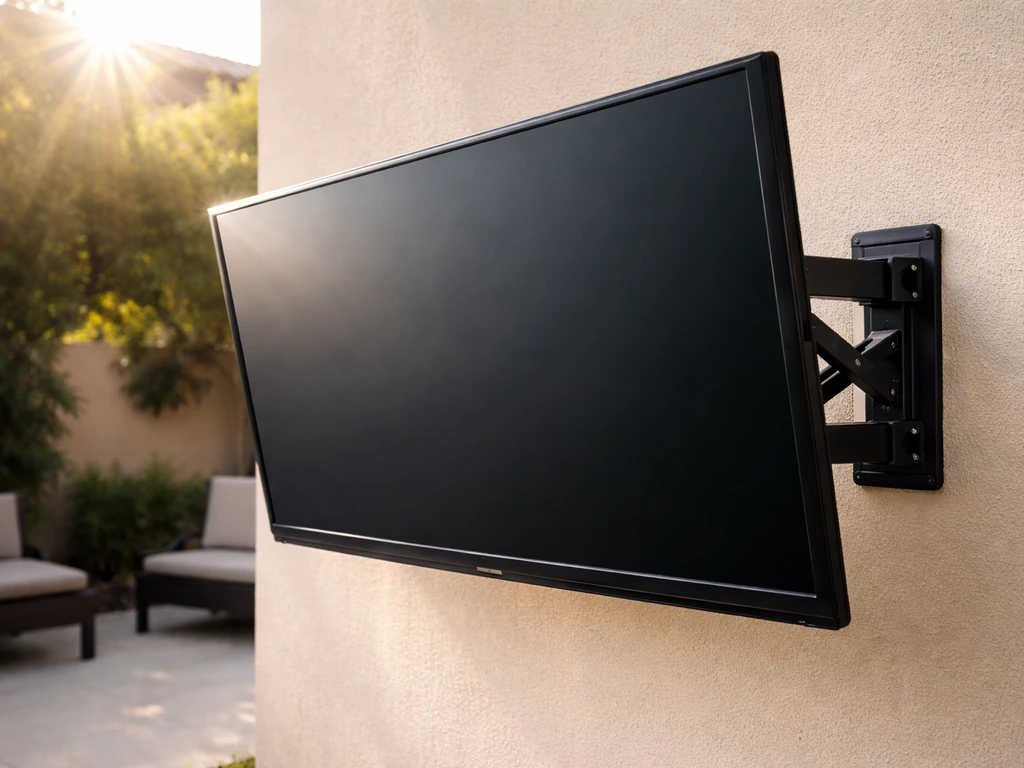
Even with an anti-glare outdoor TV screen, you'll have moments where direct sun hits the panel at a bad angle. An articulating mount helps here because you can tilt or swivel the screen a few degrees to shift the reflection off the viewing area. Some outdoor TV owners also install a small shade hood, basically a shallow box mounted above the TV like a visor, which blocks overhead sun without obstructing the view. These are easy to build from a few pieces of cedar or composite trim and a couple of angle brackets.
Power, cables, and connectivity
Running power and signal to an outdoor TV safely is non-negotiable. Shortcuts here create fire hazards and void warranties, so do this part right.
Safe outdoor power
Your outdoor TV needs a dedicated, weatherproof outlet near the mounting location. If you don't have one, hire an electrician to add a GFCI-protected exterior outlet. GFCI protection is required by code for outdoor outlets and is what prevents a shock if water gets into the circuit. Don't use an indoor extension cord run through a window as a permanent solution. If you need to bridge a short gap temporarily, use a heavy-duty outdoor-rated extension cord (12-gauge minimum for a 15-amp circuit) and plug it into a GFCI outlet. Add a quality surge protector between the outlet and the TV because voltage spikes from storms are a real threat outdoors.
Routing cables cleanly
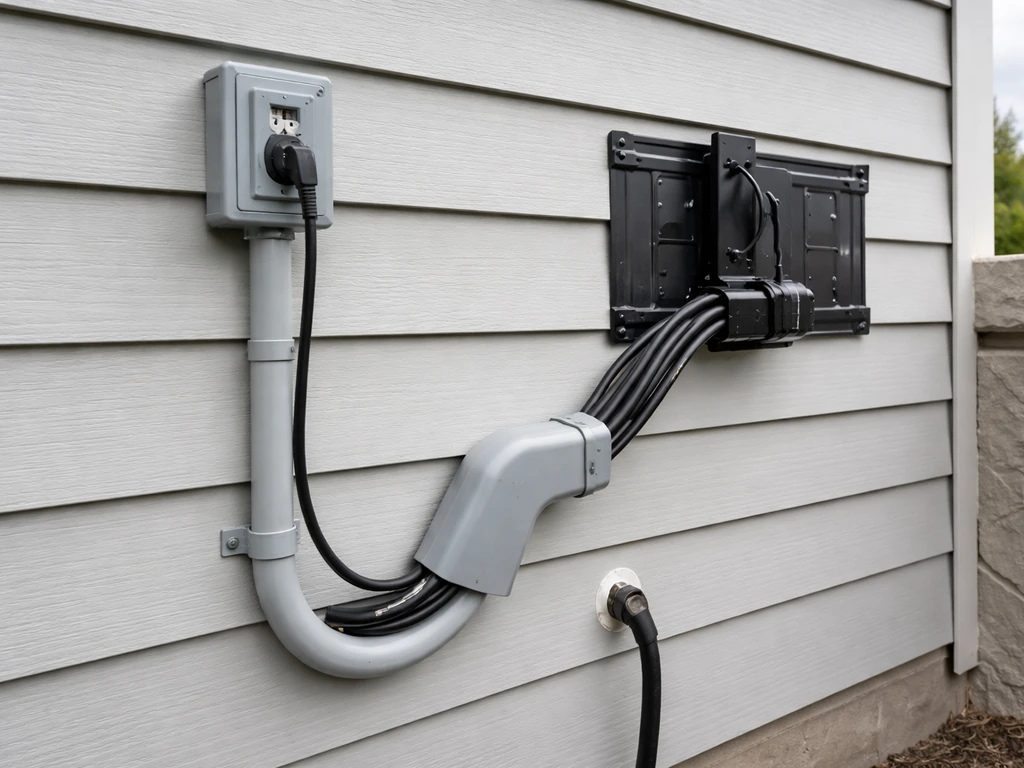
Run all cables through outdoor-rated PVC conduit or weatherproof cable raceways. Seal any penetrations through walls with outdoor-rated silicone caulk to keep moisture and bugs out. If you're on a covered patio and want to hide extension cords or device cables, there are several solid approaches to keeping them tidy and protected without a full conduit install. If you also want to hide an outdoor AC unit on the patio, consider a ventilated screen or a small louvered enclosure that allows airflow. Label every cable at both ends before you close up the wall or conduit run; you'll thank yourself later during troubleshooting.
Streaming, Wi-Fi, and antenna options
Most outdoor TV setups today rely on streaming through a built-in smart platform or a plug-in streaming stick. The biggest challenge is Wi-Fi signal strength. Your router's signal may be weak or inconsistent by the time it reaches an outdoor patio, especially through masonry walls or at any distance over 30 to 40 feet. Fix this with a weatherproof outdoor Wi-Fi access point or a mesh network node placed near a window or exterior wall facing the patio. Powerline adapters are another option if running an Ethernet cable isn't practical. For free over-the-air channels, a flat digital antenna mounted near the TV works well and gets you local channels without any subscription. Run the coax through conduit the same way you'd run any other cable.
Audio and picture reliability outdoors
Outdoor sound is genuinely hard. Open air swallows TV speakers instantly, and wind makes it even worse. The picture side has its own quirks too, especially with streaming compression artifacts that become more visible on bright outdoor panels.
Getting usable sound outside
Built-in TV speakers are basically useless outdoors. Even a modest outdoor soundbar positioned directly below the TV makes a night-and-day difference. Look for soundbars rated for outdoor use or at minimum rated IPX5. Mount it close to the TV so the audio and video feel synced. For a more immersive setup, a pair of outdoor bookshelf speakers connected to a small stereo amplifier fills the space much better and lets you position the audio closer to your seating area. Keep speaker volume moderate when wind is picking up; trying to overpower wind noise just distorts the sound and bothers neighbors. If your patio is screened or enclosed, sound bounces around more and you won't need nearly as much output.
Picture troubleshooting
If the picture looks washed out even on a bright outdoor TV, first check that you're in the right picture mode. Most outdoor TVs have a 'vivid' or 'outdoor' mode that cranks contrast and brightness to compensate for ambient light. If streaming quality looks pixelated or buffery, the issue is almost always Wi-Fi signal strength rather than the TV itself. Run a speed test from your phone at the TV's location and if you're below 15 to 25 Mbps for 4K streaming, you need a better outdoor signal solution. If the screen has a dim patch or uneven brightness, that's often a sign of heat buildup or moisture infiltration, both of which mean checking your ventilation clearance and any enclosure seals.
DIY install checklist and seasonal maintenance
Here's how to work through the install and keep everything running season after season. If you're also trying to hide an air conditioner on your patio, plan the location and airflow needs before you build or mount any cover.
Installation checklist
- Choose your TV type: true outdoor TV for sunny/exposed patios, indoor TV in enclosure for shaded/screened patios.
- Mark your mount location at the correct height (center of screen at 42 to 48 inches from ground for seated viewing).
- Verify the mounting surface is structurally sound: masonry anchors for brick/stucco, lag bolts into studs or posts for wood.
- Install a GFCI-protected outdoor outlet within 6 feet of the mount location, or confirm an existing one is accessible.
- Run all cables through outdoor-rated conduit or raceways before mounting the bracket.
- Mount the bracket, hang the TV, and leave 2 to 4 inches of rear clearance for airflow.
- Connect power through a surge protector.
- Connect streaming stick or set up built-in smart TV Wi-Fi; test signal strength at the TV location.
- Mount outdoor soundbar or speakers; test audio at normal listening volume.
- Add a shade structure or adjust the mount angle to eliminate direct sun glare during your typical viewing hours.
- Install or prepare a weatherproof cover for when the TV is not in use.
Seasonal maintenance
- Every spring: inspect all cable conduit seals and caulk any gaps that opened over winter; check the mount hardware for rust or loosening.
- Every few months: wipe the screen with a microfiber cloth and an outdoor TV screen cleaner; avoid paper towels or household glass cleaner.
- Before storm season: verify your weatherproof cover is in good shape and that all enclosure seals are intact.
- When a major storm is coming: slip on the TV cover, or if the TV is on a stand, bring it inside.
- Every fall in cold climates: if your outdoor TV's rated operating temperature is above your winter lows, store it inside or in a climate-controlled garage for the winter.
- Overheating troubleshooting: if the TV shuts off on hot days, check that the ventilation clearance hasn't been blocked and that the mounting location isn't in a spot where heat radiates off a nearby wall.
- Weak signal troubleshooting: reposition your mesh node or outdoor access point closer to the patio and retest speeds; if using an antenna, try rotating it a few degrees for a better signal lock.
A well-installed outdoor TV on a covered patio will give you years of reliable use with minimal fuss. If you also need to hide things like drain covers around the patio, use weather-safe disguising options that blend with your hardscape covered patio. The first season is mostly about dialing in the shade situation and audio setup. After that, the maintenance is light and the payoff of having a functional outdoor entertainment space makes the whole project worth it.
FAQ
Do I need an outdoor TV if my patio is only partly covered?
If any direct afternoon sun hits the screen during viewing, an outdoor-rated TV is strongly recommended. For partly covered patios, even a high-brightness indoor TV in an enclosure often struggles with glare at certain angles. If you can’t guarantee consistent shade over the viewing window, plan on a purpose-built outdoor display or add a fixed shade hood directly above the screen.
How can I tell whether my glare issue is from the TV or from viewing angle?
Turn on a bright static image, then slowly move your seating position a few feet left and right (or tilt the screen if you have a full-motion mount). If glare changes dramatically with tiny angle shifts, it is primarily a placement or reflection issue. If the image stays washed out across angles, then brightness and anti-glare performance are likely insufficient for your sun exposure.
What Wi-Fi speeds should I aim for when streaming an outdoor TV?
Aim for roughly 25 Mbps minimum at the TV location for reliable 4K, and closer to 15 to 20 Mbps for steadier 1080p. The key is the speed and stability at the patio spot, not what you see near the router. If your test result swings a lot throughout the day, consider a weatherproof access point positioned near the patio-facing wall or a mesh node.
Can I run an outdoor TV on an extension cord season after season?
It is best avoided for permanent use. The safer approach is a dedicated exterior, GFCI-protected outlet near the TV. If you must bridge a short gap temporarily, use a heavy-duty outdoor-rated cord (12-gauge minimum on a 15-amp circuit), keep the connection protected from rain, and replace it at the first sign of stiffness, cracking, or loose plugs.
How do I prevent condensation when temps swing between day and night?
When humidity is high and temperatures drop, moisture can collect inside enclosures and on screens. Use outdoor-specific ventilation or a properly sized enclosure with airflow, leave the recommended clearance behind the TV, and avoid sealing the unit so tightly that heat cannot escape. If you live in a cold, humid climate, consider adding a simple cover when not in use to reduce moisture exposure.
What’s the best way to protect my outdoor TV from wind-driven rain?
Aim to block the prevailing wind side with a solid windbreak or screened enclosure, and do not rely only on the TV’s IP rating. For times when it is not in use, use a correctly sized weatherproof cover rated for UV, not a thin bag. Also, keep cable penetrations sealed with outdoor-rated caulk and ensure conduit runs slope so water does not pool.
Should I mount the TV on a wall or a ceiling under the patio?
Wall mounting is usually simplest and gives stable viewing, but ceiling mounting can reduce glare if the screen is angled properly. If you use a ceiling mount, choose a full-motion bracket so you can fine-tune tilt for your exact seating position. Avoid mounting too high, since outdoor setups frequently cause neck strain.
How do I choose the right size TV for typical patio distances?
A common guideline is that a 55-inch TV works well from about 7 to 10 feet, while a 65-inch screen handles roughly up to 13 to 14 feet. If your seating distance varies, prioritize the largest comfortable size rather than cranking viewing too far by over-relying on zoom or streaming upscaling. Consider glare too, since larger screens can be more noticeable if they are not shaded.
What sound setup works best outdoors without disturbing neighbors?
A soundbar mounted close to the TV is typically the most effective baseline, because outdoor speakers lose clarity quickly in open air. For quieter listening, keep volumes moderate and rely on speaker placement rather than max loudness. If you use multiple speakers, test with the patio door or screen open to see how far sound carries before increasing output.
Why does my outdoor TV sometimes show uneven brightness or a dim patch?
Uneven brightness can point to heat buildup or moisture intrusion, even on outdoor models. Recheck that you left the recommended clearance behind the TV, confirm any enclosure seals are intact, and inspect conduit or cable raceways for water paths. If it happens more often during humid or very hot days, ventilation is the first thing to improve.
Do I need surge protection for an outdoor TV even if it’s not directly hit by lightning?
Yes. Voltage spikes from storms can damage electronics without a direct strike, so a surge protector between the outdoor outlet and the TV is a practical safeguard. If you have multiple devices (streaming box, soundbar, access point), consider a surge-protected power strip inside the weather-protected area, or use individual surge protection where appropriate.
Next Articles
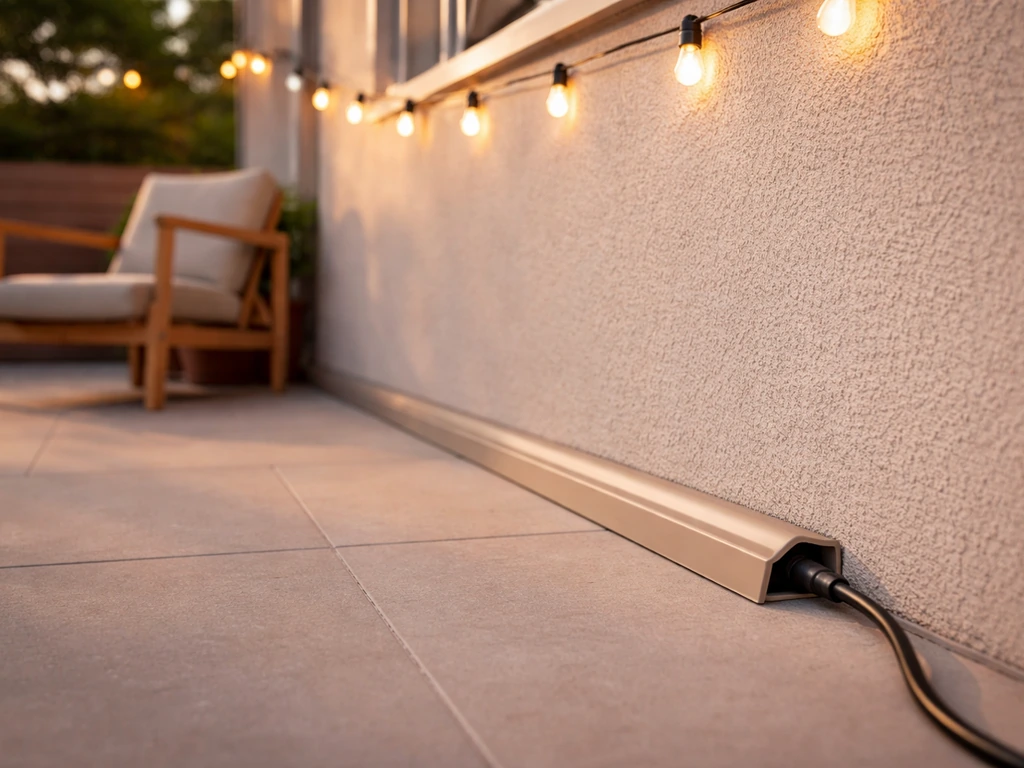
How to Hide Extension Cords on a Patio Safely
DIY guide to hide patio extension cords safely with cord covers, raceways, enclosures, and proper outdoor-rated setup fo
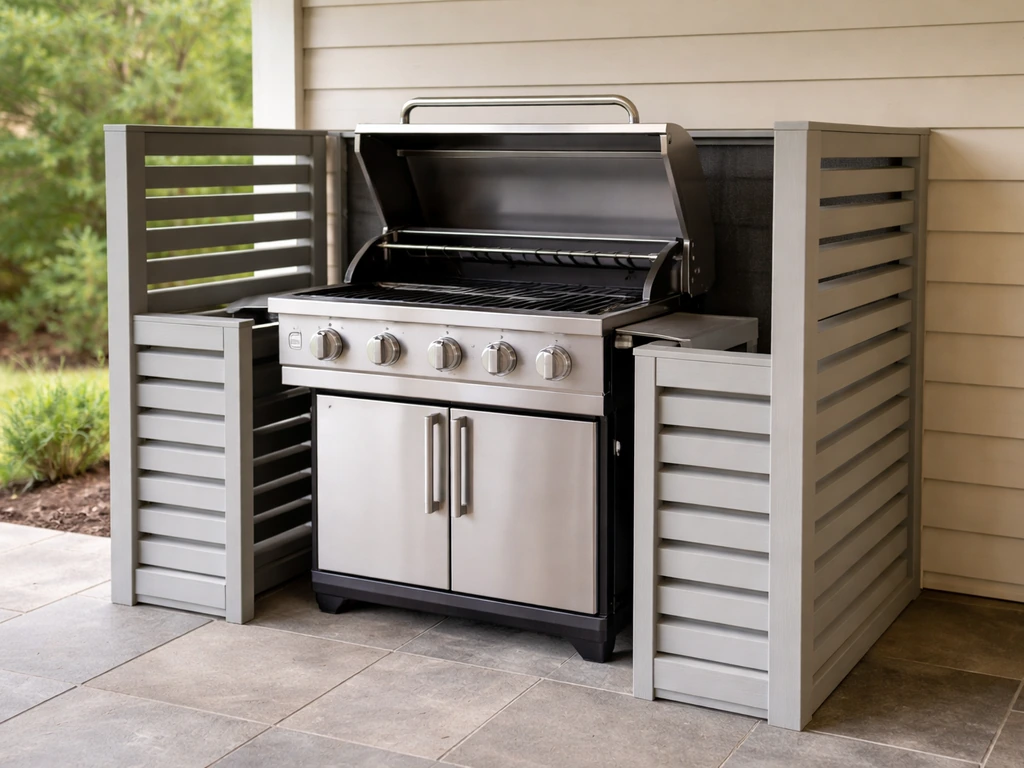
How to Hide a Grill on Patio: Safe DIY Options
Step-by-step DIY options to hide a patio grill safely with enclosures, screens, covers, and grill-zone heat clearance.
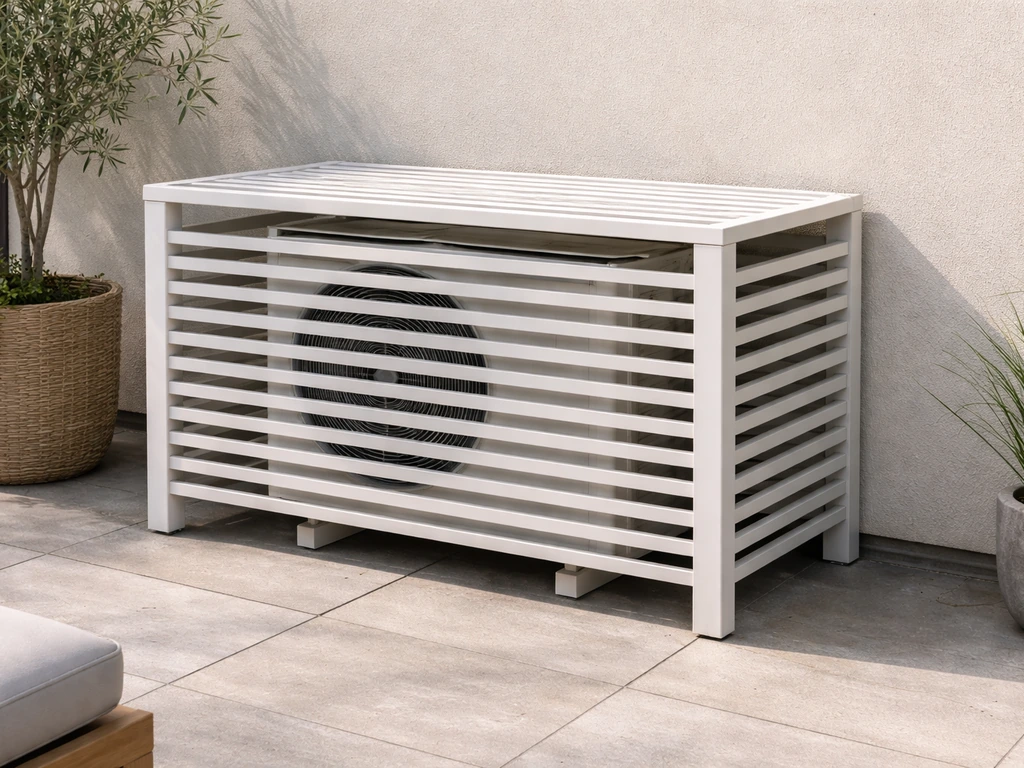
How to Hide an AC Unit on a Patio Without Blocking Airflow
Step-by-step ways to hide a patio AC condenser with screens or built-in housing while keeping airflow, clearance, and dr