The fastest way to brighten up a patio is to combine a few targeted lighting upgrades with lighter colors on your biggest surfaces (floor, walls, furniture) and at least one or two reflective accents. If you want to dial in the best results, learn how to light patio spaces step by step so your fixtures match your layout and lighting goals lighting upgrades. You don't need to rebuild anything. Most patios go from dim to genuinely inviting with a weekend's worth of work and a couple hundred dollars spent strategically.
How to Brighten Up a Patio: Easy DIY Lighting, Color, and Layout Tips

Felix Brennan
25 Jun 2026
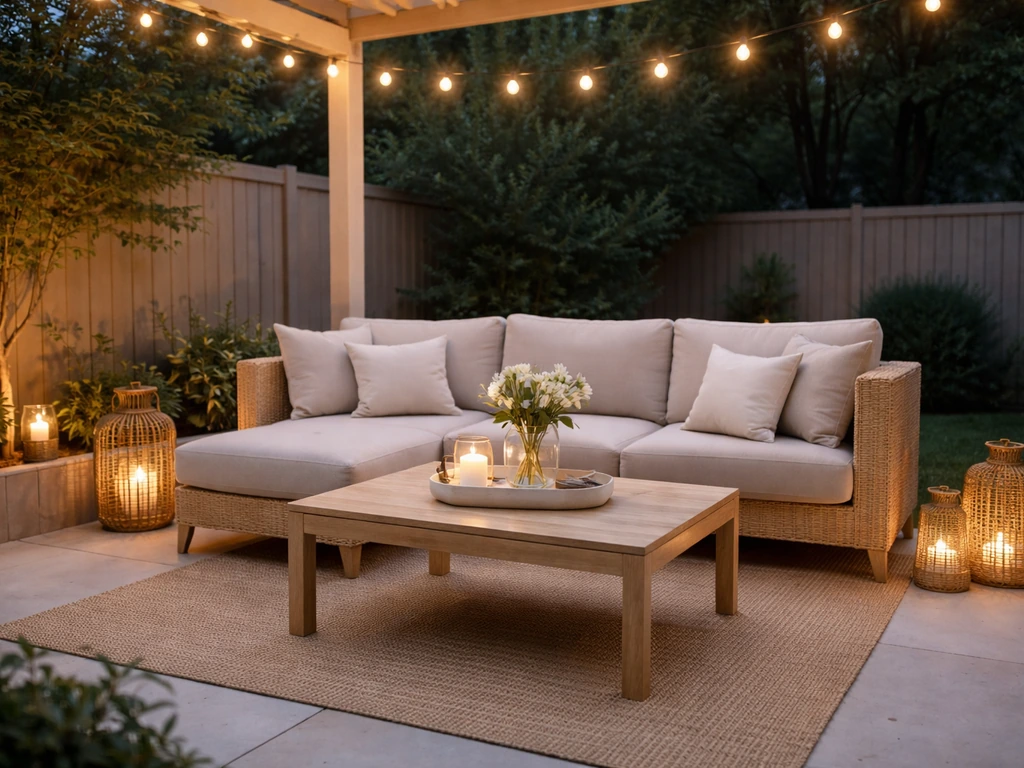
First, figure out where your patio is actually dim and why
Before you buy a single string light or can of paint, spend 10 minutes doing a quick brightness audit. Walk your patio at three different times: mid-morning, midday, and an hour after sunset. Note which zones feel cave-like and when. This matters because the fix for a patio that's shady all day is different from one that's fine in daylight but unusable at night.
Common culprits for daytime dimness: a solid patio cover or roof (especially a dark-stained wood pergola), tall fences or walls on the south or west side blocking afternoon sun, overhanging tree canopy, or a patio that faces north and simply doesn't get direct light. For night dimness, the issue is almost always just insufficient or poorly placed fixtures.
A free sun-path or shadow calculator (search 'sun angle calculator' with your zip code) can show you the solar altitude at your location across seasons. This tells you roughly where shadows will fall from your fence, overhang, or trees at any given time of year. It sounds technical but takes about two minutes and can immediately explain why your patio is sunny in June but gloomy by October.
- Dark cover overhead (solid wood pergola roof, dark shade sail, dense trellis)
- Tall solid fence or wall blocking low-angle morning or afternoon sun
- Tree canopy that has grown over the past few years
- Dark flooring, walls, or furniture absorbing instead of reflecting light
- No artificial lighting, or fixtures placed too far apart or aimed incorrectly
- Clutter on the floor and surfaces blocking what little light there is
Lighting that works from noon to midnight
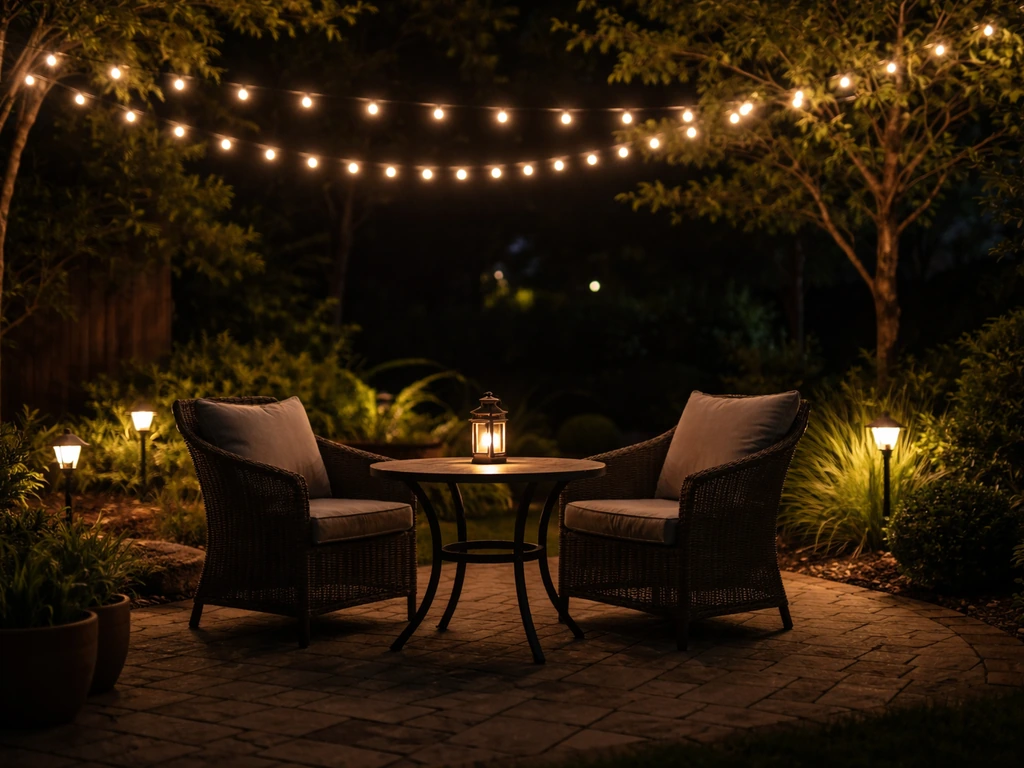
Artificial lighting is the single highest-impact change for evening use, and it's often the easiest DIY win. The key is layering: one type of fixture rarely does the job on its own. Think of overhead ambient light (string lights, a ceiling fixture), mid-level accent light (wall sconces, lanterns), and low ground-level light (path lights, step lights) working together.
String lights: the easiest starting point
A canopy of outdoor string lights is the most popular DIY patio upgrade for good reason. To get a festive look fast, plan your Christmas patio decor around the same lighting and placement strategies, then add greenery, warm accents, and ornaments that match your available light outdoor string lights. It works. Run them between anchor points (posts, the house wall, a fence, or shepherd's hooks set in planters) at 8 to 10 feet high, and they immediately make the space feel finished and inviting. Always buy blank" rel="noopener noreferrer">string lights rated for wet locations and UL-listed for outdoor use. Plug them into a GFCI-protected outlet, which is a code requirement for outdoor receptacles and a real safety measure. If you don't have a GFCI outlet on your patio, a licensed electrician can add one for a relatively modest cost, or you can use a portable GFCI adapter as a temporary measure.
Wall sconces and lanterns for true ambient light
If your patio has a house wall or a solid fence, a hardwired wall sconce at roughly 6 to 7 feet high throws good ambient light and looks more permanent and polished than string lights alone. If you’re also wondering how to style your outdoor patio overall, start by matching lighting placement and color to the activities you want there Lighting that works from noon to midnight. Solar-powered wall lanterns have improved a lot and are a wiring-free option if your wall gets decent sun during the day. For color temperature, aim for 2700K to 3000K (labeled 'warm white'). That range is what the U.S. Department of Energy recommends for residential exteriors, and it's the sweet spot between bright enough to be useful and warm enough to feel comfortable rather than clinical.
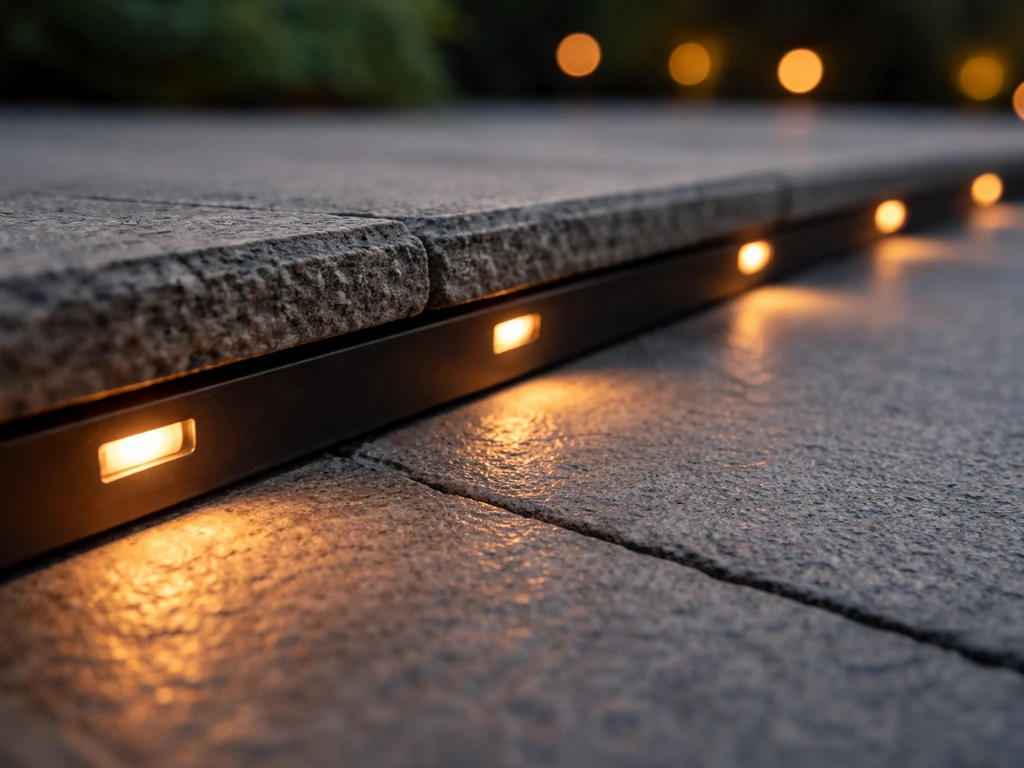
Path and step lights for safety and depth
Path lights define the edges of your patio and make it safer to navigate at night. Place them about 6 inches in from the edge of a path or patio border. For lower-output fixtures around 100 lumens, space them 5 to 6 feet apart. If you go up to 200+ lumens, you can stretch spacing to 8 to 10 feet. The goal is overlapping pools of light, not bright spots with dark gaps between them. Step lights are a smart add if your patio has level changes: mount them on the side of the riser rather than the top of the tread, and they'll illuminate the tread cleanly without the awkward shadows that top-mounted fixtures cast.
| Fixture Type | Best Use | Lumen Range | Color Temp | DIY Difficulty |
|---|---|---|---|---|
| String lights | Overhead ambient, canopy effect | 2,000–4,000 total string | 2700K–3000K | Easy (plug-in) |
| Wall sconce | Ambient + decorative on walls | 400–800 per fixture | 2700K–3000K | Easy (solar) to Moderate (hardwired) |
| Path/stake lights | Edge definition, navigation | 100–200 per fixture | 2700K–3000K | Easy (solar stake) |
| Step lights | Riser/tread safety lighting | 12–100 per fixture | 2700K–3000K | Moderate (low-voltage wire) |
| Hanging lantern | Focal point, dining table area | 200–600 per fixture | 2200K–2700K | Easy (hook mount) |
Use color and finish to stop your patio from eating light
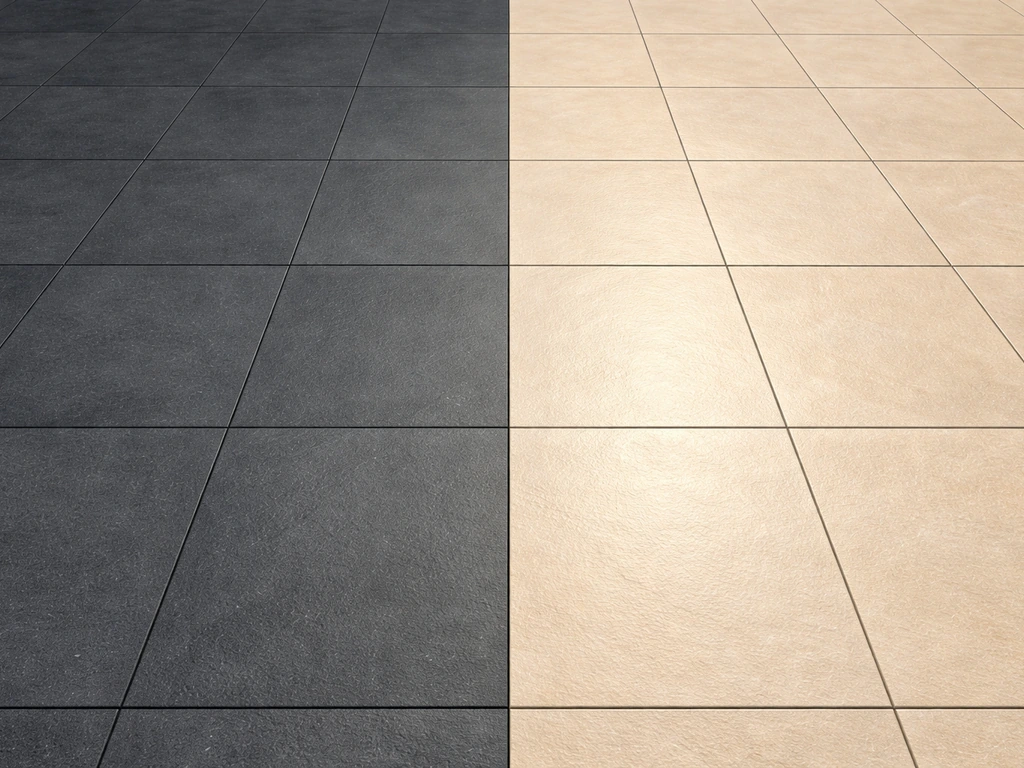
Dark surfaces absorb light. Light surfaces reflect it back. This sounds obvious, but it's the reason two patios with identical lighting can feel completely different. Every square foot of dark concrete, charcoal fence board, or navy cushion is competing against your lighting upgrades. You don't have to go all white, but shifting your biggest surfaces toward lighter tones makes a dramatic difference.
Floors: paint, stain, or cover them
Concrete patio floors are the easiest to change. A light gray or warm beige concrete stain or paint reflects significantly more light than bare weathered concrete or a dark stain. When choosing color, look for the Light Reflectance Value (LRV) on the paint chip or manufacturer page. Higher LRV means more reflective. A pure white is typically LRV 90+, while a medium gray might be 40–50. Even moving from a dark stain (LRV 15–20) to a mid-tone (LRV 50+) noticeably brightens the space. For painting, use a satin or semi-gloss exterior-rated masonry paint rather than flat. Higher-gloss finishes contain more resin, hold up better against UV, and are easier to clean.
If painting isn't appealing, a light-colored outdoor rug over dark concrete achieves a similar effect and is completely reversible. Stick with lighter neutrals (cream, pale gray, tan) rather than bold patterns, and keep in mind that direct sun fades outdoor rugs over time regardless of material, so treat the rug as a rotating seasonal upgrade rather than a permanent fixture.
Walls and fences: the most underrated upgrade
A dark wood fence or concrete block wall surrounding your patio is a massive light absorber. Painting a fence white or a soft warm white (even on just the interior-facing side) can feel like turning a dimmer switch up. Use a satin or semi-gloss exterior latex paint for better UV resistance and durability. If you can't paint (a shared fence, for example, or a landlord situation), consider adding a white or light-colored lattice panel on the inside face. Lattice maintains airflow while bouncing more light around the space.
Furniture and cushions
White, cream, light gray, and warm tan furniture and cushions keep a patio feeling airy. When shopping for replacement cushion covers or new cushions, look specifically for solution-dyed acrylic fabric (brands like Sunbrella are the benchmark). Solution-dyed means the color goes all the way through the fiber, not just on the surface, so it resists fading dramatically better than piece-dyed 'outdoor' fabrics that will bleach out within a season or two. This matters for light colors especially, since faded whites turn dingy rather than gracefully aged.
Decor and styling tricks that multiply the light you already have
Once you've dealt with surfaces and fixtures, a few smart styling moves can amplify what you've done without spending much at all. You can use the same budget-friendly lighting and styling ideas to decorate your patio on a budget without sacrificing comfort Decor and styling tricks.
Reflective surfaces and mirrors
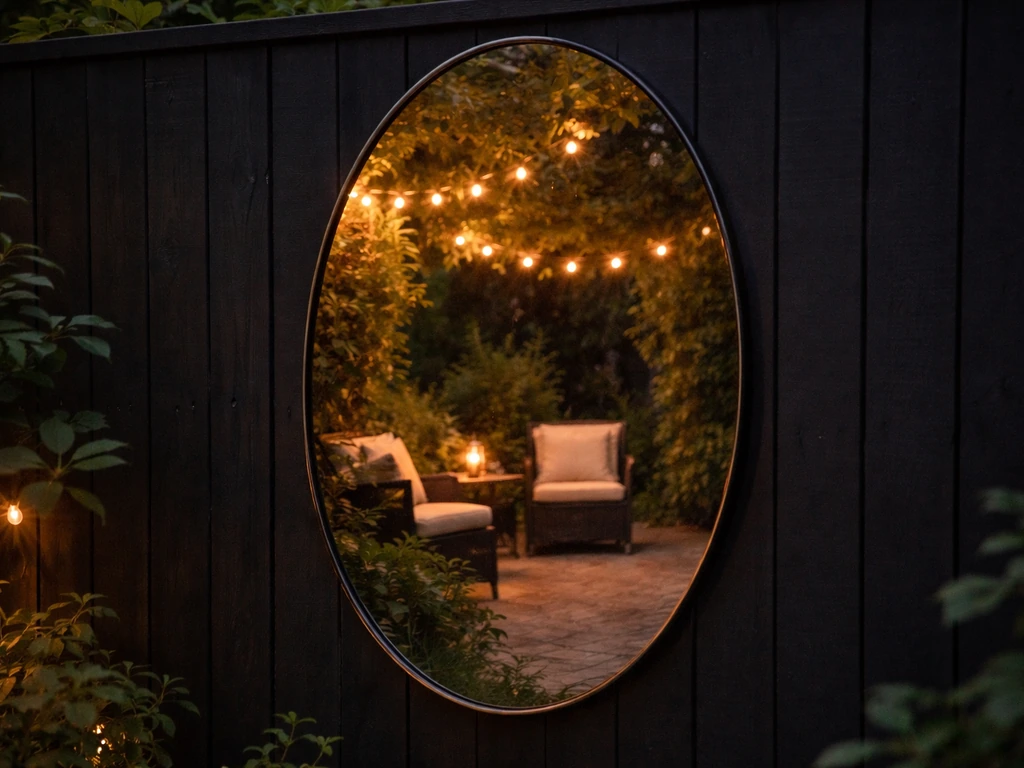
An outdoor-rated mirror mounted on a dark fence wall is one of the most effective brightening tricks there is. It bounces both daylight and artificial light back into the space and makes a small patio feel larger. Use a mirror specifically designed for outdoor use (sealed frame, moisture-resistant backing) or repurpose a large galvanized or stainless steel tray as a reflective accent. Metallic lanterns, pale ceramic planters with glazed finishes, and glass-topped tables all do a smaller version of the same thing.
Layout: give light room to move
Cluttered patios feel darker. Furniture pushed against every wall, stacked pots, overgrown plants crowding the edges, a pile of tools in the corner: all of it absorbs light and makes the space feel smaller and dimmer. Pull furniture slightly away from walls so light can circulate behind and around pieces. Keep one clear sightline from the entry point of the patio to the far end. This is a layout principle, not just tidiness, and it has a real visual impact.
Textiles and accents
A white or cream outdoor curtain panel hung on one side of a pergola or against a dark wall adds both brightness and softness. Sheer options let light through while still giving a sense of enclosure. Avoid heavy, dark-colored curtains on shaded patios, they work against you on every level.
Structural upgrades that let in more daylight
If your patio has a solid cover that's killing the natural light, you have options that don't require a full rebuild. This is where a little structural thinking pays off the most.
Swap a solid roof for polycarbonate panels
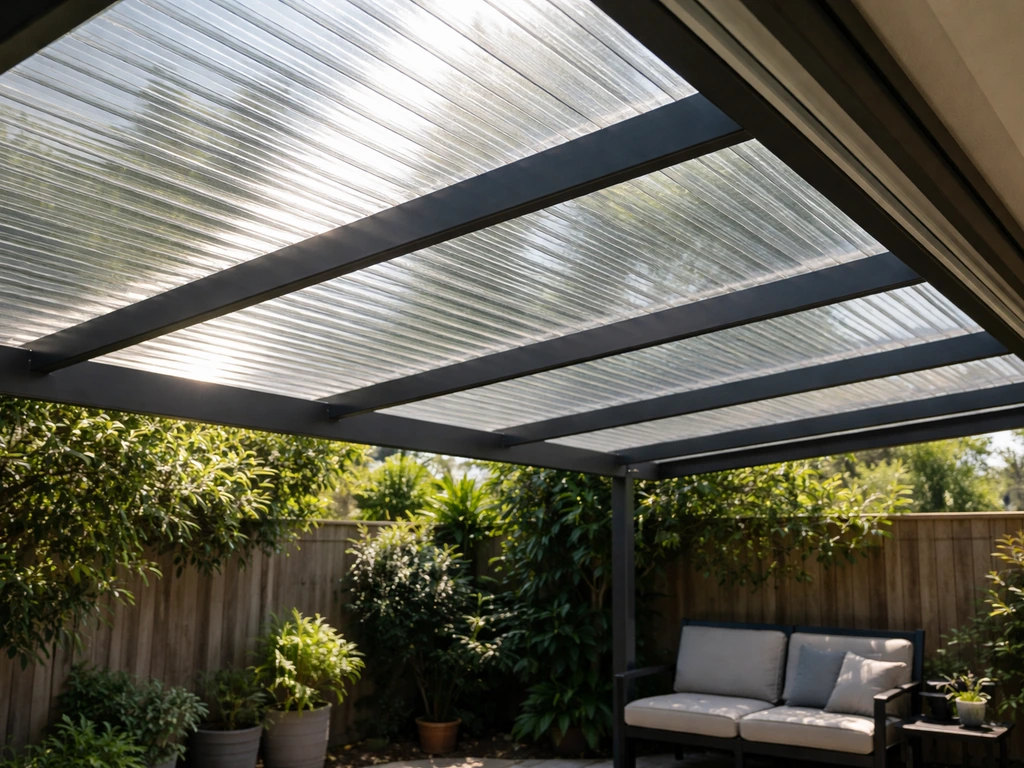
If you have a solid wood or metal patio cover, replacing even a portion of the roof with clear or lightly tinted polycarbonate panels is a game-changer. Clear single-wall polycarbonate transmits roughly 80 to 90 percent of visible light while still providing rain protection. Opal or bronze-tinted multiwall panels drop transmission to around 30 to 60 percent but diffuse the light more evenly and reduce glare and heat gain. For a patio that's primarily dim rather than hot, clear or light-tint is the better call. For a patio in full southern sun that gets too bright and hot at midday, a diffusing opal panel is a smarter compromise.
Shade sails with light-transmitting fabric
If you're adding shade rather than replacing a cover, choose a shade sail with a lower shade factor, around 70 to 85 percent shade rather than 95 to 100 percent. Shade sails are commonly specified with a shade factor percentage indicating light blockage, where 100% implies complete blockage, which helps predict how much daylight a patio will lose blank" rel="noopener noreferrer">shade factor percentage indicating light blockage (100% implies complete blockage). Shade factor is listed on almost every shade sail product page. A 70 percent shade sail blocks most direct UV and radiant heat but still lets a noticeable amount of diffused daylight through, keeping the patio from feeling like a tent. Avoid dark-colored sails (charcoal, navy, hunter green) on patios that already struggle with shade. Light tan, white, and light gray sails reflect more ambient light back down.
Screens and enclosures that don't kill the light
Enclosing a patio doesn't have to mean making it darker. Retractable screen systems use fiberglass mesh in several densities: insect-control mesh at the fine end, and sun-control or privacy fabrics at the denser end. For brightness, insect-control or standard fiberglass mesh is the right choice. These screen types have high light transmission and visibility, effectively turning your patio into a screened room without noticeably reducing daylight. Aluminum-framed screens with fiberglass mesh maintain views and let in far more light than solid privacy panels or vinyl enclosures. If privacy is also a goal, consider using solid panels only on the side facing neighbors and open mesh on the sides that face gardens or open sky.
Plants and landscaping that add brightness instead of shade
Plants are almost always discussed in terms of shade and screening, but the right plant choices actually make a patio feel brighter. The trick is selecting plants for foliage color and placement rather than just coverage.
Go for chartreuse, lime, and variegated foliage
Chartreuse and lime-green leaved plants (sweet potato vine, golden creeping Jenny, lime coleus, golden hosta) are genuinely eye-catching in shaded spots. They reflect more light than deep green foliage and read as almost luminous in low-light conditions. Variegated plants with yellow, white, or pale cream markings create a similar effect, producing what looks like dappled sunlight even in full shade. Good shade-tolerant variegated picks include variegated hostas, caladiums, and Persian shield.
Use white and pale-colored flowers strategically
White flowers (white impatiens, white begonias, white petunias) glow in low light in a way that bold colors simply don't. In a shaded patio corner, a pot of white impatiens creates a visible brightness point. Combine them with chartreuse foliage for maximum visual contrast.
Planter strategy: thrillers, fillers, and spillers in light containers
Use the thriller/filler/spiller framework for container arrangements: one tall, dramatic plant in the center (thriller), medium bushy plants around it (fillers), and trailing plants over the edge (spillers). This approach fills space efficiently and looks intentional. Choose planters in white, pale gray, or glazed cream tones rather than terracotta or dark resin. A row of white or pale gray planters along a dark fence wall does double duty: it adds greenery and acts as a reflecting surface. Match container volume to plant size, as cramped roots mean weak, less vibrant plants that quickly look sparse rather than bright.
Trim what's blocking the light
Before adding anything, remove what's already causing shade. Trimming the lower canopy of an overhanging tree by even 3 to 4 feet can dramatically increase the light reaching a patio. Cutting back shrubs along the south or west side of the patio fence line lets in afternoon sun. This is free and often the highest-impact single action you can take.
Your prioritized DIY plan and budget-friendly shopping list
Here's how to sequence these upgrades based on impact per dollar. If you want the whole process from start to finish, use this guide on how to decorate an apartment patio for practical ideas and a simple plan. Start at the top and work down based on your specific situation and budget.
- Trim overhanging trees and overgrown shrubs (free, highest daylight impact for shaded patios)
- Add outdoor string lights on a GFCI outlet with a timer (low cost, immediate evening transformation, plug-in versions require no electrical work)
- Paint or stain dark concrete floors a light tone using exterior masonry paint or concrete stain (moderate cost, affects the largest surface area)
- Paint or treat dark fence walls or perimeter walls with a light exterior paint, satin finish (moderate cost, second-largest reflective surface)
- Replace dark cushions and textiles with solution-dyed acrylic in light tones (moderate cost, reversible and portable)
- Add solar path or step lights to define edges and add depth at night (low cost per fixture, no wiring needed)
- Install an outdoor-rated mirror or large reflective metallic accent on the darkest wall (low to moderate cost)
- Swap dark shade sails for light-tone ones with 70–85% shade factor, or replace solid roof sections with clear polycarbonate panels (moderate to higher cost, major structural daylight improvement)
- Add white or pale planters with chartreuse/variegated foliage and white flowers along dark perimeter walls (low to moderate cost, ongoing seasonal refresh)
- Add wall sconces or a hardwired overhead fixture for permanent ambient lighting (higher cost if new wiring needed, but most durable long-term solution)
Rough budget ranges to plan around
| Upgrade | DIY Cost Range | Difficulty | Impact |
|---|---|---|---|
| Tree/shrub trimming | Free–$50 (tools) | Easy | High (daytime) |
| String lights (plug-in, 48 ft) | $30–$80 | Easy | High (evening) |
| Solar path/step lights (set of 4–6) | $20–$60 | Easy | Medium (evening) |
| Concrete floor paint or stain | $40–$120 for average patio | Moderate | High (daytime + evening) |
| Fence/wall exterior paint | $50–$150 depending on area | Moderate | High (daytime) |
| Replacement cushions (solution-dyed acrylic) | $60–$200+ | Easy | Medium |
| Outdoor mirror or reflective accent | $30–$100 | Easy | Medium |
| Light-tone shade sail (replacement) | $60–$200 | Moderate | High (daytime) |
| Clear polycarbonate roof panels | $150–$400+ depending on size | Moderate–Hard | Very High (daytime) |
| Planters + plants (seasonal) | $50–$150 | Easy | Medium (visual brightness) |
If your budget is tight, the string lights plus floor paint plus tree trimming combination delivers by far the best result per dollar. That trio alone addresses evening darkness, the largest surface in the space, and the root cause of daytime shade. Everything else builds on that foundation. If you're also thinking about how to decorate or style your patio beyond just brightness, much of this work overlaps naturally with broader decorating and lighting upgrades, and the improvements compound on each other quickly. If you're looking for more than just light and color tweaks, follow a full how to decorate patio guide for layouts, decor, and finishing touches.
FAQ
What’s the quickest way to brighten up a patio if I only have one day and a small budget?
Do a lighting quick-fix plus one surface change. Start by adding ground-level path lights or additional string lights to create overlapping pools of light, then switch one biggest dark item (usually a cushion set or outdoor rug) to a lighter neutral. If you can’t repaint, a light rug over dark concrete often gives the fastest “bigger and brighter” visual shift.
How do I know whether my patio is dim because of daytime shade or poor night lighting placement?
Use your brightness audit at mid-morning, midday, and one hour after sunset. If the patio looks fine in daylight but dark after dusk, it’s almost always fixture spacing, height, or missing layers. If it’s cave-like all day, prioritize removing shade sources (tree trimming, shrub reduction) or increasing reflective surfaces (light paint, lighter fence/lattice).
Are solar lights enough to brighten a patio, or do I need wired fixtures?
Solar can work for ambiance, but it rarely matches the brightness and consistency of wired lighting in all seasons. If your patio is shaded for much of the day, solar wall lanterns may underperform at night. In that case, use solar only for edge/path definition and rely on a wired ambient layer (strings with proper outlets or a wall sconce) for real evening usability.
What color temperature should I choose if I want it bright but not yellow or harsh?
Stay in the 2700K to 3000K range (warm white). Higher “cool white” temperatures (for example, 4000K) can look clinical and often highlights clutter. Warm white also pairs better with typical outdoor materials like beige cushions, natural wood, and warm metal accents.
How high should I hang string lights, and how do I avoid glare?
Aim for about 8 to 10 feet high between anchor points. Keep fixtures slightly off the ceiling line if you have a covered area to avoid direct bulbs in sightlines, and consider dimmable options if you find the patio too bright right near the seating.
Can I put string lights or outdoor outlets on an older patio cover or wall without rewiring everything?
You can often keep changes localized by using an existing exterior outlet plus a weather-rated extension only where permitted by local code. The safer path is to confirm whether you have a GFCI-protected outdoor receptacle; if not, a licensed electrician can add one, or you can use a temporary portable GFCI adapter until a permanent outlet is installed.
What spacing should I use for path lights if my fixtures have different lumen ratings?
Use overlapping pools as the goal, not uniform brightness. Around 100 lumens, space them about 5 to 6 feet apart, and if you’re using 200+ lumens, stretch spacing to about 8 to 10 feet. If you see dark gaps when you walk the path, reduce spacing or add a low accent between clusters.
Is it better to use a mirror or reflective trays, and where should I place them?
A mirror is most effective when mounted on a dark vertical surface where it can bounce both daylight and light from your fixtures. Outdoor-rated mirrors work best on fences or cover walls facing the patio interior, ideally aligned with your main seating sightline. Reflective trays can substitute for smaller brightness boosts, but place them where they catch light directly rather than behind furniture.
If my patio is small, how do I brighten it without making it look crowded?
Pull seating slightly away from walls and keep one clear sightline from the entry to the far edge. Brightness is as much about light circulation as it is about fixtures. If you add lighting, avoid putting a bright cluster in the middle of sight, instead distribute layers along walls, edges, and steps.
Should I paint a fence white if I share the fence or I’m renting?
If painting isn’t an option, you can still improve reflectivity with add-ons. Consider adding a light-colored lattice panel on the interior-facing side to bounce light while maintaining airflow. For rentals, this is usually less disruptive than repainting and you can often remove it without leaving lasting damage.
How do I choose an outdoor rug color for maximum brightness without turning it into a maintenance problem?
Choose lighter neutrals like cream, pale gray, or tan, and avoid bold dark patterns that visually absorb light. Remember that direct sun fades rugs over time, so treat the rug as a seasonal “refresh” item rather than a permanent solution. Flat, reflective fabrics are more forgiving visually than plush textures that trap dust and dull color.
What’s the safest way to increase light when I can’t change the patio cover?
Address shade sources first, then increase reflectivity. Trimming the underside of tree canopy and reducing shrubs along the south or west edge often increases daylight without any structural work. After that, lighten the biggest absorbing surfaces (floor paint/stain, cushions, fence interior face) before upgrading more fixtures.
Do chartreuse plants and white flowers really make a shaded patio brighter?
Yes, especially in low light, because light-colored foliage and white blooms read as “glow points” against darker backgrounds. Chartreuse or lime-green foliage stands out in shade, and white flowers create contrast that feels like additional brightness. Combine them with variegated plants for a dappled-light effect.
What container setup works best to avoid a patio looking darker or sparse?
Use thriller, filler, spiller in a planters-first mindset. Choose planters in white, pale gray, or glazed cream tones so the containers act like mini reflectors. Match planter size to root growth, because cramped roots lead to weak foliage and faster fading or dulling of “light” colors.
Next Articles
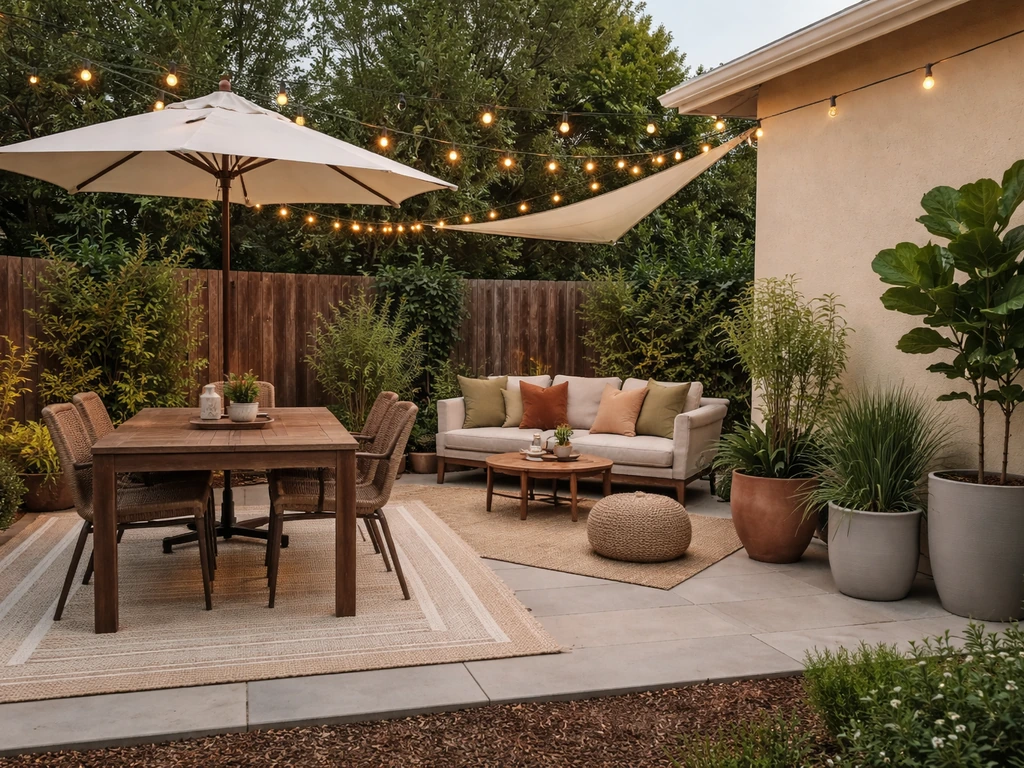
How to Style an Outdoor Patio: Easy DIY Guide
Step-by-step DIY guide to style an outdoor patio with layout, furniture, colors, lighting, privacy, shade, and seasonal
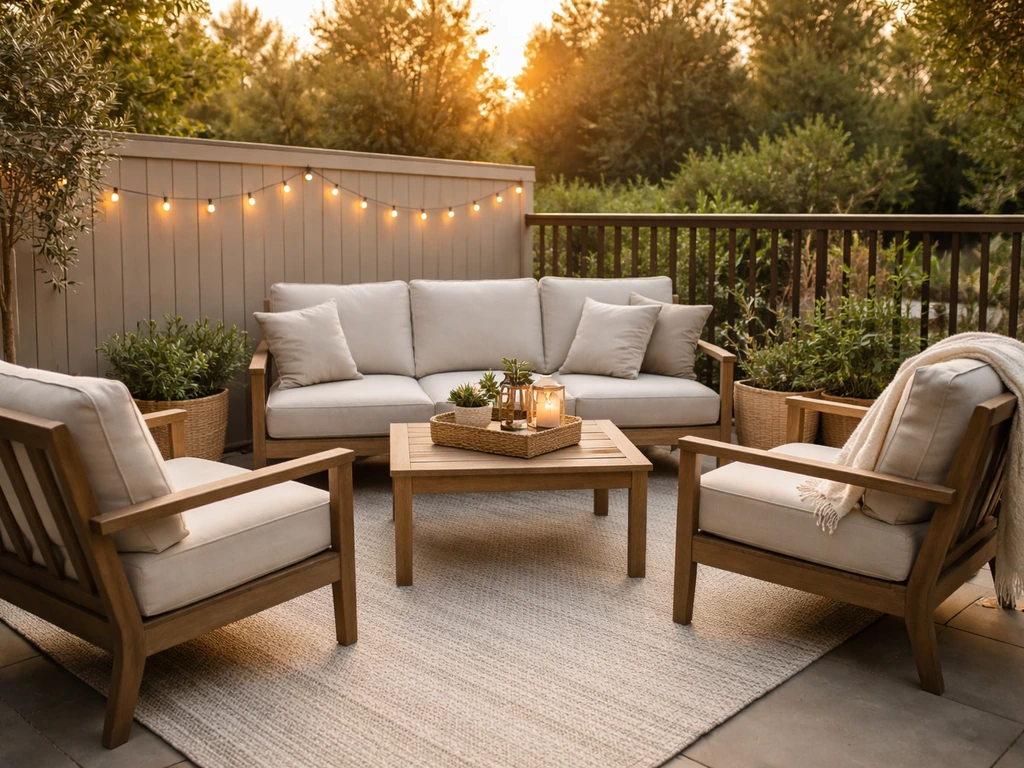
How to Dress Up a Patio: Easy DIY Upgrades for Comfort
Step-by-step DIY ideas to dress up your patio with furniture, decor, lighting, shade, privacy, and easy seasonal mainten
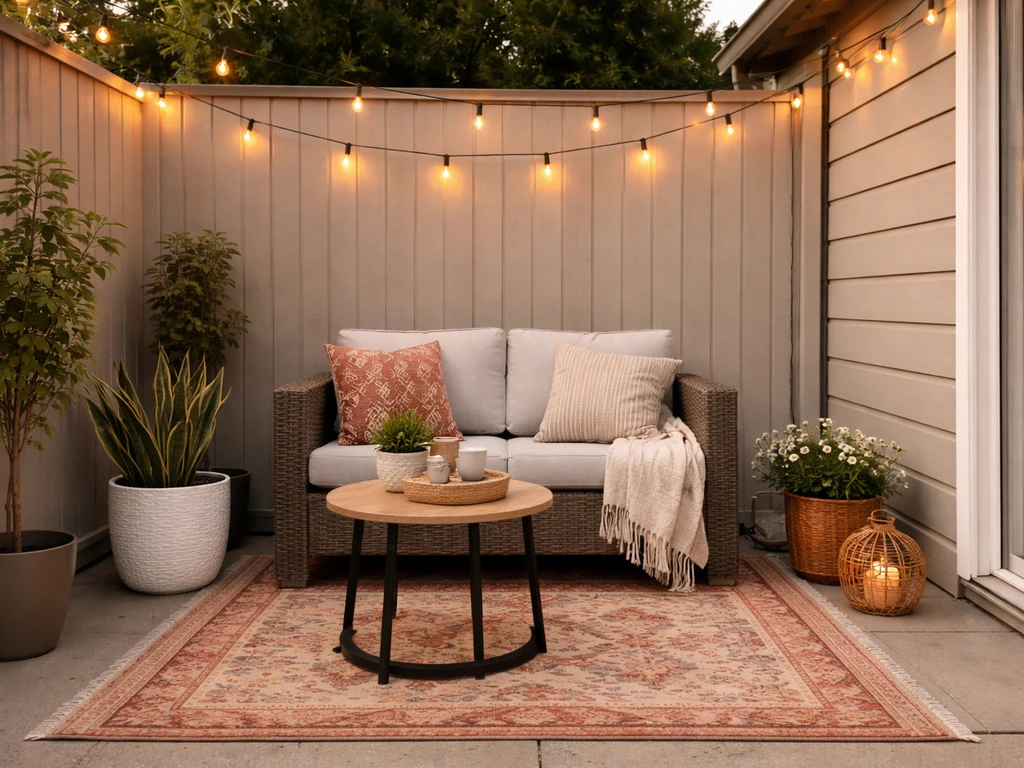
How to Decorate a Patio on a Budget: Small Ideas
Step-by-step patio decor on a budget with small-space layout, budget buys, DIY upgrades, and lighting tips.