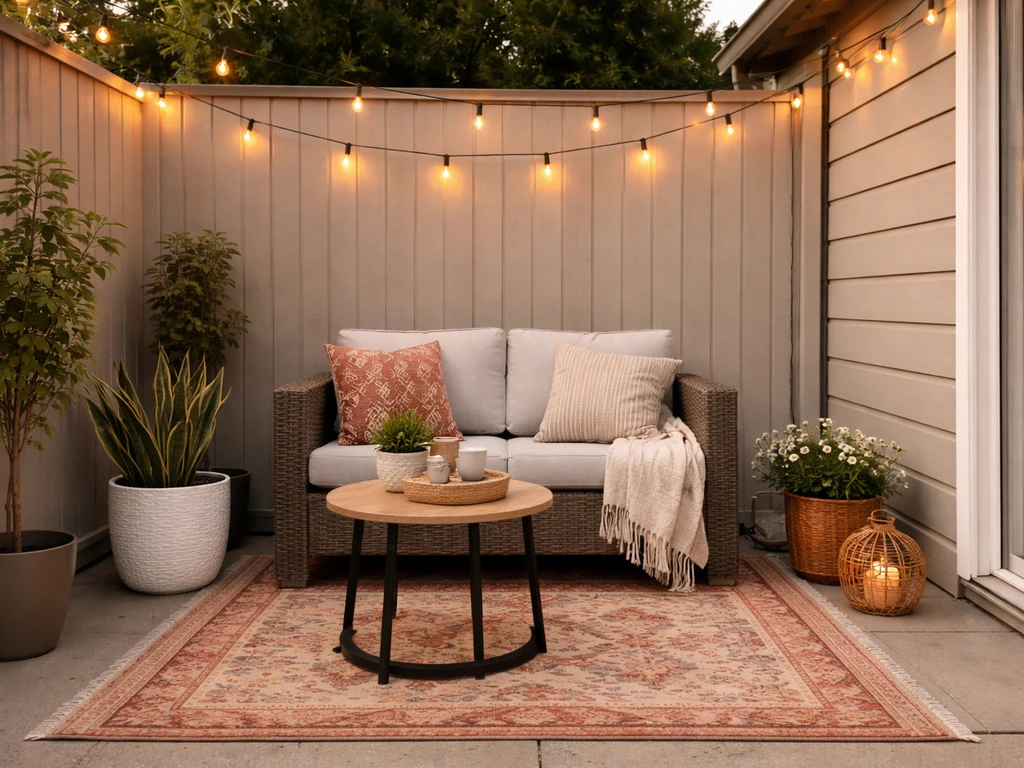
You can decorate a patio on a budget for anywhere from $100 to $500 and still have it look like you planned every inch of it. The trick is doing three things in order: measure your space before you buy anything, pick one visual style so everything feels cohesive, and spend the most money on the two items that have the biggest visual payoff (usually an outdoor rug and lighting). Everything else, from planters to privacy screens, can be DIY or secondhand without anyone knowing the difference.
How to Decorate a Patio on a Budget: Small Ideas

Felix Brennan
27 May 2026
Set a real budget before you buy a single thing
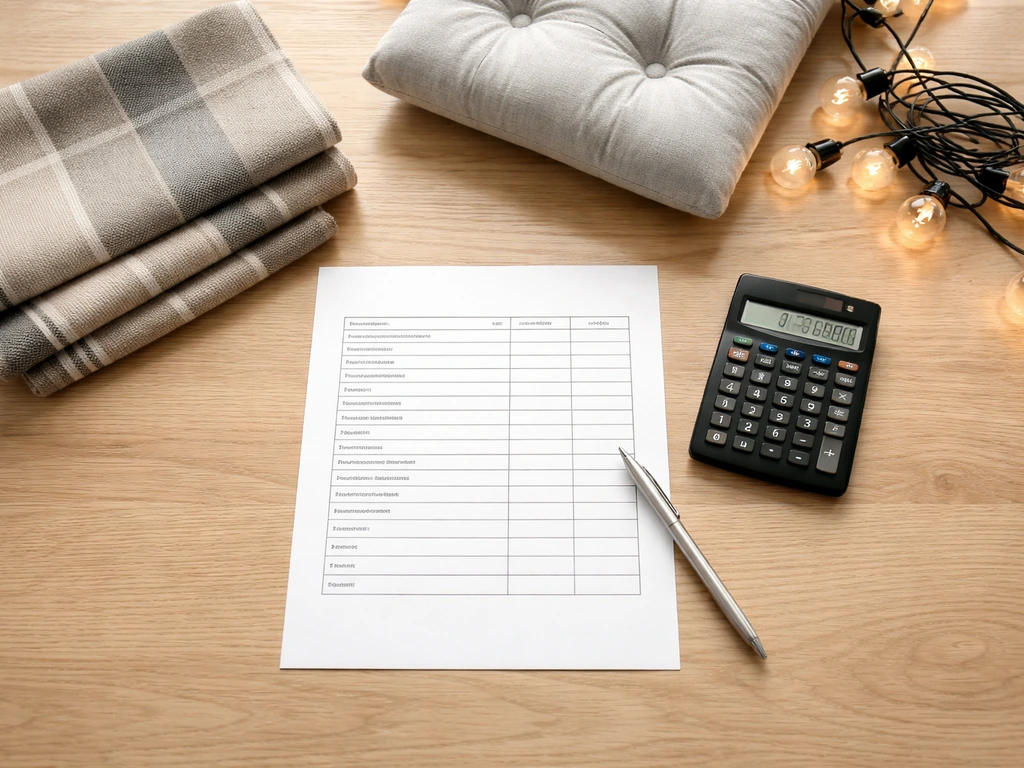
The most common budget mistake on a patio project is buying individual items you love without tracking the running total. You end up spending $300 and still feeling like the space isn't done. Start instead by picking a hard ceiling, whether that's $150, $300, or $600, and then divide it across categories. A practical split for most small-to-medium patios looks something like this:
| Category | Budget-Friendly Range | Where to Prioritize |
|---|---|---|
| Outdoor rug | $40–$150 | Yes — biggest visual anchor |
| Seating/cushions | $50–$200 | Yes — comfort drives use |
| Lighting (string or solar) | $20–$80 | Yes — transforms evening use |
| Planters and greenery | $20–$60 | DIY to save here |
| Wall/vertical decor | $15–$50 | DIY or thrift |
| Privacy screen or shade | $30–$100 | DIY strongly recommended |
Notice that furniture is not always the top priority. If you already have chairs or a table, even mismatched ones, you can use cushions, a rug, and consistent accessories to tie them together visually. Buying a whole matching furniture set rarely makes financial sense on a tight budget, and scale is usually where people get burned anyway: a set that looks right in a showroom can swallow a small patio whole. Measure your space first, then shop.
Also plan for at least one thing you didn't expect to need. Outdoor extension cords, mounting hooks, zip ties for string lights, or a bag of gravel for a planter drainage layer all add up. Build in a 10–15% buffer on whatever ceiling you set, and you won't end up making a second hardware store run mid-project.
How to lay out a small patio so it feels bigger
Before you place anything, grab a tape measure. Write down your patio's length and width, note where the door is, and mark any fixed obstacles like a gas line, downspout, or existing lighting fixture. This takes ten minutes and saves you from the classic mistake of buying a bistro table that blocks the door.
The one clearance number worth memorizing is 36 inches. That's the minimum walkway width that feels genuinely easy to move through. A 24-inch squeeze path works, but it makes the space feel cramped immediately. If your patio is narrow, position seating along one wall or railing rather than floating it in the center, and leave the 36-inch lane open along the longest travel path (usually from the door to the yard).
- Push furniture to the perimeter on small patios rather than centering it — this frees up the middle and makes the space read as larger
- Choose a rug that's at least 6x9 feet if space allows — this is the minimum that actually anchors a seating area rather than looking like a bath mat
- Aim for 8x10 as your sweet spot for a standard small patio seating zone — it's large enough to anchor two chairs and a side table without overwhelming an 8x10 or 10x12 slab
- Keep tall items (planters, lanterns, trellises) at the edges or corners, not the center — vertical height draws the eye up and makes the floor area feel more open
- If you have a square patio, try angling a bistro table 45 degrees — it breaks the boxy feel and creates better traffic flow around it
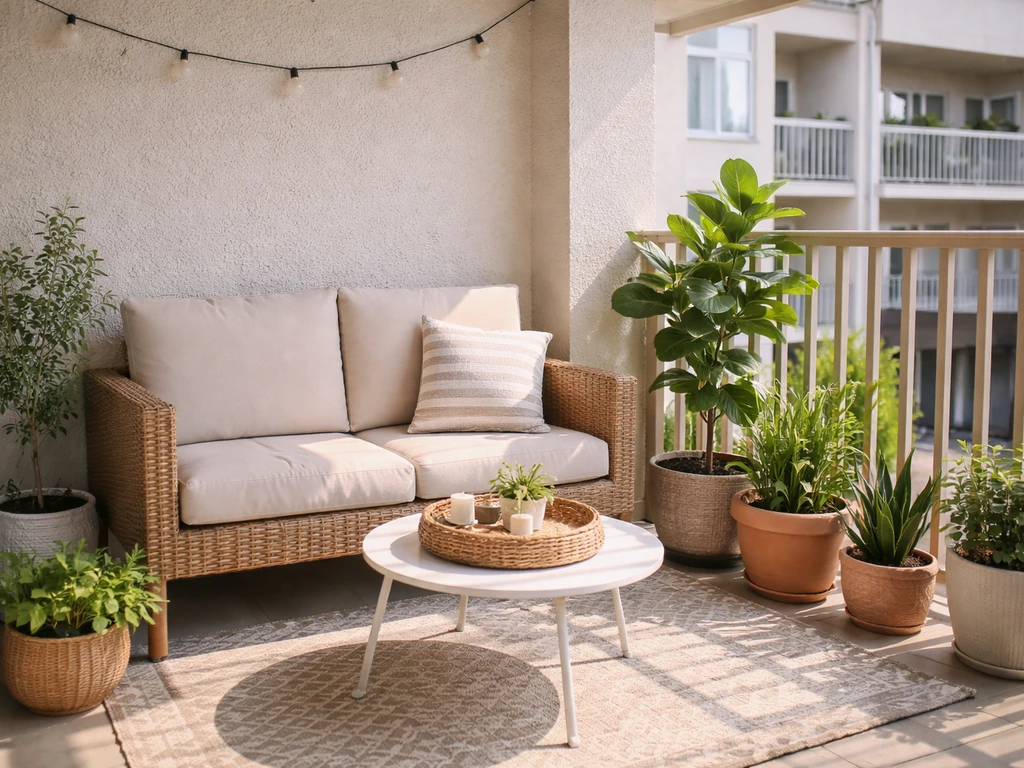
For apartment patios and other tight spaces, the goal is function first. Decide what you actually do on your patio: eat, read, have a drink after work, grow herbs? Let that activity drive the layout, and don't try to do everything at once. A small patio that does one thing well feels intentional. A small patio crammed with furniture for every scenario feels cluttered. If you are wondering how to decorate an apartment patio, start with a rug and lighting to create a cohesive seating zone.
Affordable decor that actually works: furniture, rugs, and lighting
Furniture and seating on the cheap
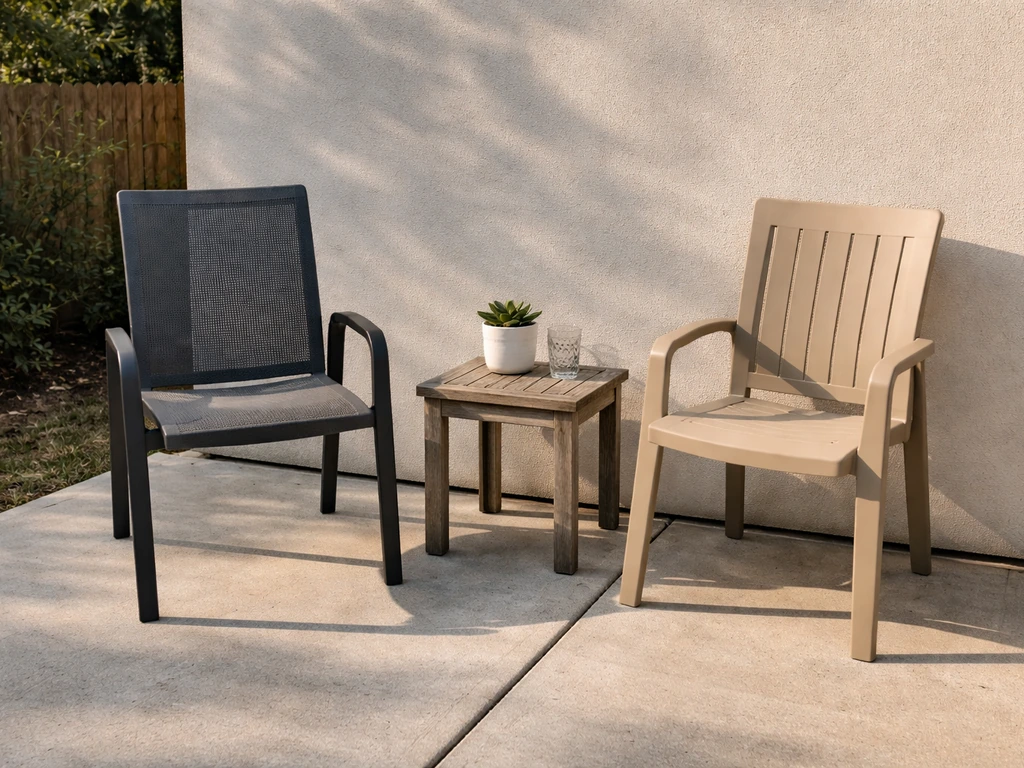
If you need seating, avoid buying a complete patio set unless you find one deeply discounted. Instead, start with one or two solid chairs, then add a small side table or a wooden crate as a surface. Mismatched seating tied together with matching cushion covers is a classic designer trick, and it costs a fraction of a matching set. Cushion covers in a consistent color or pattern (more on style later) are what make mix-and-match look intentional. A full set of outdoor cushions can run $150 to $1,000 new, but a pair of replacement cushion covers from a discount retailer can run $15 to $40 and completely change the look of chairs you already own.
When buying any outdoor furniture, think about your sun and shade patterns before you commit to a material. A chair with thick cushions left in direct afternoon sun in a hot climate will fade and degrade in one season. If your patio gets a lot of direct sun, look for solution-dyed acrylic fabrics (Sunbrella is the premium version, but generic solution-dyed options exist at lower price points) or simple metal and resin furniture that doesn't rely on a fabric cushion at all.
Outdoor rugs: the single highest-impact budget item
An outdoor rug is the fastest way to make a patio feel like a room. It defines the seating zone, adds color, and immediately makes the space look designed rather than random. For most patios, an 8x10 rug is the sweet spot: big enough to anchor a full seating area, small enough to fit most standard slabs, and available at almost every price point.
A rug-size guide for outdoor spaces also emphasizes sizing around your available area and furniture layout, often citing common sizes like 8x10 and 9x12 for coverage and anchoring For most patios, an 8x10 rug is the sweet spot: big enough to anchor a full seating area, small enough to fit most standard slabs, and available at almost every price point. .
A decent outdoor rug in this size can be found for $40–$100 at discount retailers, and the difference between a $50 rug and a $200 rug in an outdoor setting is smaller than you'd expect, especially since both will fade over a few seasons in direct sun.
As a sizing rule, keep the rug's dimensions roughly 12 to 24 inches shorter than the patio perimeter on each side. This gives you a visual border of the concrete or deck and prevents the rug from looking too small or too wall-to-wall. If your space is tight, go with 6x9 as your minimum, anything smaller will look like an afterthought.
Lighting that transforms the space for under $80
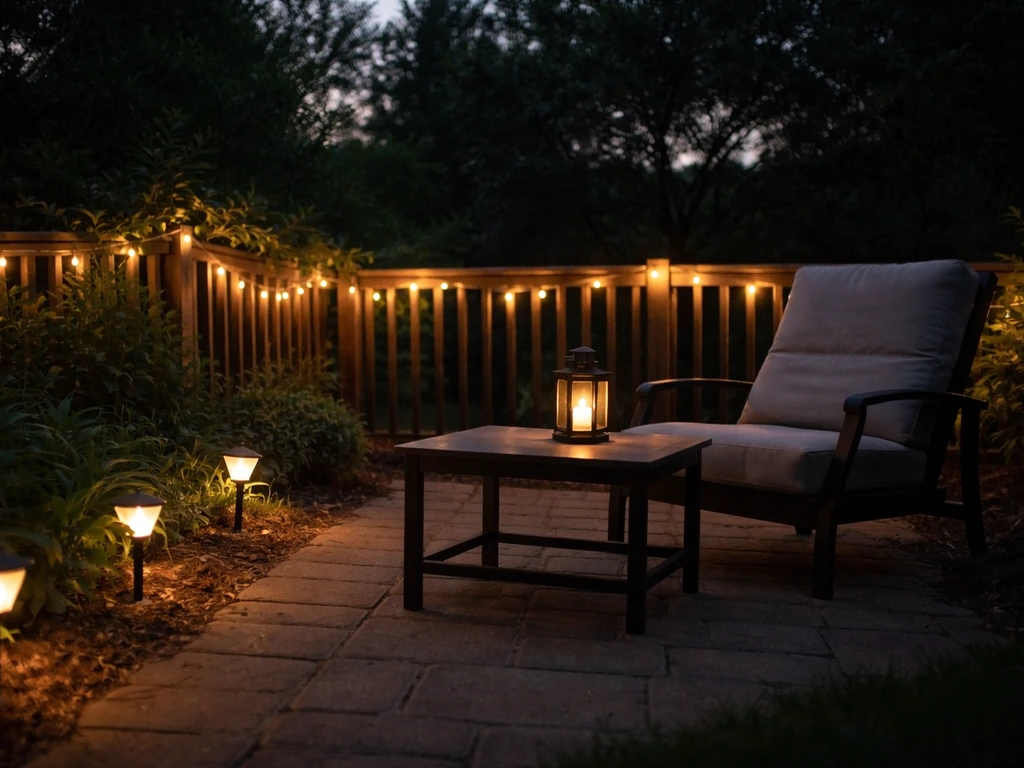
This is the category that gets underestimated most on a budget patio project. Good lighting makes your patio usable in the evening, which effectively doubles how much time you spend out there. String lights are the most budget-friendly and highest-impact option, and a single strand of warm white LEDs can cost as little as $15 to $30. Look for lights labeled 2700K to 3000K color temperature, this is the warm white range that feels comfortable and welcoming outdoors, rather than the harsh blue-white of cooler LEDs.
For hanging placement, aim for about 8 to 10 feet off the ground if you can. This gives comfortable overhead clearance and spreads the light across the space rather than shining it directly in your eyes. If you don't have a permanent mounting point, freestanding lanterns or string lights clipped to a fence or railing with outdoor hooks (around $5 for a pack) work just as well.
Solar string lights are a good option if your patio gets strong direct sun for most of the day. If you deal with frequent cloudy days or a shaded patio, plug-in lights with a timer are more reliable since they don't depend on battery charge.
Outdoor lighting fixtures can range from $50 to $1,000 per item, but for decoration purposes on a budget, you don't need anything close to the high end, a $25 string light strand and a $15 solar lantern can do everything you need.
DIY upgrades that cost almost nothing
Wall and vertical decor
Bare walls or fences are the most overlooked opportunity on a budget patio. Vertical space costs nothing to use. A few options that work well without major investment: hang a galvanized metal sign or a piece of painted wood art (thrift stores often have these for $3 to $10), attach a simple wooden shelf to a fence and use it for a potted plant and a lantern, or paint a fence panel or exterior wall in an accent color that matches your rug. That last one costs a single quart of exterior paint (around $10 to $15) and is one of the highest-impact changes you can make for the money.
For planters, terracotta pots from hardware stores are still one of the cheapest options available, starting around $2 to $5 for smaller sizes. Spray paint them in a consistent color, or leave them natural. Group three pots in different sizes together in a corner for a layered look that takes about 20 minutes to set up. If floor space is limited, vertical or stackable planter systems let you grow herbs or trailing plants without using any extra square footage, a stackable tower planter can hold four to six plants in the footprint of a single pot.
Privacy touches that double as decor
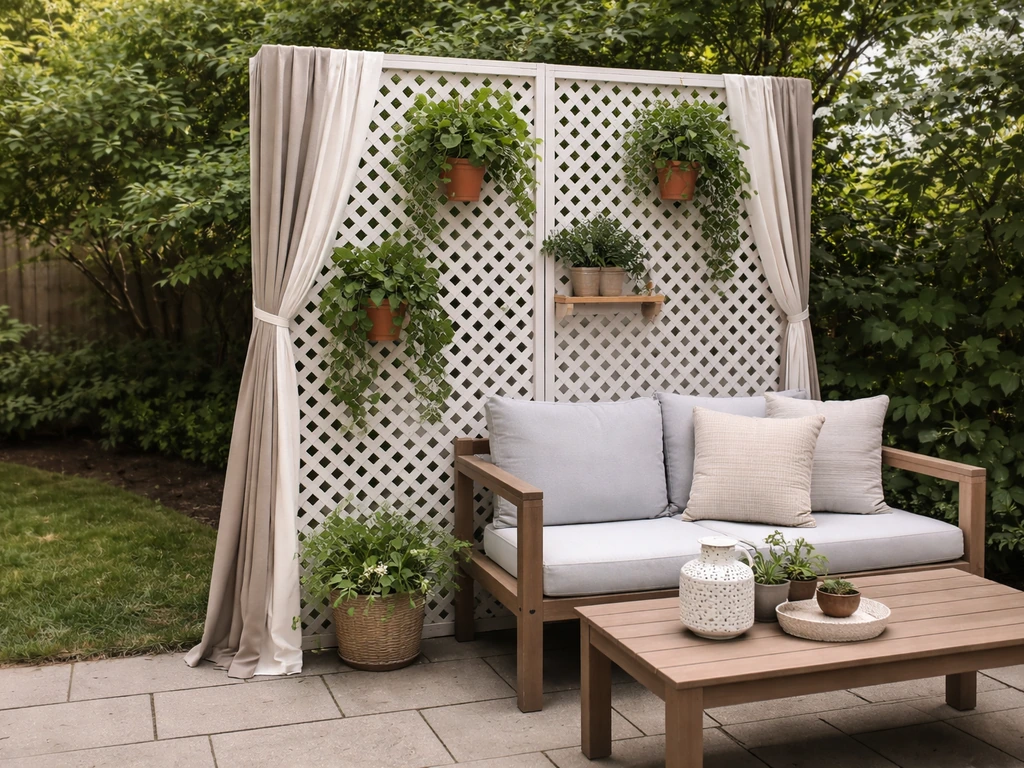
Privacy screens do two jobs at once: they block sightlines to neighbors and they create a visual backdrop that makes the patio feel more like an enclosed outdoor room. A basic cedar-slat privacy screen can be built for $40 to $80 in lumber and deck screws.
The key construction detail that gets skipped most often is drainage: if you're setting posts into the ground, add a few inches of gravel at the bottom of each hole before the post goes in. This prevents rot and gives the screen a much longer lifespan. If you want a non-permanent option, movable privacy screens made from wood or metal frames are available at major home improvement retailers and online.
These work especially well if you rent or don't want to commit to a fixed structure.
Shade is the other functional upgrade that improves the livability of a patio dramatically. A basic DIY shade cloth stretched over a simple PVC-pipe frame can cover a 10x10 area for under $50. This matters for decoration too: a shaded patio keeps cushion colors from fading as quickly, makes plants happier, and just makes the space more comfortable to actually sit in. If you want more style-forward shade, a sail shade or a pergola curtain panel anchored to fence posts gives a similar result with a more finished look.
Pick a style so it looks intentional, not random
One of the most effective things you can do on a tight budget is pick a style and stick to it. You don't need to label it anything fancy. Just decide on two or three anchor elements: a color palette (two colors maximum, maybe a neutral and one accent), a texture family (natural wood and woven textures, or metal and tile, or soft and casual with lots of fabric), and a general vibe (relaxed coastal, clean modern, rustic cottage). Once you have those decided, every purchase becomes a quick yes or no. Does this $12 solar lantern fit the palette? Yes, buy it. Does this discounted red cushion not match anything else? Leave it.
Budget patios look expensive when everything belongs to the same visual family, even if individual items came from different stores and different price points. Budget patios look cheap when there are too many competing styles, colors, and finishes, not because the items are inexpensive, but because nothing reads as a choice. The style decision costs nothing and is the single biggest factor in whether a $200 patio looks like a $200 patio or a $600 patio.
- Limit your color palette to two colors: one neutral (natural wood, white, gray, black) and one accent (terracotta, navy, sage green, mustard)
- Repeat textures: if you have a woven rug, add a wicker planter or jute cushion cover to reinforce that theme
- Keep metallics consistent: if your string lights have warm brass bulbs, choose a lantern and any hardware in the same warm tone, not chrome
- Use plants as a unifying element: matching pots in the same color or material tie together any mix of furniture
- Less is more on a small patio: four well-chosen items look more deliberate than ten random ones
If you want more detailed decoration ideas beyond the budget angle, there's a lot of overlap with how to style an outdoor patio in general, and thinking about how to brighten up a patio can give you good direction on color and plant choices that work across styles. For seasonal applications like holiday decorating, the approach stays the same: pick a palette, repeat it, keep it simple. If you want to decorate a patio for Christmas, repeat the same palette and lighting ideas so the seasonal touches feel cohesive instead of random holiday decorating.
Where to shop, when to shop, and what to skip
The best times to buy
Timing matters more than you'd think for patio decor. Memorial Day (late May) is one of the best windows of the year to buy outdoor furniture and decor, with retailers like Walmart running major discounts and stores like Terra Outdoor Living offering up to 40% off. IKEA typically runs spring outdoor promotions with discounts up to 40% off patio furniture during this same window.
If you miss the spring sales, the next best time is late August into September, when retailers start clearing out summer inventory to make room for fall. End-of-season clearance is where you find the deepest discounts, often 50 to 70% off, and since outdoor furniture stores fine for 8 to 10 months before next season, buying in September is a perfectly practical strategy.
Where to find the best deals
- Facebook Marketplace and Craigslist for used patio furniture — people replace patio sets constantly, and a $30 chair with new cushions looks as good as a new $150 chair
- Home Depot and Lowe's clearance sections (usually a marked section near the seasonal display, or check the store's website clearance filter) for discounted umbrellas, planters, and lighting
- IKEA for affordable outdoor rugs, stackable planters, and simple furniture — prices hold well and the aesthetic is clean enough to work with most styles
- Amazon for string lights, solar lights, and outdoor lighting under $50 — check the return policy before buying anything you haven't seen in person
- Thrift stores and Goodwill for wall art, lanterns, and decorative items — outdoor-suitable items rotate through constantly, especially in spring
- Dollar Tree and Five Below for small accent pieces like taper candles, simple lantern holders, and single faux succulents
What to spend on versus what to skip
Spend real money on: the outdoor rug (it anchors everything and cheap ones fall apart in one season), the main seating (comfort drives how much you actually use the space), and your lighting (even a $30 string light makes a dramatic difference at night). These three categories are where quality shows and where cutting too far on price creates regret.
Skip or go cheap on: throw pillows in trendy patterns (they fade fast outdoors and you'll want to change them anyway), decorative trays and tabletop items (these can come from anywhere, including thrift stores), matching plant pots (spray-painted terra cotta pots look great and cost almost nothing), and table covers or tablecloths unless you're going for a specific look. Also skip any outdoor rug under 6x9 if your goal is anchoring a seating area, a small rug looks worse than no rug on most patios.
A simple action plan to get started
- Measure your patio and write down the dimensions — length, width, and door clearance
- Set a hard budget ceiling and divide it across the six categories in the table above
- Pick your two-color palette and your general style before buying anything
- Buy the rug first — it will anchor everything else and force the right furniture scale decisions
- Add seating or cushion updates next, keeping your palette in mind
- Hang string lights or set up solar lighting to make the space usable at night
- Fill in with plants, wall decor, and a privacy screen as budget allows — these are all DIY-friendly and can be done in stages
The whole thing can come together in a weekend if you have the materials ready. Start with what you have, measure before you shop, pick your style once, and prioritize the rug and the lighting. If you want a polished result, put your budget, layout, and key decor decisions together to guide how to style outdoor patio spaces you can actually live in.
Add patio lighting early in the planning so you can choose the right fixtures and placement for how you use the space at night. Those two decisions alone will get your patio looking intentional and welcoming for well under $200, and everything else you add after that just builds on a foundation that already works.
It is also a good idea to plan your “how to dress up patio” look by choosing a consistent style, then adding high-impact items like a rug and lighting.
FAQ
Can I decorate my patio on a budget without buying new furniture? (My chairs are mismatched.)
Yes, but plan the cushion covers first. If your seats are already outdoors, buy replacement covers in your chosen palette (two colors max) and swap the look without paying for new chairs. For extra longevity, choose covers labeled for outdoor use or fade-resistant materials, and keep them off the ground when possible to avoid mildew staining.
What should I use to make everything look cohesive when I’m mixing secondhand items?
Do it with a simple “visual grid.” Start by selecting one main anchor (the outdoor rug) and then repeat the same accent color in two smaller places (for example, one lantern and one planter or one pillow cover and one wall accent). This prevents the common issue where everything looks individually fine but the patio still feels random.
How do I choose rug size for a narrow patio so it doesn’t make the space feel cramped?
If you have a narrow patio, avoid centering a rug and instead align it with the seating zone. Use the 36-inch clearance idea as your guiding lane from door to yard, then place the rug so its shortest edge doesn’t cross that travel path. A 6x9 minimum often works better than smaller rugs in tight layouts because tiny rugs can make the space feel like it’s shrinking.
What’s the best lighting approach for a budget patio that still looks polished at night?
Budget patios can still look high-end if the lighting is warm and layered. Use warm white (2700K to 3000K), then add at least two light sources, one for atmosphere (string lights or lanterns) and one for function (a small area light or a single solar lantern near where you sit). Keep cords tidy with outdoor-rated clips or cable ties, otherwise the practical setup can look messy.
Will outdoor rugs and cushions hold up if my patio gets lots of sun?
Yes, and timing matters. If your patio is in harsh direct sun, plan to buy fewer fabric-based items or choose solution-dyed fabric cushions, and rotate or store removable cushions during intense seasons. For rugs, expect fading over time, so budget for a rug that you’ll replace in a few years rather than trying to “buy once” at a deep discount.
How do I protect my budget patio decor so it lasts through the seasons?
Use a weather-smart plan: choose rugs and cushions that are easy to lift, store, or cover. For furniture, avoid leaving raw wood exposed year-round unless it’s sealed for exterior use, and consider moving planters under cover if you expect heavy rain or frost. If you live somewhere with freeze-thaw cycles, prioritize protecting pots (terracotta cracks) and use resin or glazed options for reliability.
What are the most common measuring mistakes when planning a patio on a budget?
Check two clearances before buying anything: walkway width (aim for at least 36 inches) and door swing space. Also leave room to fully pull out chairs if you plan to eat outside, test this with a tape measure by marking chair footprint directions on the patio floor, then shop for furniture that fits without blocking the main route.
How can I add privacy and wall decor on a budget if I rent and cannot drill?
For renters, go non-permanent first. Use adhesive outdoor hooks designed for your surface (or clamp options on railings) for string lights and lanterns, and choose freestanding privacy screens instead of fixed builds. For wall decor, use removable outdoor-safe mounting methods (like hook-and-loop style or temporary brackets) to avoid damaging painted surfaces.
What’s the easiest way to avoid plant and privacy-screen problems that waste budget?
Start with drainage even if you’re using cheap planters. For ground posts, add gravel at the post hole bottom as described, and for potted planters, ensure there are drainage holes and don’t let pots sit in standing water. A simple gravel layer or saucer management can prevent rot and helps plants last longer, which saves money on replacements.
How do I choose a patio style when I don’t know what matches yet?
Pick a style using anchors, then constrain colors and finishes. A practical method is to choose (1) one dominant neutral, (2) one accent color, and (3) one texture family, then limit repeats to these categories. When in doubt, buy the item that repeats an anchor you already chose, this is how you avoid the “too many competing styles” look.
When is the best time to buy patio decor on a budget, and what should I buy first if I’m shopping late?
The best value usually comes from buying last-season items for one of the three high-impact categories first. If you’re decorating during summer, consider late August to September clearance for outdoor furniture and accessories, then fill gaps with secondhand planters or thrift wall art. If you missed that window, focus on string lights and an outdoor rug, because they are easiest to find year-round and they change the look immediately.
How can I decorate for Christmas on a budget without ruining the patio’s year-round style?
Yes, for holiday decorating, keep the same core palette and lighting so seasonal items look intentional. Swap in holiday accents that match your existing color choices (for example, warm lights and a repeated ornament color), and store the rest so you do not accumulate expensive decor you only use once. Treat holiday decor like a “capsule,” add only a few pieces that repeat across the space.
Next Articles
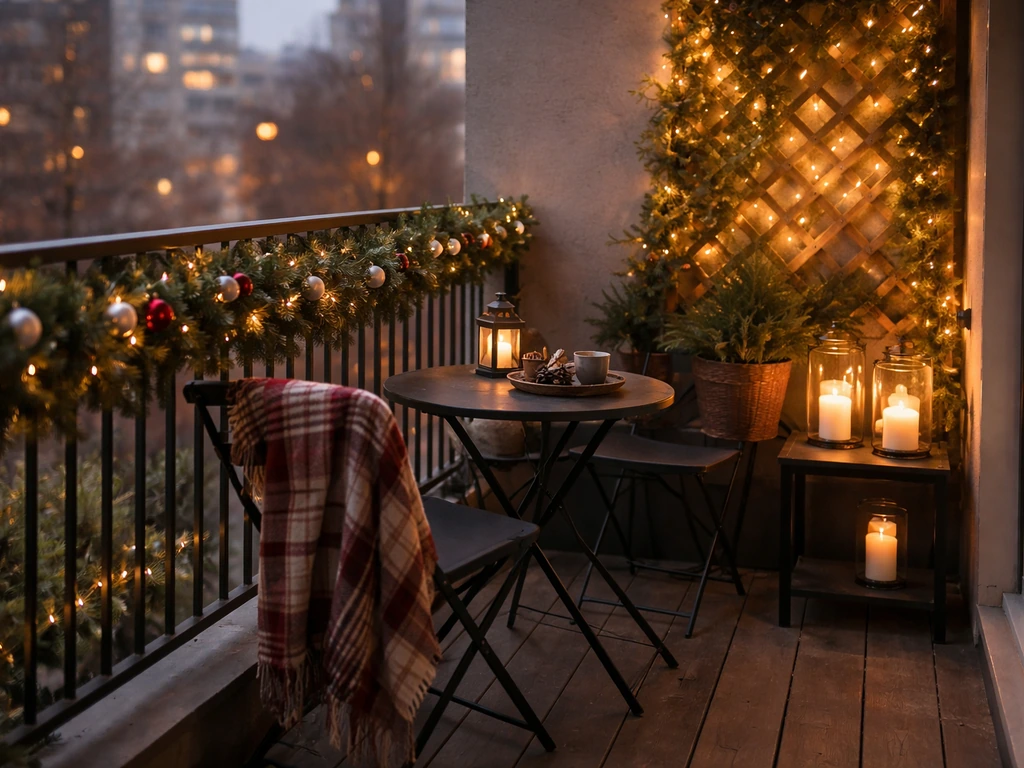
How to Decorate a Patio for Christmas in Any Space
Step-by-step DIY tips to decorate any patio for Christmas, including small and apartment balconies, layout, lighting, an
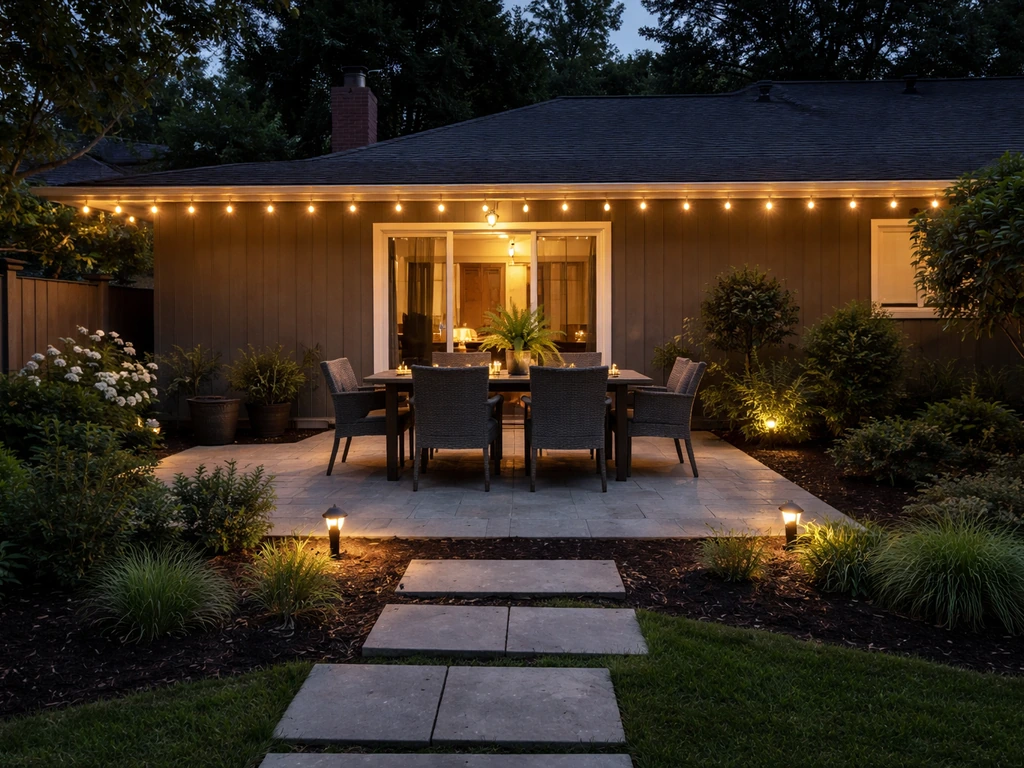
How to Light Patio: DIY Layout, Power, and Placement
Step-by-step DIY guide to light a patio: fixtures, placement, power safety, and troubleshooting for even, glare-free out
How to Decorate an Apartment Patio: DIY Steps
Step-by-step DIY guide to decorate an apartment patio: assess limits, pick layout, add weatherproof seating, plants, lig